
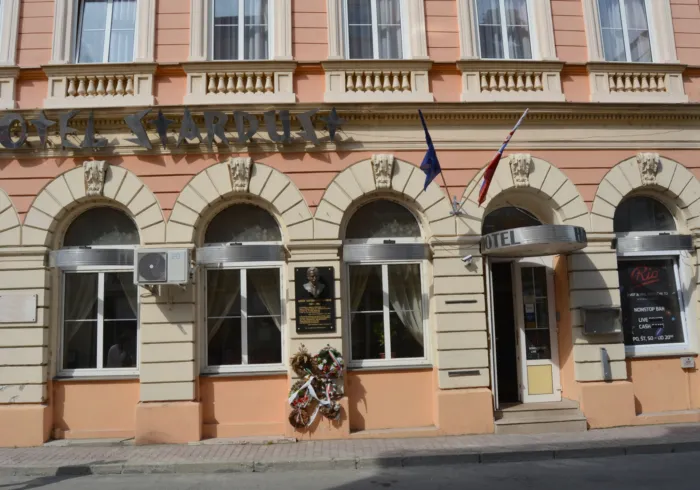
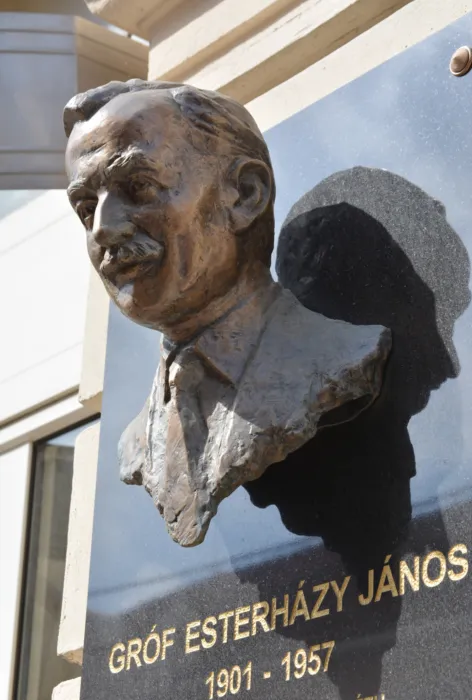
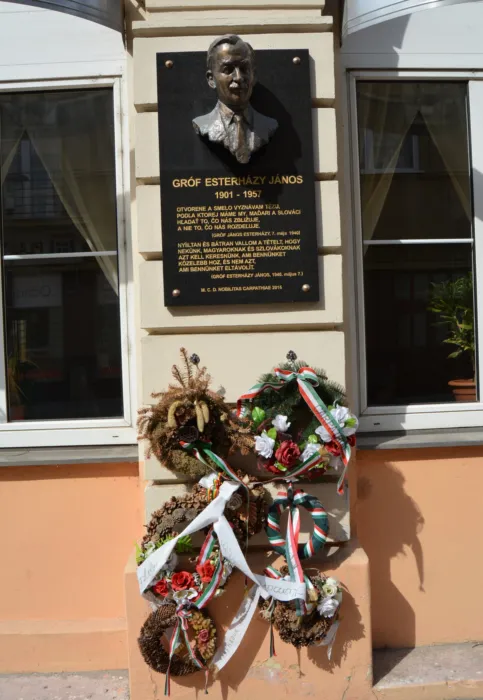
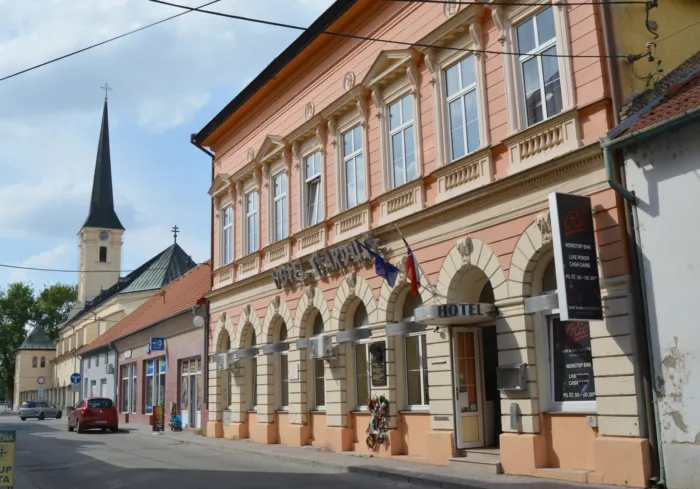
Memorial plaque of János Esterházy in Érsekújvár
Statue, monument, memorial plaque
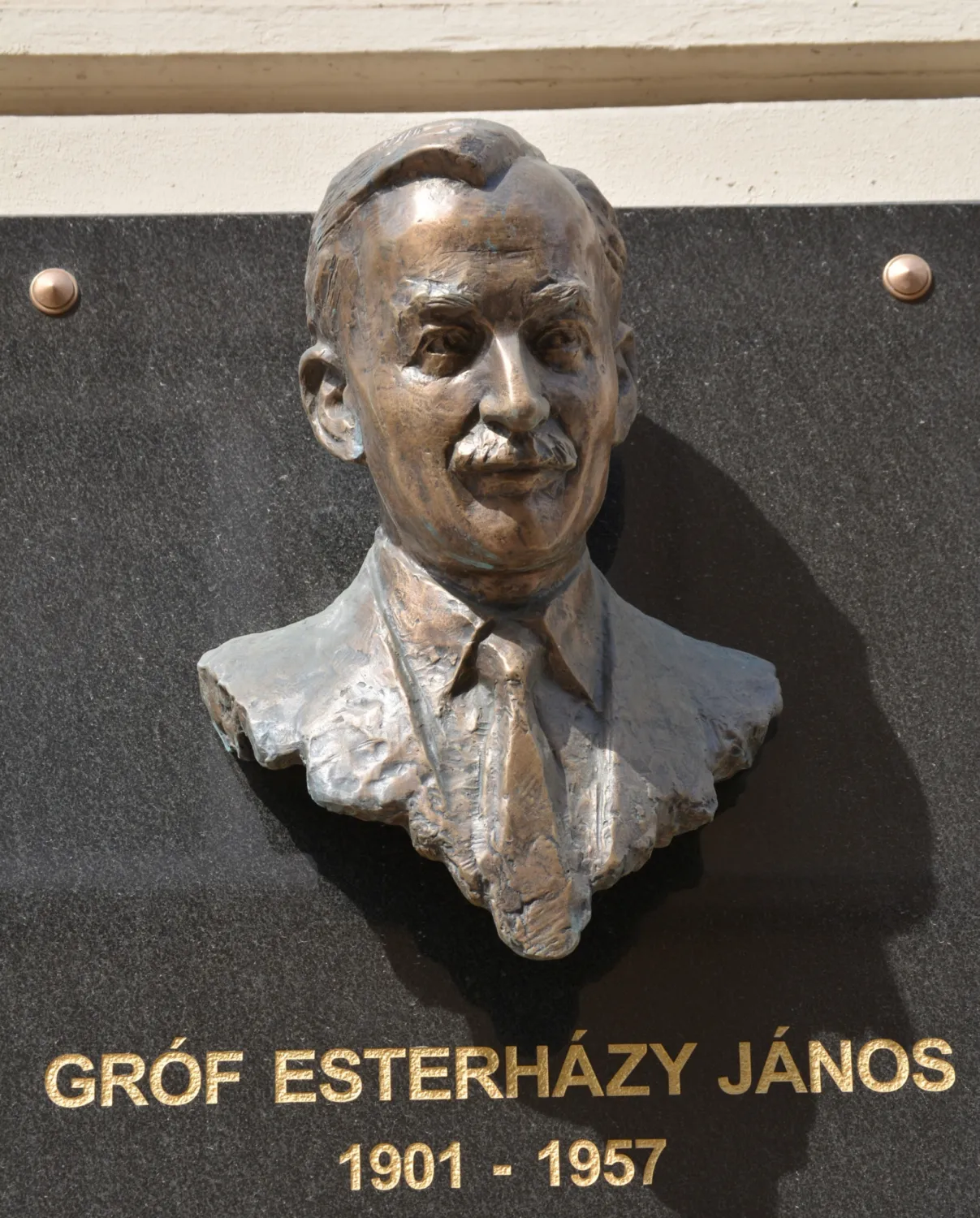
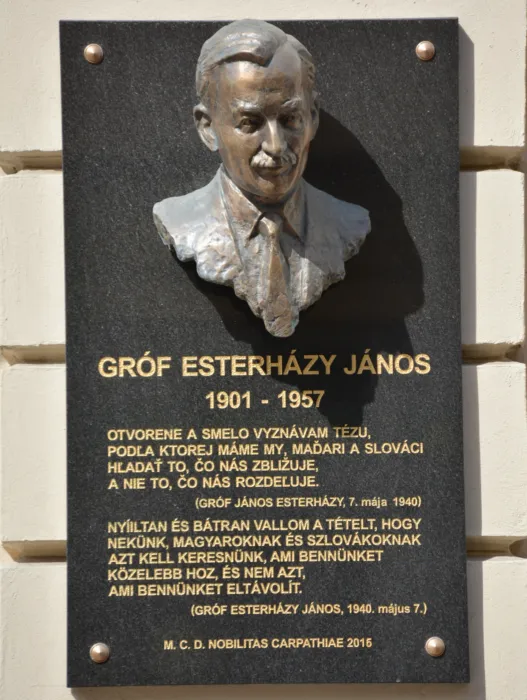
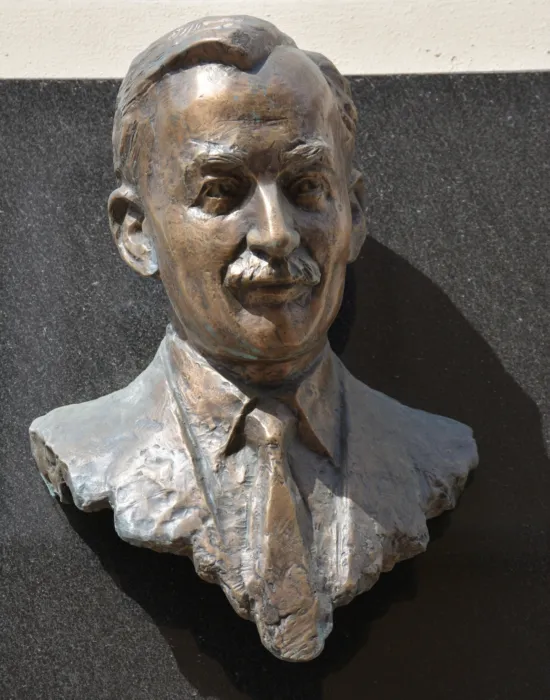
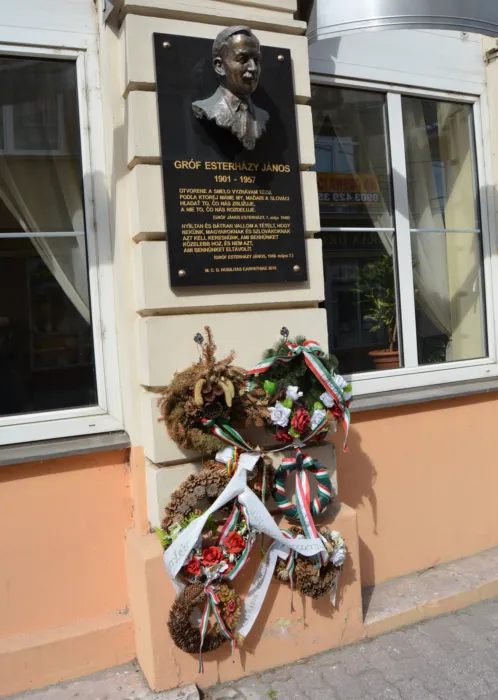
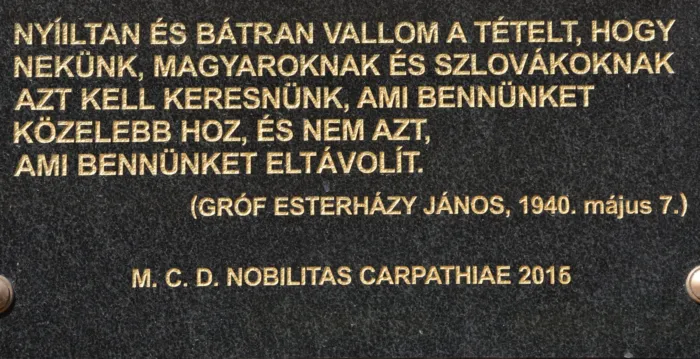
The bronze relief and the memorial plaque were unveiled at the entrance to the Stardust Hotel on November 25, 2016, which reads János Esterházy's creed - "I openly and courageously profess the thesis that we, Hungarians and Slovaks, must seek what brings us closer, and not what separates us." The memorial was realized with the public donation of the Nobilitas Carpathiae civil society organization and the János Esterházy Association, and with the support of the Ministry of Human Resources on the occasion of the Year of Remembrance of Political Prisoners and Forced Laborers Deported to the Soviet Union. The monument is the work of Tibor Szilágyi, a sculptor from Érsekújvár. ”. ; The event began with a solemn memorial mass in the Roman Catholic parish church of the Exaltation of the Holy Cross in Érsekújvár, which was presented by Zoltán Ďurčo, the Hungarian episcopal vicar of the Diocese of Nitra, who also remembered the victims who were taken to gulags at the end of World War II during the mass. “It is important to emphasize that behind this sea of suffering there is steadfastness, there is love for the homeland, for the nation. In fact, they were the heroes and martyrs who were able to fulfill their mission without running away from the trials of life, and for this we thank Count János Esterházy,” said the episcopal vicar, who according to him, János Esterházy did not politicize and live his life on the border of values, but was guided by faith in his Creator and love for his people. ; After the Holy Mass, the Deputy State Secretary for National Policy of the Prime Minister's Office, Dr. Péter Szilágyi, gave a ceremonial welcome speech, who emphasized in his speech that we are remembering the tragedy of our 20th century, full of horrors and trials, hidden and forgotten for decades, in these days in the Carpathian Basin. "Count János Esterházy, whose monument we are inaugurating today, did not abandon the Hungarian community entrusted to him even during this inhumane period," said the Deputy State Secretary, who said that János Esterházy always remained in his place even in these terrible circumstances. "His loyalty and perseverance are still a strengthening example for many of us today," he said. “The pain of the Gulag was followed by even stronger, more extensive shocks during the years of statelessness: population exchange, deportations to Bohemia, re-Slovakization. Cattle wagons, deportations, forced labor. These are the tools of dictatorial oppression that János Esterházy fought against all along. But the Hungarian hero of Felvidék did not break either in the Soviet camps or in the Czech prisons. With a sound spirit, amidst all humiliation and oppression, he stood up for his community, the Hungarian people and Christian morality,” said the deputy state secretary. ; According to Miklós Práznovszky, president of the Nobilitas Carpathiae civil organization that initiated the monument, the date of the event was not set for November 25 by chance. “On May 21, 2012, the Hungarian Parliament decided that November 25 would be the day of remembrance for Hungarian political prisoners and forced laborers deported to the Soviet Union. Count János Esterházy was also given the opportunity to share, even if only for a short time, the merciless fate of the internees,” Práznovszky said in his speech, emphasizing that Esterházy, as a Hungarian politician, did not only stand up for the rights of the Hungarian population. As a representative in the Czechoslovak National Assembly, he raised his voice in favor of Slovak autonomy within the Czechoslovak Republic on numerous occasions. ; “Our more than two-year effort, which was also joined by the Esterházy János civic association, has now been completed. The amount of money required to create the memorial plaque has been raised. Allow me, ladies and gentlemen, to thank all donors in the belief that the memorial plaque of Count János Esterházy – recalling the message of the party unification congress in Érsekújvár on June 21, 1936 – will become a symbol of unity not only for Hungarians, but also between Slovaks and Hungarians,” said Práznovszky. ; According to Károly Peczár, president of the co-organizer Esterházy János civic association, the text of the memorial plaque, which also expresses Esterházy’s creed, was chosen after consultation with the martyred count’s daughter, Countess Alice Esterházy-Malfatti. As he said, it is no coincidence that the new Esterházy statue was unveiled in Érsekújvár. Many events in Esterházy's career are linked to the city, including the unification of the two Hungarian parties of Czechoslovakia at the time, which was announced at the congress held in Érsekújvár in 1936, where Esterházy was elected executive chairman of the United Hungarian Party. According to Peczár, the memorial is also intended to pay tribute to the memory of political prisoners on the occasion of the Gulag anniversary. "Our association considers it an objective to erect a memorial plaque, monument or headstone for János Esterházy in more and more places in the Upper Hungary. In 2011, we already erected a memorial plaque at the place of birth of the martyr count, in Nitraújlak, in the local parish church," said Peczár, who believes that these memorials are important because they see János Esterházy as a role model, whose statements have lost none of their relevance over the past 60-80 years. ; The commemoration was made even more unforgettable by the performance of singer Krisztina Szeredy, operetta prima donna, the Hajnalcsillag ensemble and actor Dávid Berényi. ; The memorial inauguration event was also honored with the presence of Éva Czimbalmosné Molnár, Hungary's Ambassador Extraordinary and Plenipotentiary to Slovakia, Pál Csáky, Member of the European Parliament, Imre Molnár, Director of the Hungarian Cultural Institute in Bratislava, and József Szabó, Counselor of the Embassy.