
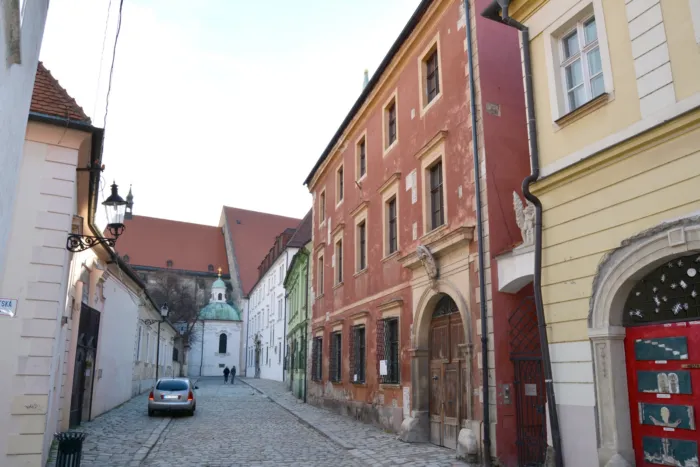
Emericanum
Building, structure
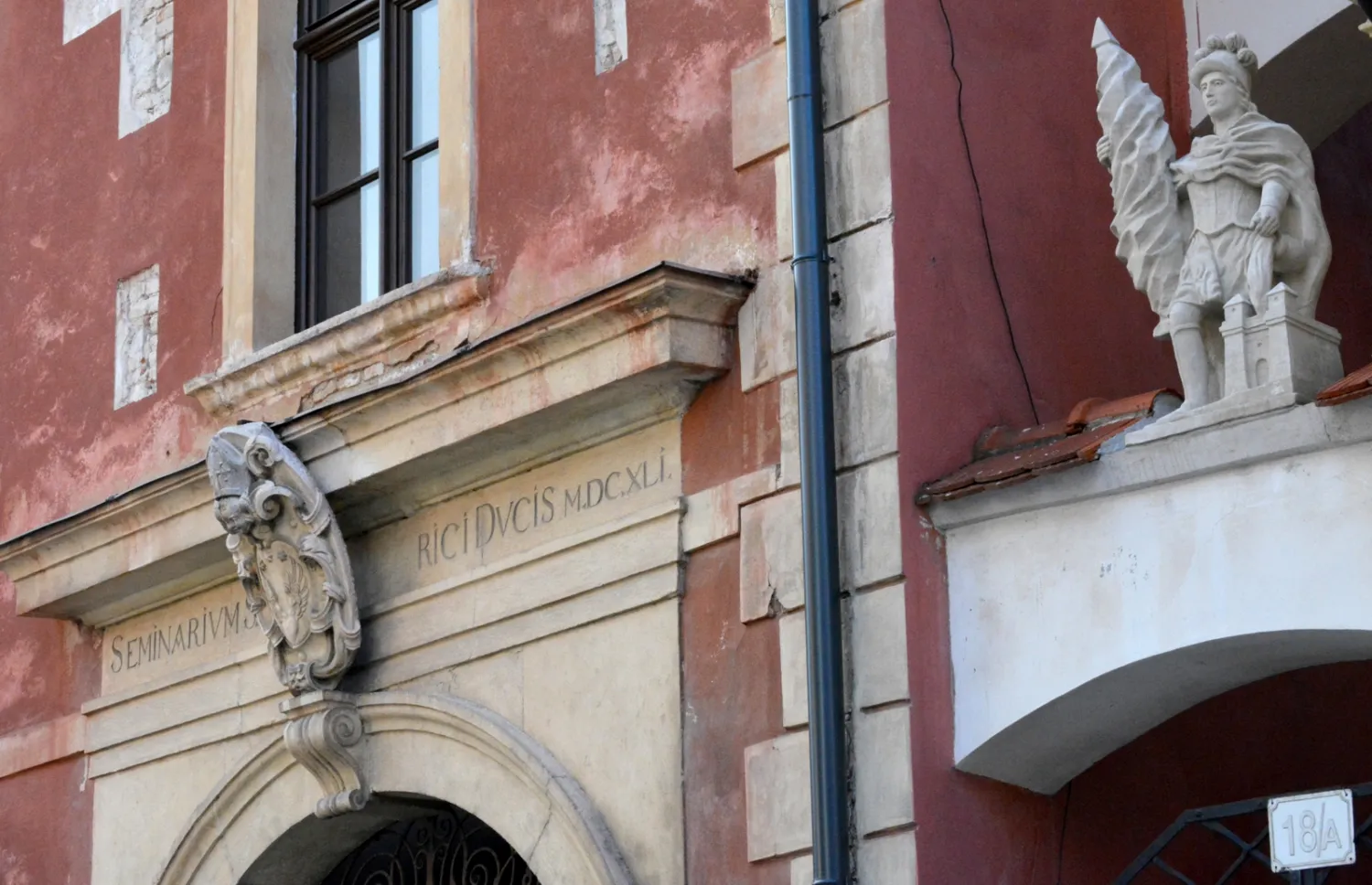
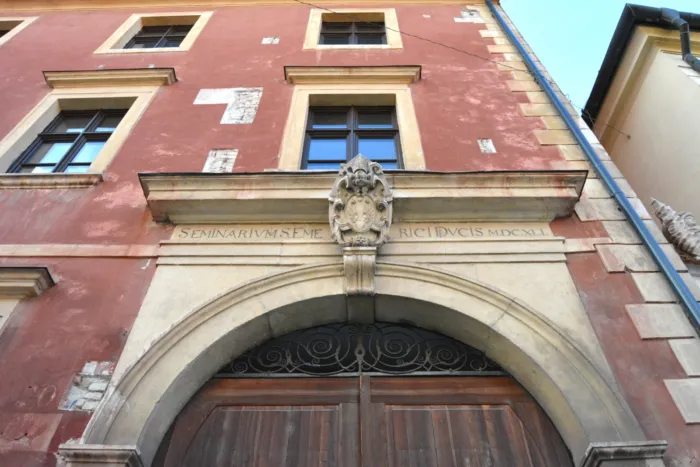
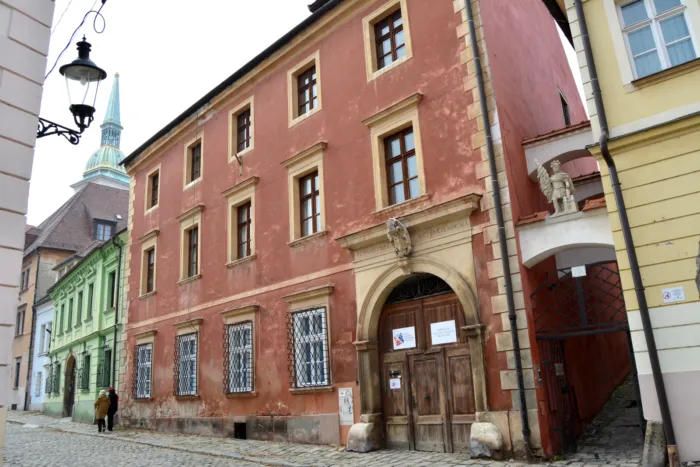
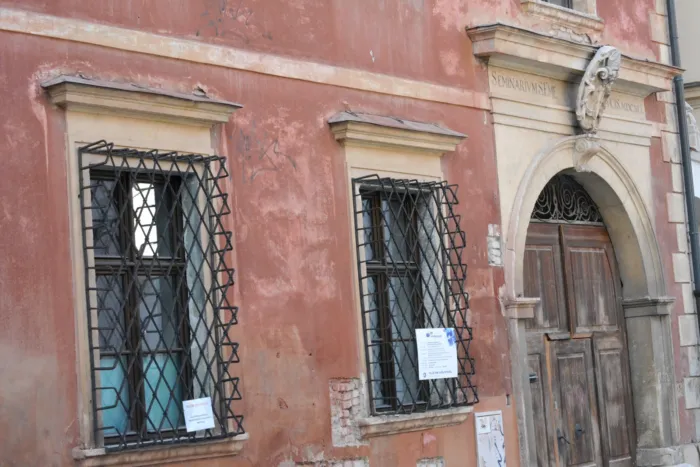
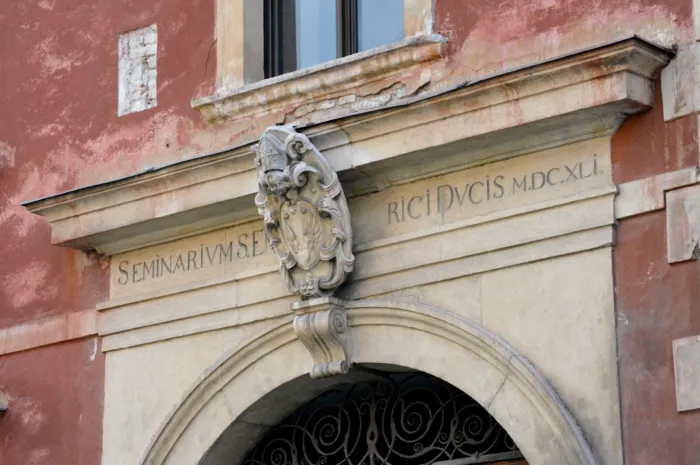
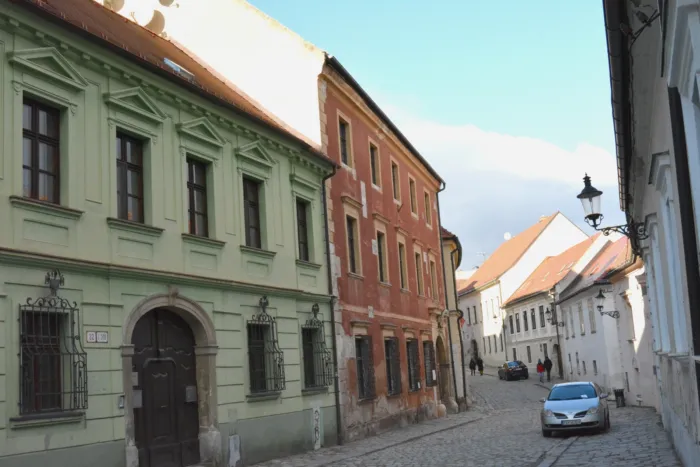
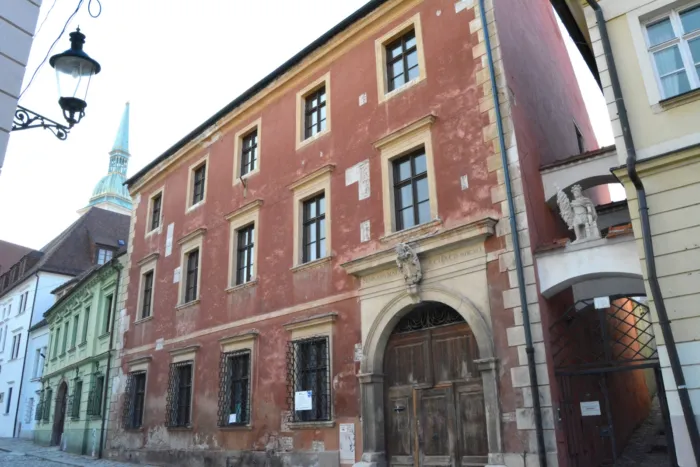
"The second building from the Royal Academy of Law on Káptalan Street is the Emericanum, a small seminary named after St. Imre. It was founded on January 26, 1642 (contrary to the inscription on the building: Seminarium S. Emerici Ducis MDCXLI) by Canon Imre Lósy of Bratislava (his coat of arms can be seen above the entrance to the Emericanum), later Archbishop of Esztergom, with 21 thousand forints, so that in this institute 12 seminarians, under the care and guidance of the chapter and provost, would be carefully trained in science and priestly virtues and would be at the service of the church in Bratislava. The chapter also contributed to Lósy's foundation, by giving over two houses for this purpose, in the place of which the Emericanum would be built. Canon Mihály Veresmarty and Abbot of Báttai increased the foundation with 1,500 forints, so that the students could use the interest from it to be taught both in the faculty and in figurative singing. In 1716, Imre Luby, a canon of Esztergom, and János Okolicsányi, the later bishop of Várad, contributed 3,500 forints to the Lósy foundation. In 1783, by order of Joseph II, the institute was moved to Buda and the foundation amount, which had increased to 35,337 forints in the meantime due to the continuous donations of the canons, was seized by the thirty-year office together with the house. However, in 1802, the institute was moved back to Bratislava. On November 5, 1848, Adalbert Pogány, the provost of Bratislava, increased the foundation capital of the institute by donating 5,000 forints, then 2,000 forints in 1850, and in 1851 by donating the estates of Nagy- and Kis-Bercel in Nógrád counties. The students were They are under the leadership of a canon, a director (rector) and a sacristan, a vice-rector. From 1803 to 1868 they were educated at home, but since 1868 they have been attending a local public school, the Royal Catholic High School, where they complete their secondary school studies, after which they are transferred to a larger seminary for theological studies. The institute building was renovated in 1724, as is announced by a chronostic inscription above the gate, written by the late vice-rector Máté Uzeoróczy (Est Virgo Lilium, ast Emericus ut esset). ; Considering the notable churchmen who have graduated from this institute, it can be said that the glory of this house shines far and wide in the country. In the series of young students in blue robes educated here, there are a large number of those who later rose to the highest level of earthly glory and became prominent figures in the ecclesiastical and scientific world. played the most significant role in the field of political life. In the last century, this institution produced the following: in 1777, Rudnay Sándor, archbishop-primate of Esztergom; in 1780, Jordánszky Elek, bishop of Tinn, archbishop-vicar and owner of the famous Jordánsky-Codex; and István KoIIár, bishop-elect of Tribunic; in 1790, József Kopácsi, archbishop-primate of Esztergom; in 1790, György Németh, bishop-elect of Tribunic; and Imre Tóth, consecrated bishop of Thaumacea; in 1805, József Kunszt, archbishop of Kalocsa; in 1806-7, Béla Bartakovics, archbishop of Eger; in 1823, József Szabó, consecrated bishop of Nicopoli; in 1826, Lázár Káncz, bishop-elect of Phara; in 1828, János Simor, prince-primate; in 1829, gr. Forgách Bishop Ágost, lord of Esztergom and political writer, in 1829-30 Sujánszk y Antal, prelate-canon and church writer of Esztergom, in 1830 Cardinal Lajos Haynald, archbishop of Kalocsa, in 1833-4 Endre Radlinszky, the most active of the church writers, in 1833 György Schopper, bishop of Rozsnyo, in 1836 József Boltizár, consecrated bishop of Mylasa, in 1836-7 Arnold Ipolyi, this first-rate torchbearer of Hungarian mythology and art history, the creator of the Ipolyi Museum, first the bishopric of Bánya Bisztergom, then the prince of the church sitting on the bishopric of Várad, in 1838 János Zalka, bishop of Györ, in 1839 Károly Rimely, Rudolf the heir to the throne, teacher of Hungarian language and history, for a time canon-parish priest of Bratislava, monographer of the Pázmáneum and the Bratislava social chapter and finally holder of the bishop's chair of Bánya Biszterce, Ferenc Blümelhuber, canon of Esztergom and a delicate church writer, in 1841-42 Gyula Márkus, canon of Esztergom and elected bishop, in 1842-43 György Császka, archbishop of Kalocsa, and Kornél Hidassy, bishop of Szombathely, in 1843 József Samassa, archbishop of Eger, and József Dankó, titular bishop, provost of Bratislava, theologian and art historian of great scholarship, in 1845 Nándor Dulánszky, bishop of Pécs, in 1850 Antal Pór, prelate-canon of Esztergom, the most knowledgeable and prestigious of our country's Anjou period acquaintance: Nándor Cselka, consecrated bishop in 1851 and the first archbishop of Budapest. We can add that one of the most learned members of the Hungarian clergy, the Hungarian Academy of Sciences, worked as an academic supervisor in this institute: Bishop Nándor Knauz and provost of Bratislava, who rests in the Sz. András cemetery in Bratislava after the toils of his tireless research. For many years, the prelate-canon of Bratislava, Károly Santhó, headed this institute as an academic supervisor, who made the institute entrusted to his management a model institution and provided the students entrusted to him with a patriotic spirit and worthy priestly training. But there are also other very worthy members of the clergy of the Esztergom archdiocese (we mention József Kovács, the priestly teacher, Ferenc Urbanek, the canon of Bratislava, and the famous pomologist, titular bishop Károly Heiller, canon-parish priest of Bratislava and distinguished church orator, József Krotky, canon of Esztergom and famous church orator, Lajos Lassu, canon of Bratislava, Adolf Majthényi, abbot and archdeacon of Sasvár, József KIimstein (Kőhalmi), worthy director of the archbishop's high school in Nagyszombat and diligent church writer, János MáIIy, canon of Bratislava, later of Esztergom and church writer, gr. Adolf Pongratz, provost of Vágujhely and former member of the National Assembly, László Schreiber, canon of Győr and abbot of Szegszárd, Ödön Zandt, provost-canon of Bratislava and city parish priest, Alajos Somogyi, deputy director of the St. Stephen Society, distinguished church writer, Dodek Crescencet, court chaplain and librarian of the University of Budapest etc. etc.) who brought with them from the Emericanum the spirit of patriotic ambition and later became the benefit and decoration of the church and state."