World War I memorial in Gúta
Statue, monument, memorial plaque
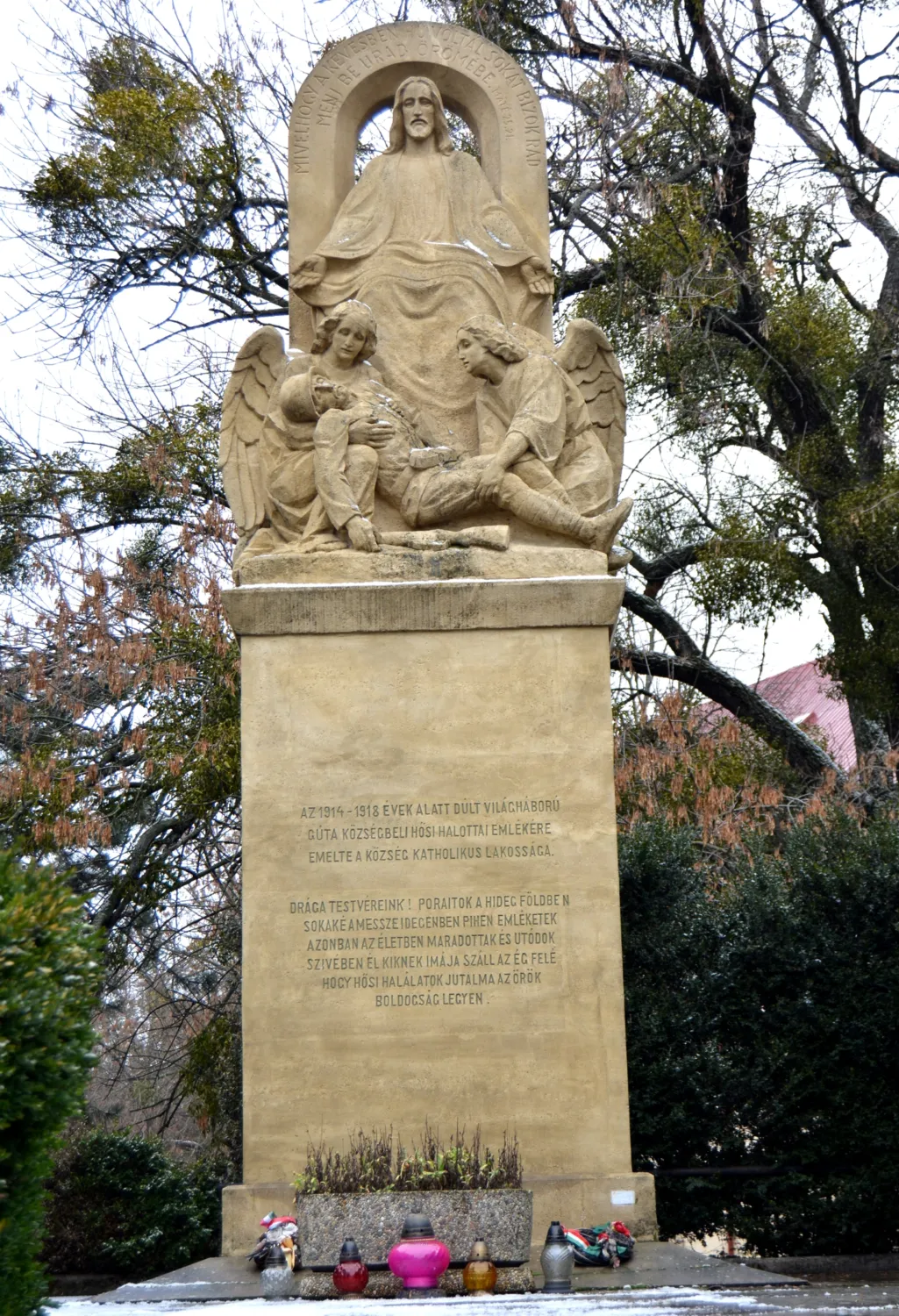
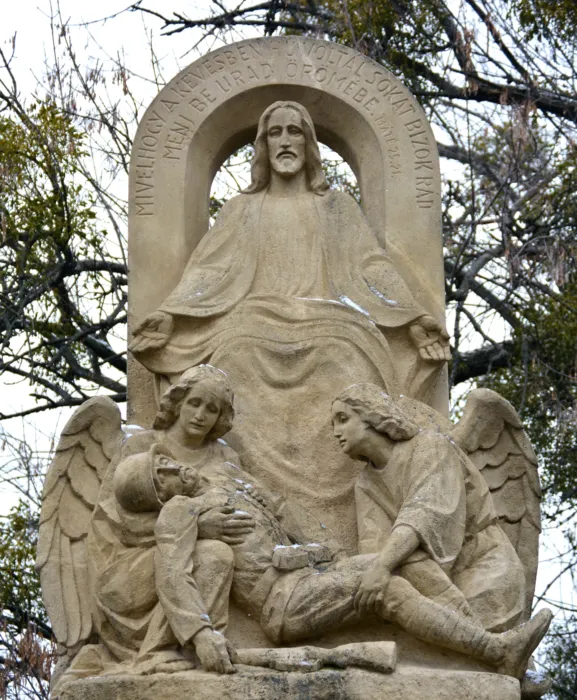
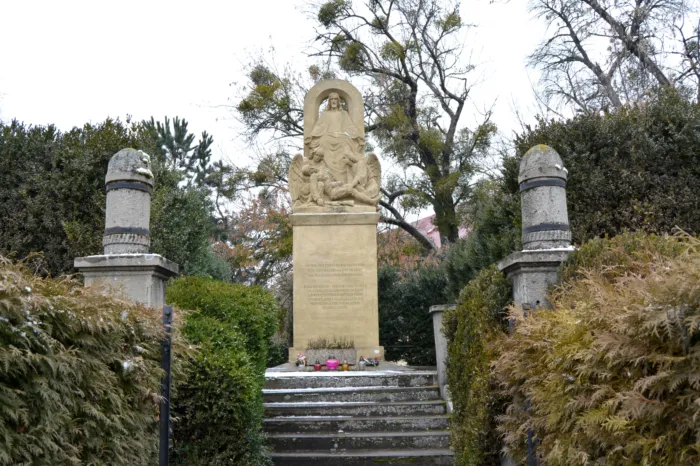
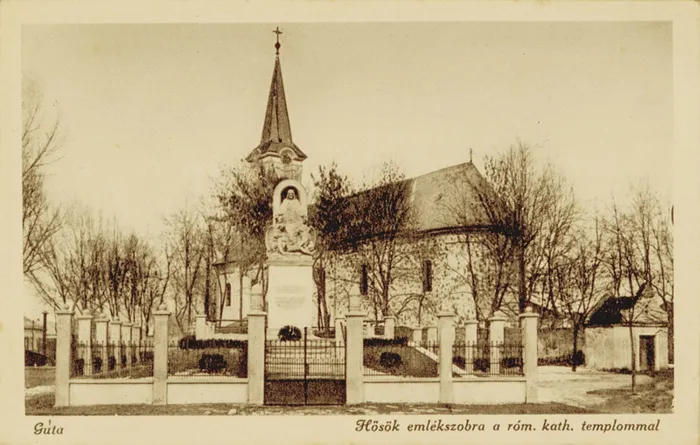
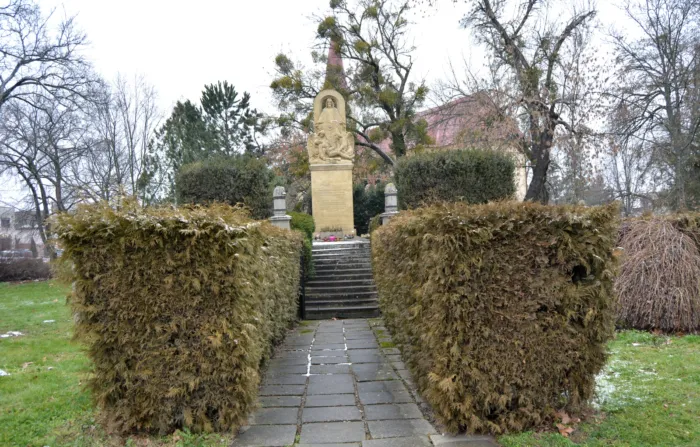
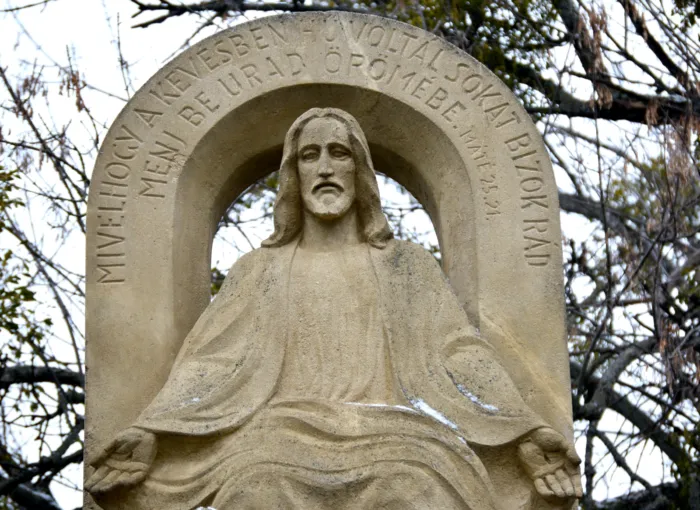
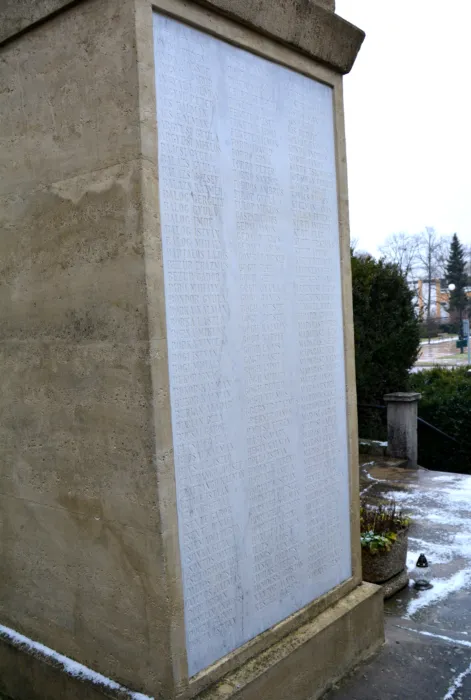
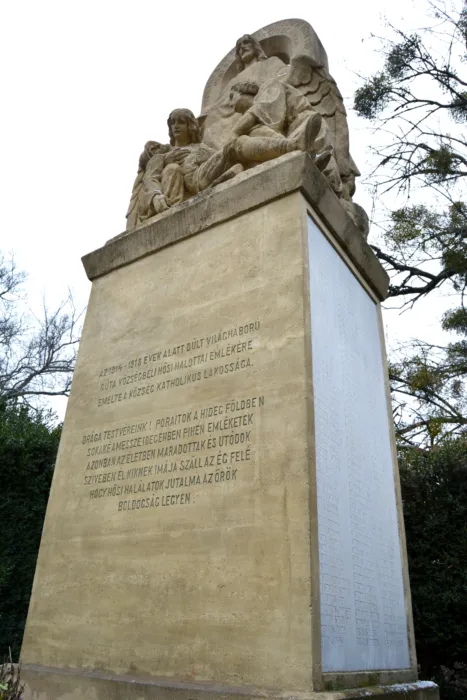
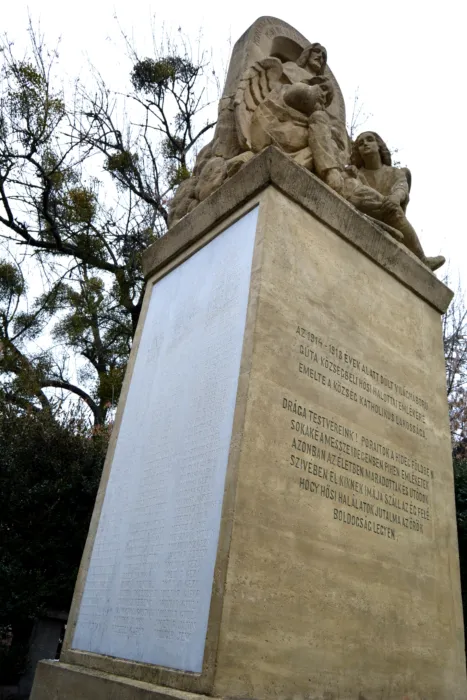
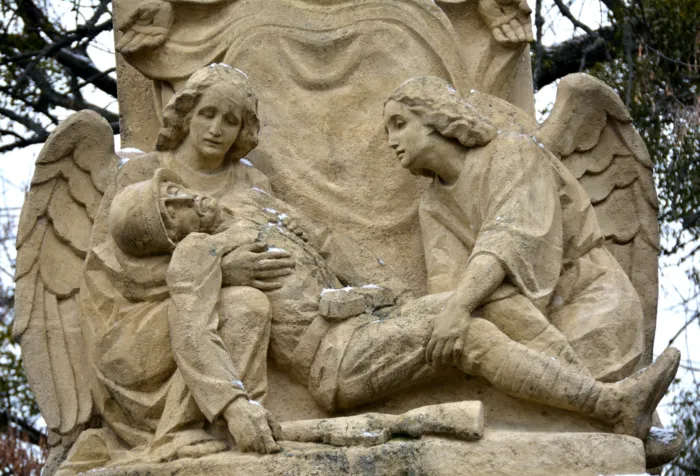
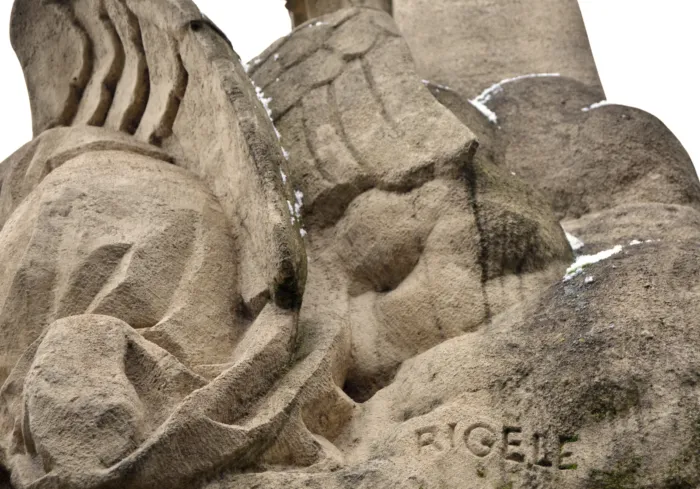
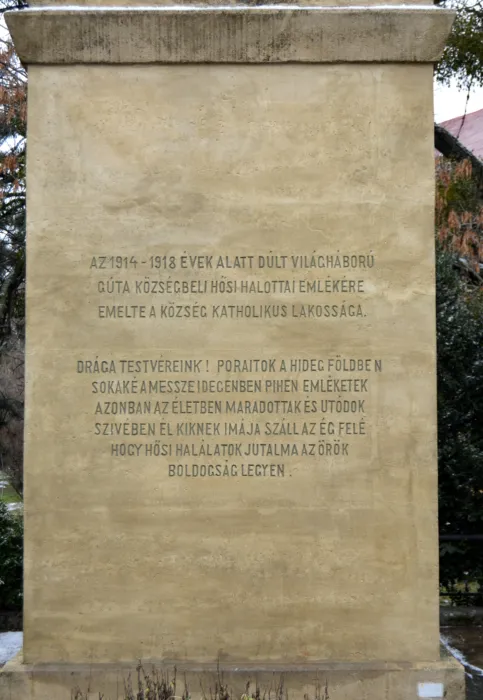
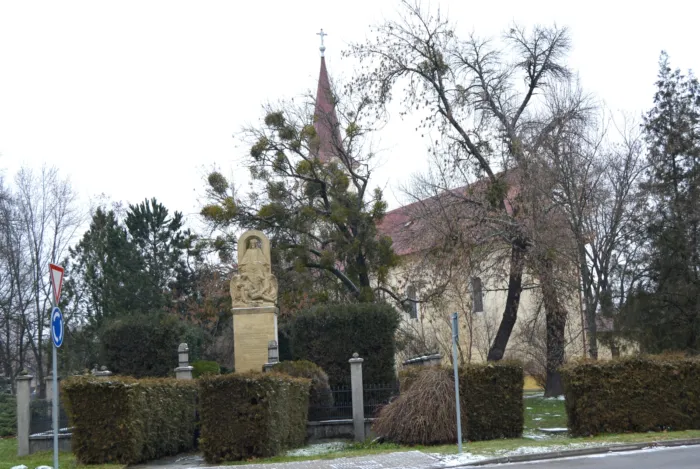
The monument, surrounded by a wrought iron fence, can be reached by a few steps. On both sides of the entrance, on top of the pillars serving as door frames, there are stylized concrete cannons, with flagpoles made of iron straps on them. The statue itself depicts Jesus with his hands spread out in protection, with two angels in front of him holding a dying soldier in their arms. Above Jesus' head, a quote from the Gospel of Matthew can be read in a semicircle: BECAUSE YOU HAVE BEEN FAITHFUL IN A LITTLE, I HAVE COMMITTED MUCH TO YOU, ENTER INTO THE JOY OF YOUR LORD. MATTHEW 25.21. On the front of the pedestal is an inscription containing information about the identity of the founders and the reason for the founding: ERECTED BY THE CATHOLIC POPULATION OF THE MUNICIPALITY IN MEMORY OF THE HEROIC DEAD IN THE WORLD WAR OF 1914–1918. MY DEAR BROTHERS! YOUR DUSTS ARE IN THE COLD EARTH, MANY OF THEM REST IN A DISTANT PLACE, BUT YOUR MEMORIES REMAIN IN LIFE AND LIVE IN THE HEARTS OF YOUR PROGENIES, WHOSE PRAYERS Ascend to the HEAVEN THAT THE REWARD OF YOUR HEROIC DEATH MAY BE ETERNAL HAPPINESS. The names of the fallen are listed on the long lists on both sides of the pedestal. According to the press reports, in the summer of 1938 in the large village of Gúta, a ceremony for the dedication of the monument erected in the center of the settlement was held with the participation of 10 thousand people. This large number also proves how significant a monument inauguration was at that time, almost equal to a symbolic national demonstration: The Hungarians of the village of Gúta organized a huge mass celebration on Peter and Paul Day on the occasion of the completion and ceremonial dedication of the heroic monument. According to an approximate estimate, ten thousand people showed up at the ceremony and offered sacrifices in memory of the fallen Hungarian heroes. Gúta, the largest village in Slovakia, had a magnificent monument erected in front of the Catholic church. The statue was a successful creation of the Bratislava sculptor Rigele. The large-scale program began at five in the morning and lasted until late in the evening. At dawn, messengers on horseback called the population to the ceremony. Silent masses were held twice in the morning, and at eight o'clock the fire brigade lined up at the statue. The ceremony of the statue dedication began at nine o'clock. The Hungarians of Gúta marched in endless lines to pay their respects to the heroes. War orphans, war widows, and the disabled marched in front of the procession, followed by those who had participated in the war. At the monument, Gergely Bognár, the Holy See Councilor and parish priest of Gúta, gave a touching church speech, then Károly Kocsis, a teacher at the Benedictine High School in Komárom, gave a heartfelt memorial speech, praising the fallen heroes. Gergely Bognár consecrated the statue and handed it over to the care of the village prefect. Then came the laying of a wreath on the statue. The final part of the ceremony was the primarchy of the new mass by Piarist teacher candidate Lajos Szénási, a native of the village, in the framework of a camp mass. In the afternoon, the youth marched to the heroes' memorial statue, and after the litany, the afternoon ceremony followed. The Roman Catholic Church Choir sang, followed by the dean of Ekel István Cserny and the dean of Csicsó József Király, who delivered a very beautiful and effective speech to the youth. After the ceremony in front of the statue, the Catholic youth marched to the courtyard of the Catholic school, where the program continued. The poem “The Anonymous” by Béla Boross was recited by the recitation choir of the Catholic girls’ school. In addition, two poems related to the war were also performed. In the evening, the closing ceremony took place in the gymnasium of the civil school in front of a very large audience. After the singing of the Church Choir, Dr. Géza Borka gave a very beautifully structured, energetic occasional speech, and then Imre Forró also recited an occasional poem by Géza Borka. The Gúta music association, the recitation choir of the civil school students, the Church Choir and children’s recitatives completed the rich program.