
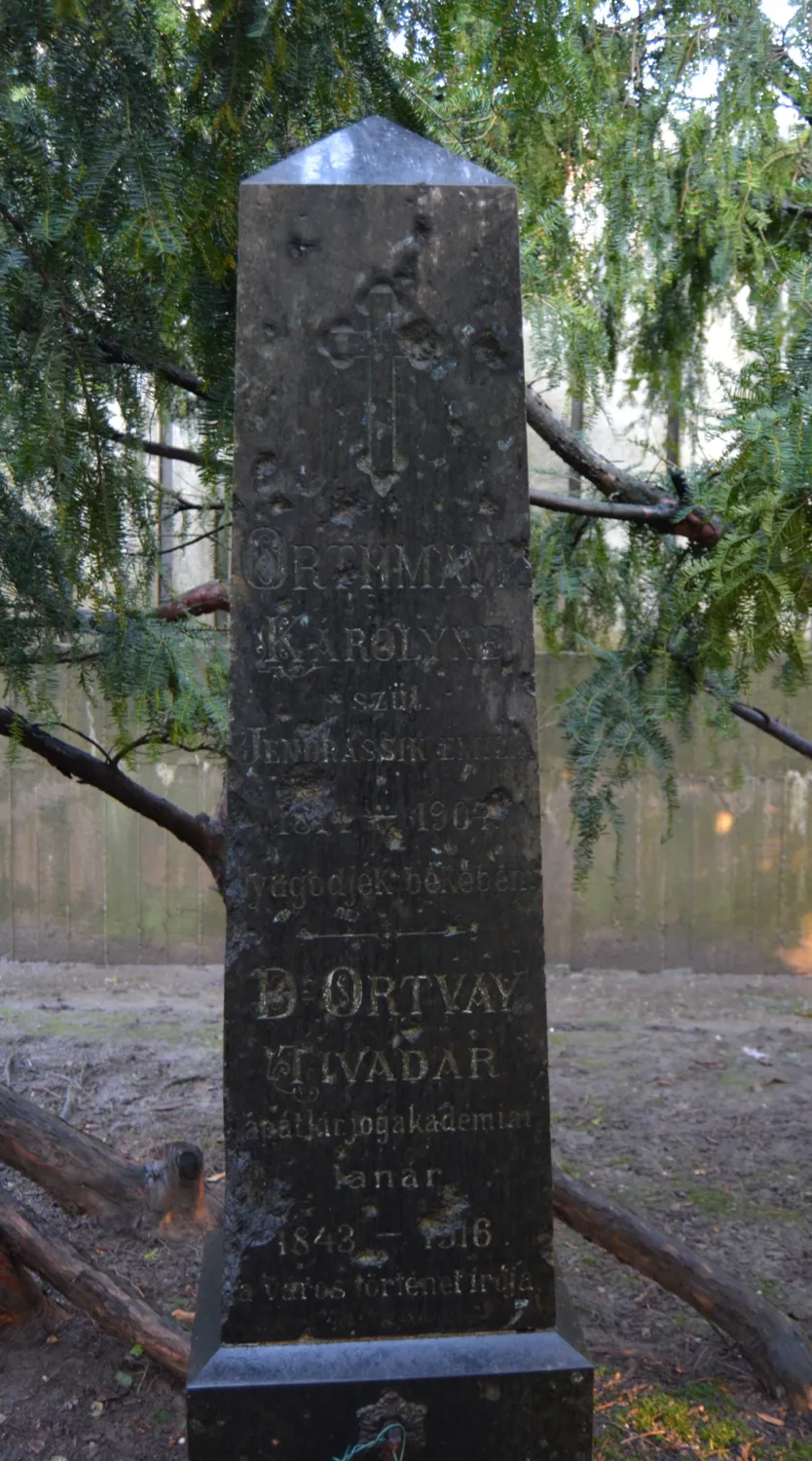
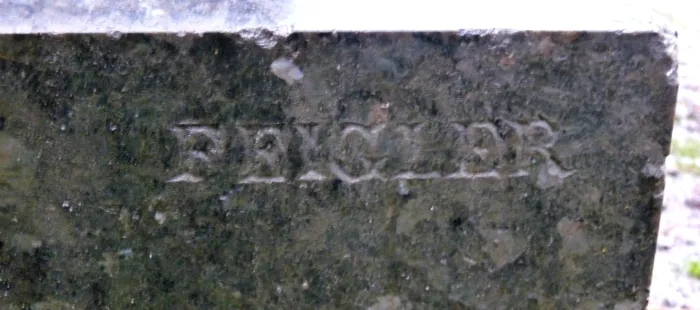
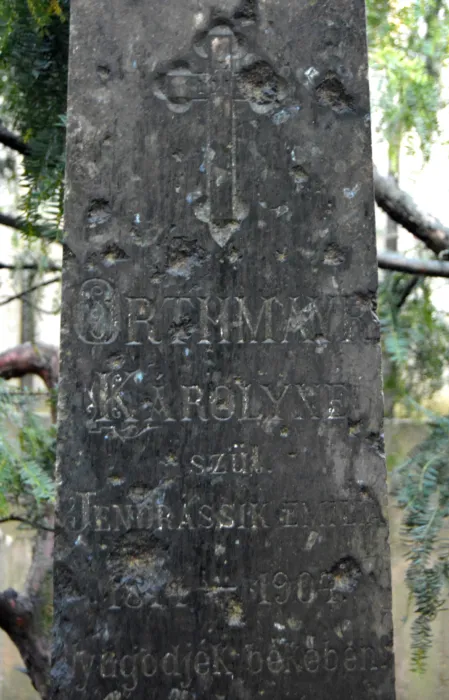
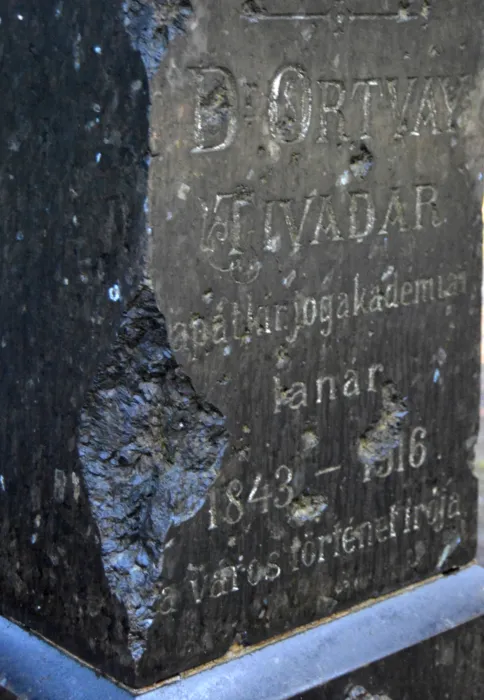
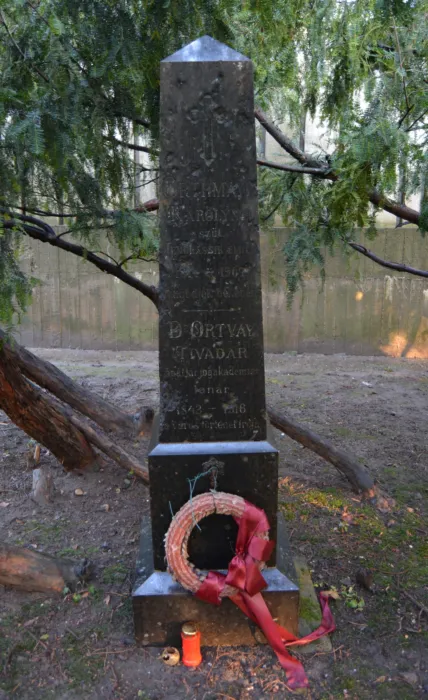
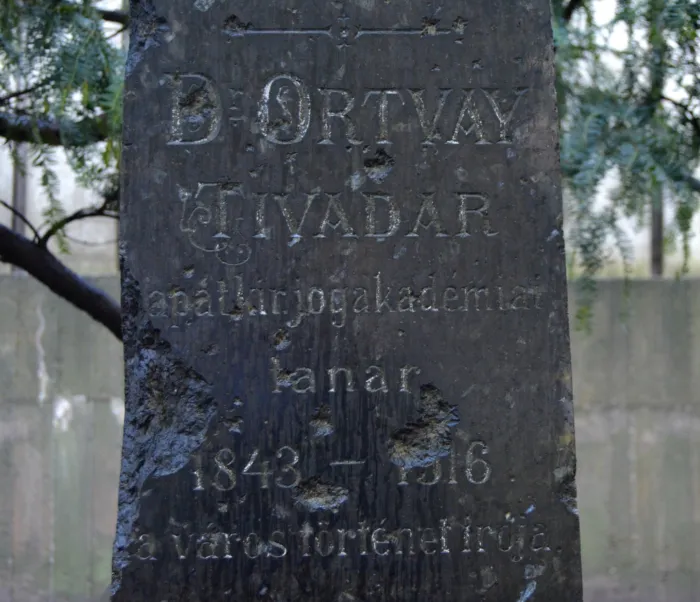
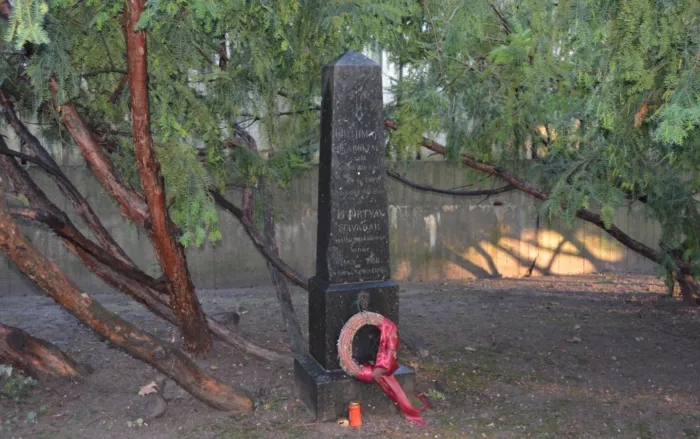
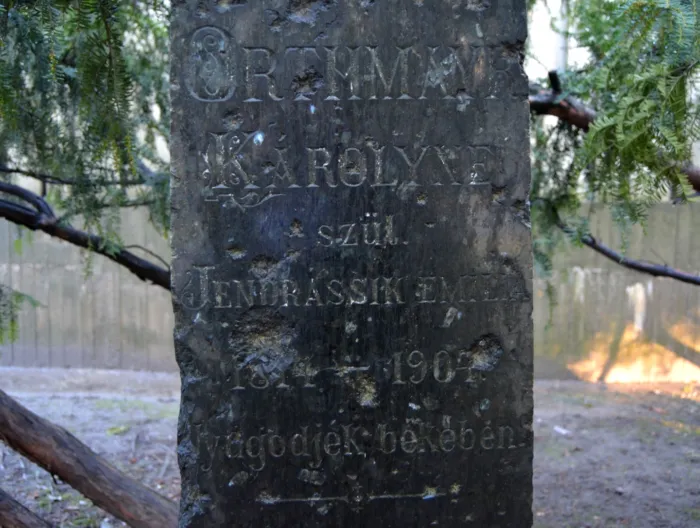
Dr. Tivadar Ortvay's tombstone
Cemeteries, tombstones, graves
Ortvay Tivadar (Orthmayr) was born in 1843 in Csiklovabánya, Krassó-Szörény County. His father Károly Orthmayr was the treasurer of copper and iron slag and the manager of the mines. The family of German origin was settled in the Temesvár Banat by Maria Theresa. After graduating from the Temesvár Piarist Gymnasium, he studied theology at the Temesvár Priest Training Institute. Until 1870, he served as an assistant pastor and religious teacher in several settlements of the Csanád diocese. ; In 1868, he published his first scientific study, an analysis of a manuscript by Mátyás Bél. In 1870-1872, he became a substitute teacher at the Lugosi Roman Catholic Gymnasium, and a journal was published with Jenő Szentkláray. In 1872, he received his doctorate in humanities. In 1873 he took the surname Ortvay. From 1873 to 1875 he was assistant keeper of the antiquities collection of the Hungarian National Museum in Budapest. In 1874 he obtained another doctorate in archaeology and art history. He was the editor of the Archeological Bulletin. Known colleagues: Imre Heszlmann, Flóris Rómer. ; In 1875 he was appointed professor of history at the Royal Academy in Bratislava. From 1894, with the conduct of his academic department, he became director of the teacher training institute of the Ursuline nuns in Bratislava. He was a history teacher to the daughters of Archduke Frederick and Archduchess Isabella. In addition to his ecclesiastical functions (papal court chamberlain, titular abbot of Csanád, etc.), he actively participated in the public life of Bratislava. He was vice-president of the Bratislava County Archaeological and Historical Association and the Bratislava Natural Science Association, and was a member of the Bratislava City Statistical Office, the Public Library Committee, the Toldy Circle, and the Public Education Society. He regularly published in the Bratislava press (Pozsonyvidéki Lapok, Pressburger Zeitung, Westungarischer Grenzbote, Nyugatmagyarországi Híradó). In 1902, he was a member of the city's municipal authority. In 1906, he moved to Budapest, where the Bratislava city government made him an honorary citizen. In Budapest, he became a member of the Hungarian Academy of Sciences. Here, he continued writing his great monograph on Bratislava: The History of the City of Bratislava (1892-1912), which deals with the history, natural history, and public education of the city and the county. ; When he died in 1916, he was laid to rest in the Kerepesi Street Cemetery in Budapest, and then, in accordance with his last will, he was buried in the St. Andrew's Cemetery in Bratislava next to his mother's grave. It may have been better if he had been buried there, rather than in his beloved city. The tombstone still exists (Sector IV/5), but it is not in its original place; his eternal rest lasted only until the widening of Zsigmond király Street (today Karadžičova ulica).