
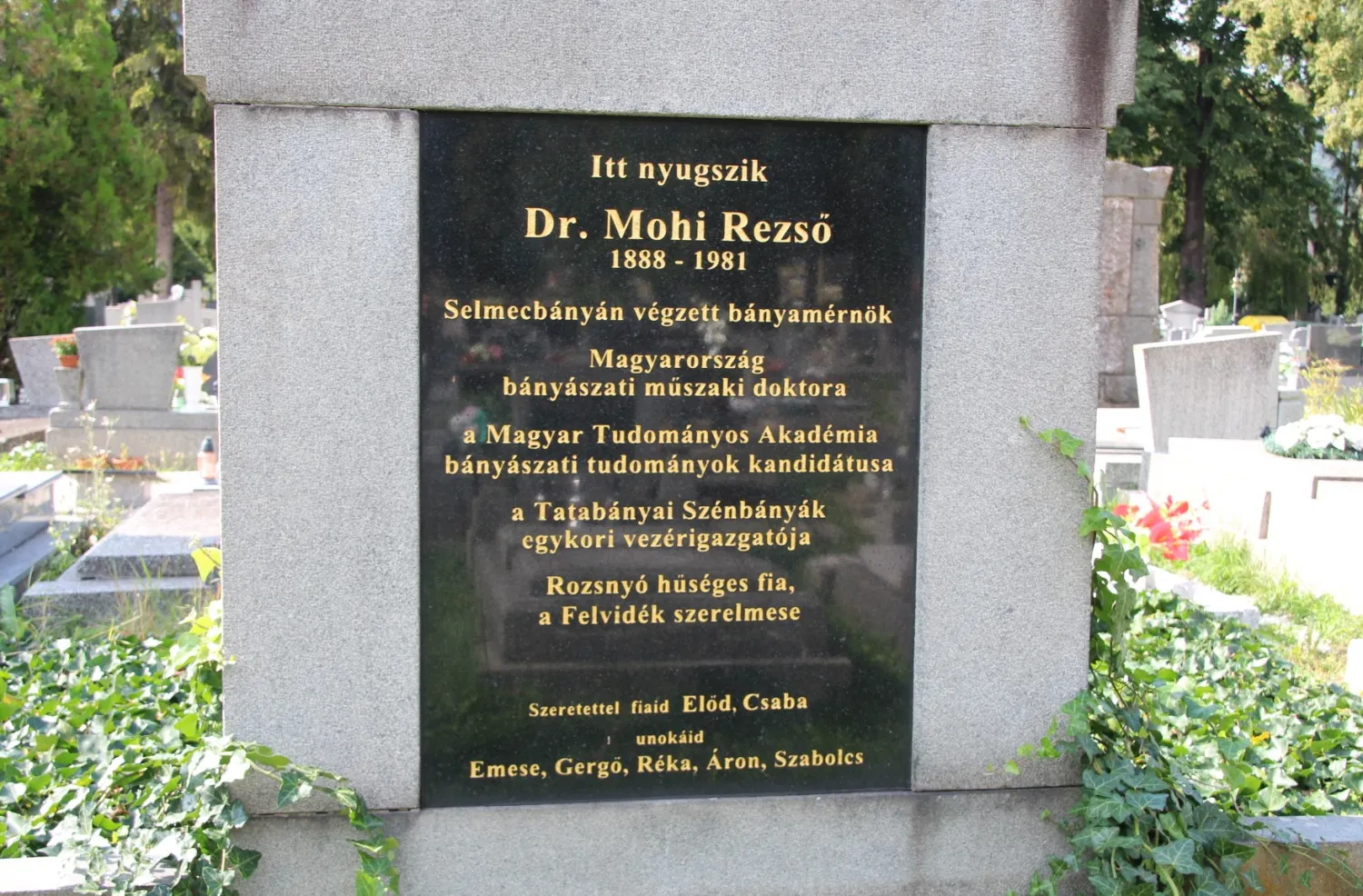
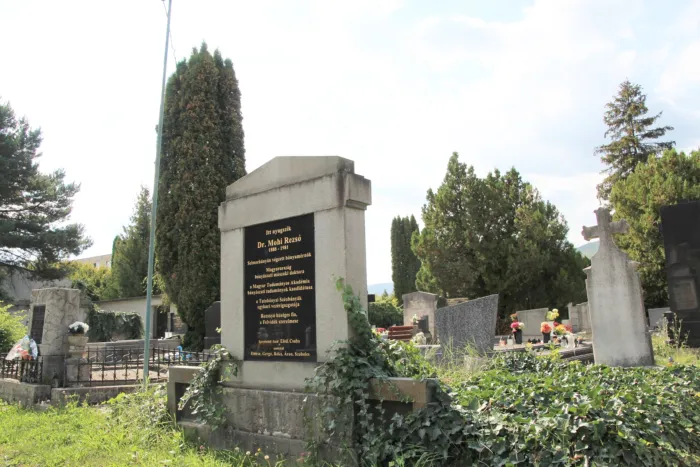
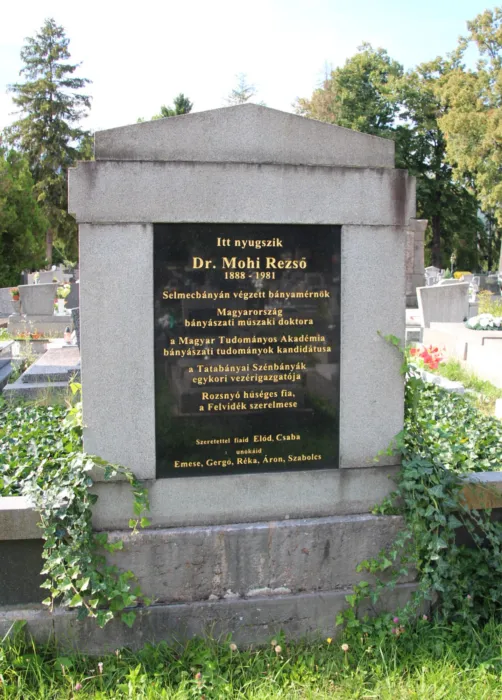
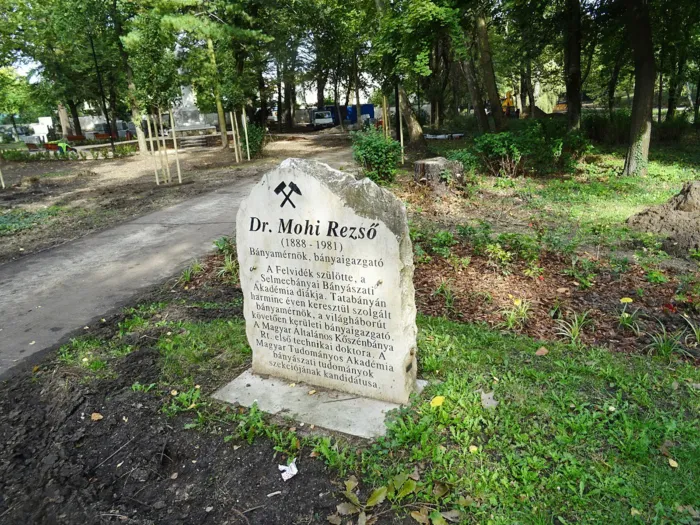
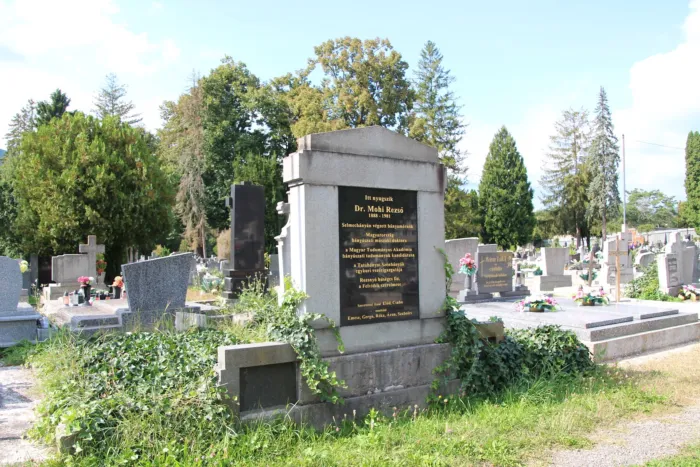
Resting place of mining engineer Dr. Rezső Mohi
Cemeteries, tombstones, grave sites
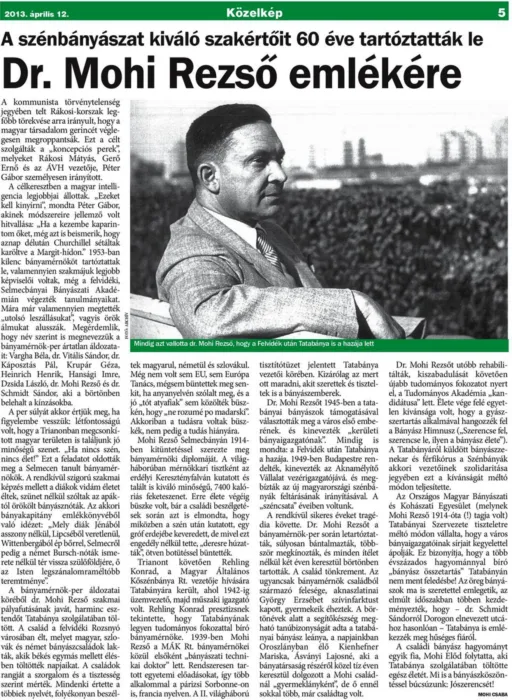
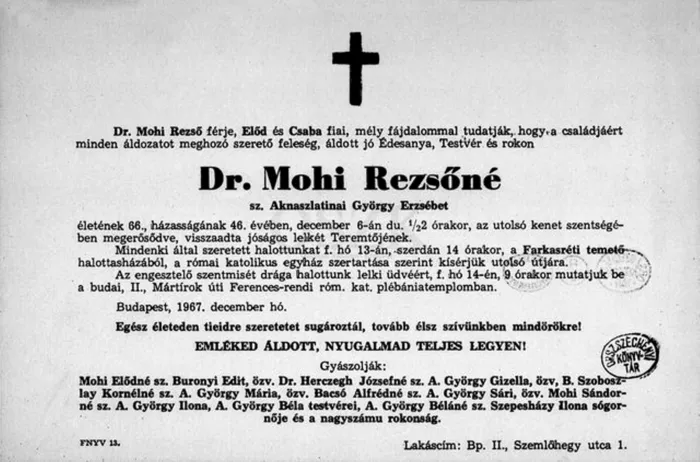
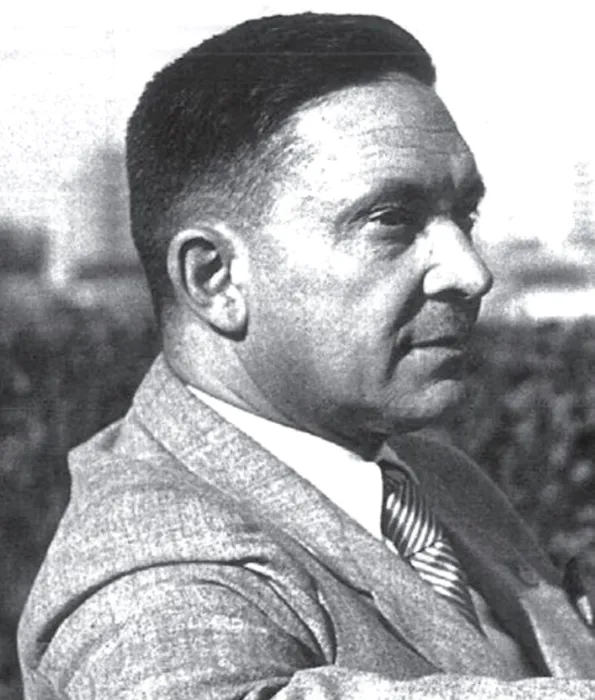
Mohi Rezső spent the better part of his professional career, thirty years, in the service of Tatabánya, where he was plant manager, then technical director, and later, from 1945. May. 27 - 1948. Apr. 30, after the nationalization of coal mining, he was the mining director of the Tatabánya district. He always said: after the Uplands, Tatabánya is his homeland. ; He has a patent to his name, for the development of a new blocking process for sludge accumulation, but his professional activities are characterized by 46 further publications. Among others, the research and connection to production of the abandoned coastal coal resources in the Bánhida area, the examination of the surface impact of mining operations, with particular attention to the development of the shaft pillar. In recognition of his scientific work, he received the title of Candidate of Technical Sciences in 1952, and in 1977 the Order of Merit in Gold. ; Mohi Rezső was born in the highlands, in Garamszentkereszt, on January 15, 1888. The family lived in the town of Rozsnyó, which was inhabited by Hungarian, Slovak and German mining families. It was here that he gained his first impressions of mining. He completed secondary school in Körmöcbánya, then obtained his diploma with honors at the Mining and Forestry College in Selmecbánya in 1914. ; During the World War, he started as an engineering officer in Keresztényfalva (Brassó) in Transylvania, where he dealt with coal exploration and found high-quality black coal. Later, he continued his career in Királd, Borsod County. ; After the royal years and Trianon, Konrád Rehling, the head of the Hungarian General Coal Mine Co. (1 Nov. 1916 – 20 Aug. 1941), was called to Tatabánya in 1919 at the invitation of the mine director. Konrád Rehling considered it prestigious for Tatabánya to have a mining engineer with a scientific degree. In 1939, Mohi Rezső became the first of the mining engineers of MÁK Rt. to receive a technical university doctorate. He regularly gave university lectures, including several times at the Sorbonne in Paris, in French. ; In 1945, with the support of the Tatabánya miners, he was appointed "mining director", a position he held for 3 years. ; In 1948, he was assigned to Budapest and appointed general manager of the Mine Deepening Company. Later, he became the general designer of the Mining Planning Institute, until his retirement in 1961. Here he was entrusted with the management of the exploration of new coal mines in Hungary. After the years of the “coal battle”, a difficult period began. Dr. Rezső Mohi was arrested during the mining engineer trial, severely abused, tortured several times, and kept in prison for two years without any conviction. The family was ruined. His wife, Erzsébet György from Aknaszlatina, also from a mining engineer family, suffered a heart attack, and their children starved. Dr. Rezső Mohi was later rehabilitated and, after his release, in 1952, he received another scientific degree and became a “candidate” of the Academy of Sciences. ; Mohi Rezső had been a member of the National Hungarian Mining and Metallurgical Association since 1914 and was even awarded the diamond certificate in 1978, but his heart stopped in Budapest on August 20, 1981 and he was buried in his homeland. Towards the end of his life, his only wish was that the Miners' Anthem be played during the funeral service. The miners' band and male choir sent from Tatabánya fulfilled this wish in a dignified manner in the spirit of solidarity with the leaders of the Coal Mines at the time.