
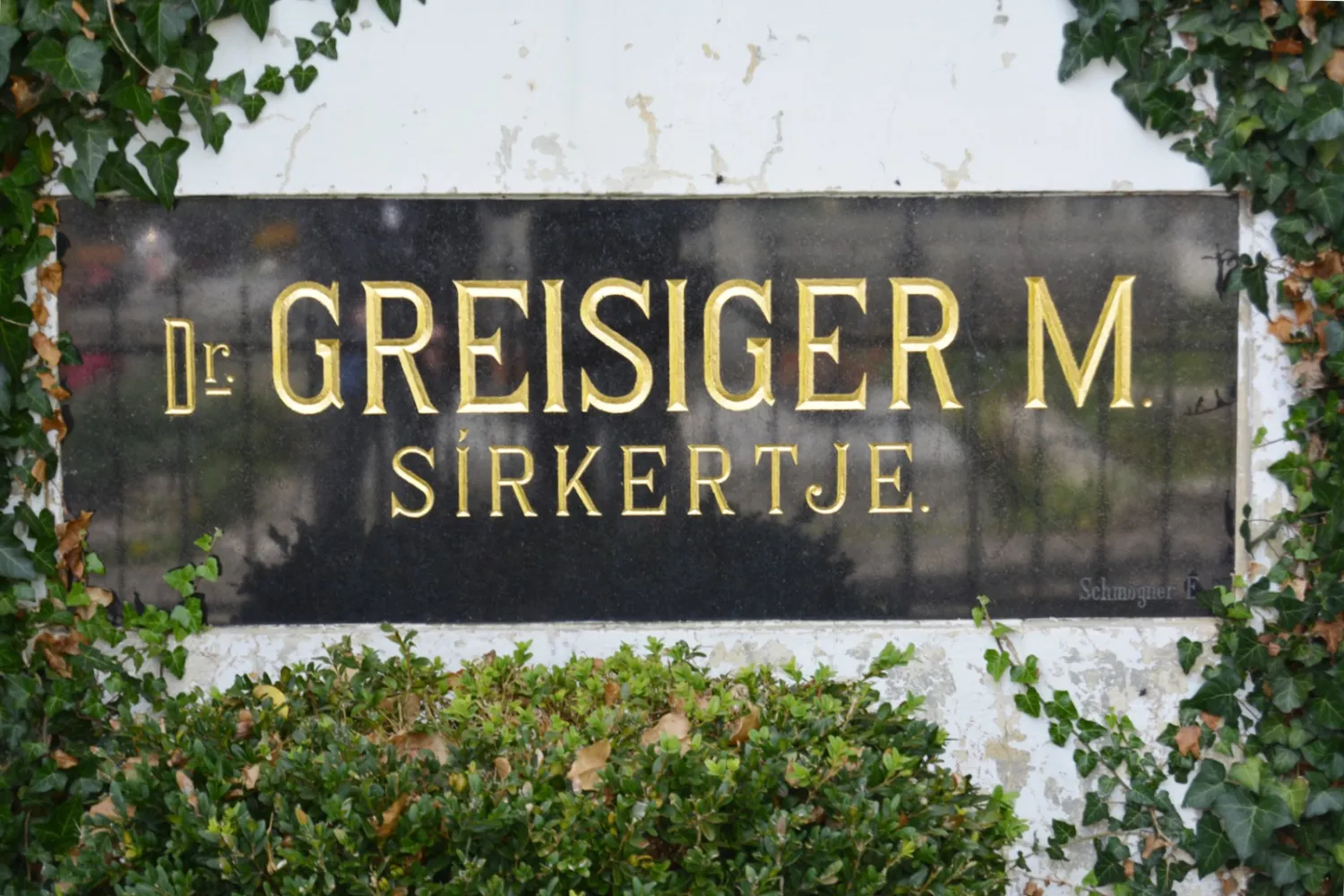
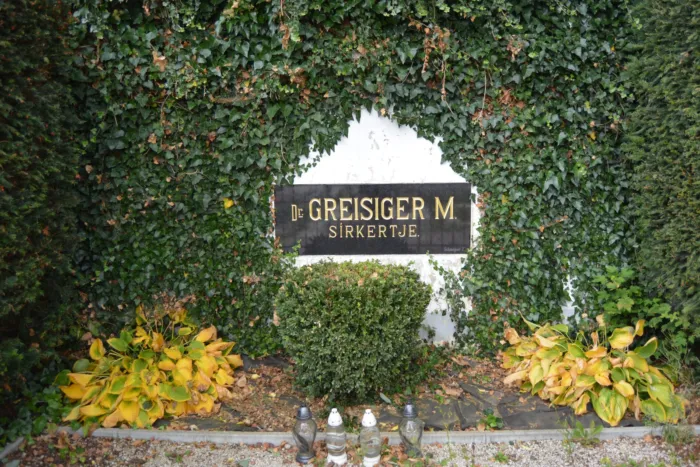
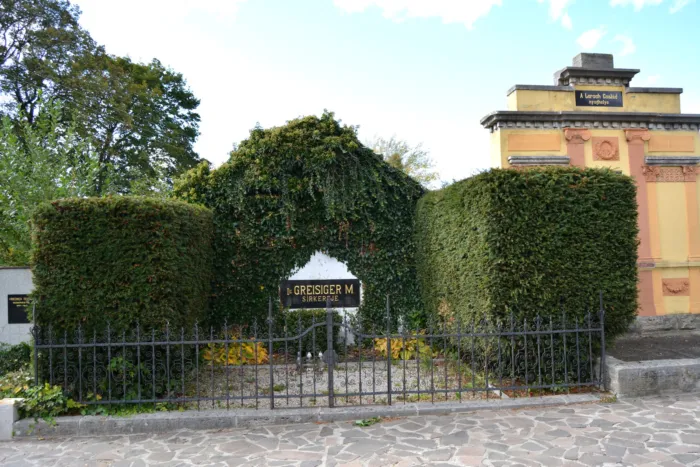
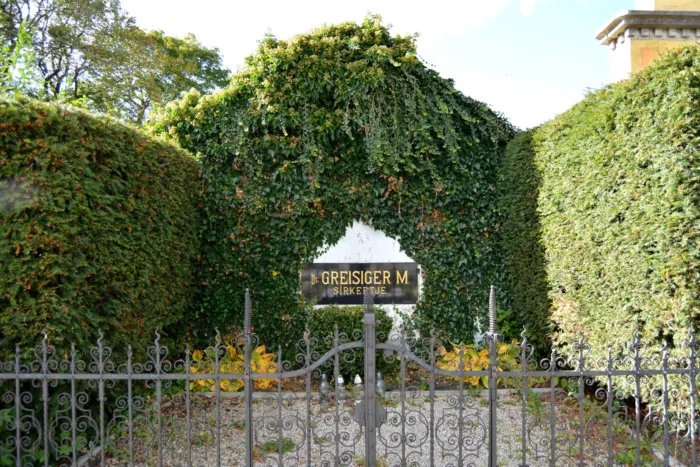
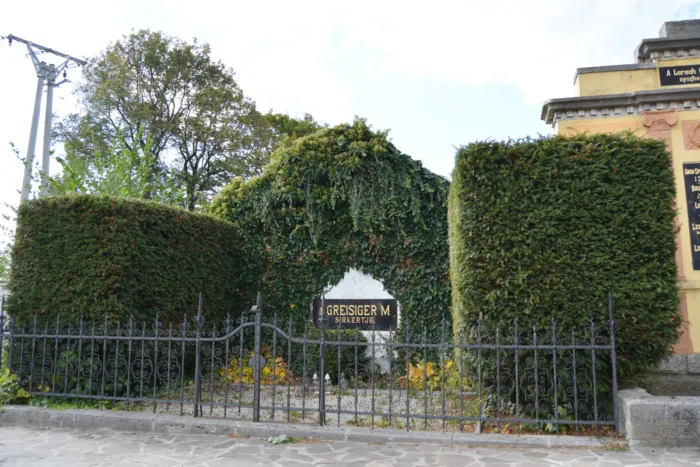
The grave of Dr. Mihály Greisiger
Cemeteries, tombstones, graves
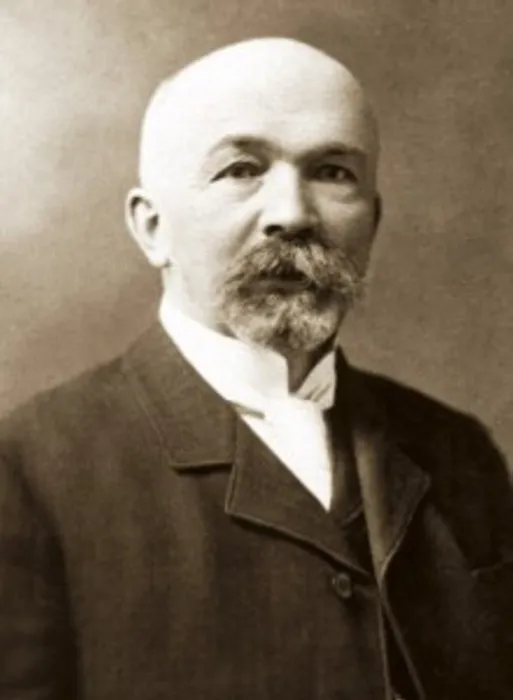
Dr. Mihály Greisiger (December 25, 1851, Tátraalja, Szepes m. - September 10, 1912, Szepesbéla)) was a medical professional and polymath with a reputation for being a humanitarian - who dedicated his life to several disciplines in addition to his profession. He was an enthusiastic researcher of the ancient history of Szepes, who wrote himself into the hearts of the people of Szepesbéla. He was born on December 25, 1851, in Tátraalja, the second child of a farming family with eleven children. His father was Mihály Greisiger Sr., a farmer, and his mother was Mária Faix. On March 1, 1881, in the village of Rókus, he married Helén, the daughter of the highly esteemed Lersch family. The couple had four daughters - Irma Julianna, Anna Erzsébet, Dorottya Ilona and Edit Marianna Elektra. ; He continued his primary schooling in his native village. He completed his secondary school education at the Keszmárk Gymnasium, where he graduated on June 26, 1872. He studied medicine at the medical faculty of the Josephinum - Vienna Medical University, where he was ordained a doctor on December 8, 1877. He settled in Szepesbéla in 1878 as a practicing physician, where he worked as the duty physician of the Szepesbéla tobacco factory from 1898. His health district extended from the city of Poprad to the village of Gnézda, through Maguran, Záro and Javorina to the area of the Szepes villages in present-day Poland. In 1883 he was elected city medical officer. On October 12, 1885, he bought a house at Téli Street 23. ; Dr. Mihály Greisiger joined the Szepes Medical and Pharmaceutical Association in 1880, at whose meetings he gave several lectures. He was an active participant in public life in Szepesbéla, and a member of the council since January 27, 1883. As a member of the Poprad Valley Railway Board, he was an enthusiastic supporter of the construction of the Szepesbéla - Podolin line. ; His association activities also deserve mention. In 1880, he became a member of the Rifleman's Association and became involved in the activities of the Economic Casino. He was the chairman of the Supervisory Board of the Szepesbéla Water Drainage and Sewerage Company. In addition to his profession as a city medical officer, he also conducted archaeological research. As an ethnographer, he studied the ethnographic characteristics, clothing, diversity of language, traditions and lifestyle of the Szepes region. His interest was directed towards natural sciences. The naturalist who studied the flora and fauna of the Spiš region, in addition to observation, also dealt with collecting, cataloguing and systematizing. His research was fundamental in many respects. His series of natural science articles, which were published in the yearbooks of the Hungarian Carpathian Association, are also noteworthy. ; He was a member of several natural science societies and associations, including the Hungarian Natural History Society, the Vienna Ornithological Institute and, from 1897, he was a corresponding member of the Hungarian Ornithological Institute. He was an enthusiastic member of the Hungarian Carpathian Association, whose diverse activities also include the exploration of natural treasures. Dr. Mihály Greisiger's versatility is demonstrated by his work in the interests of natural science. His rich archaeological, ethnographic and botanical collections represent great museum value, some of which can still be found in the museums of Keszthely and Poprad. His interest in fish is evidenced by his valuable writings on fish and the fishing of the Spiš region. In 1889, he was a founding member of the Spiš Fishing Association. ; His research in the field of archaeology was particularly successful. He placed emphasis on the precise description of the excavated finds and the marking of objects with labels. The finds of archaeological research come mainly from the wider areas of Spiš region. The younger Bronze Age finds from Spiš region from the excavation of 1891 deserve mention. His collection also includes finds from the ancient and late Roman periods. Ceramics from the Upper Spiš region, a decorated bowl and a Bronze Age buckle from the Nagylomnice region. The Old Hungarian heart-shaped forged bronze belt found in Spiš region and the 12th and 13th century ceramics of the Busóc people are unique. Among his finds, iron-made spears, spurs, knives and arrowheads are worth mentioning. Dr. Greisiger's archaeological collection forms the basis of the prehistoric period of the Tatra plains. ; ; His published writings on his archaeological research: ; Késmark in der Steinzeit, (Karpathen Post, 1890, issues 25 and 26), ; Zur Vorgeschichte unserer Tátragegend, (MKE Yearbook 1897 and 1901), ; Die Gross-Lomnitzer Burg, (MKE Yearbook 1896), ; About the pile-built buildings of the Hradek of Gánóc, Über die Pfahlbauten des Gánóczer Hradek, (Szepesi Medical and Pharmacist Association Yearbook 1906) ; ; Study on the ethnography of the Spiš region: ; Cultural History from the Tátra Region, (MKE Yearbook 1897 and 1901) ; ; His activities as a naturalist were also extensive: ; On the History of Deer in the Tatra Mountains and their Surroundings, (MKE Yearbook 1896) about the deer in the Tatra Mountains, ; Stone Hens, (MKE Yearbook 1883) ; The Birds of Béla and its Surroundings, (MKE Yearbook 1884) about birds, ; The Pine Forests of the High Tatras, (Tourist's Magazine 1889) ; ; Dr. Mihály Greisiger died on September 10, 1912 in Szépesbéla. His daughters and successors followed in the footsteps of their father and grandfather and also dedicated their lives to natural science. The most famous of them are high school teacher Irma Julianna Győrffy and her husband Dr. István Győrffy, university professor. Their daughter, Edit, donated their family house in Szepesbéla to the state in 1967, on the wall of which a memorial plaque was unveiled in 1971. The Greisiger Mihály Museum opened in the building on October 29, 1994. ; His well-kept grave can be found in the Evangelical Cemetery in Szepesbéla.