
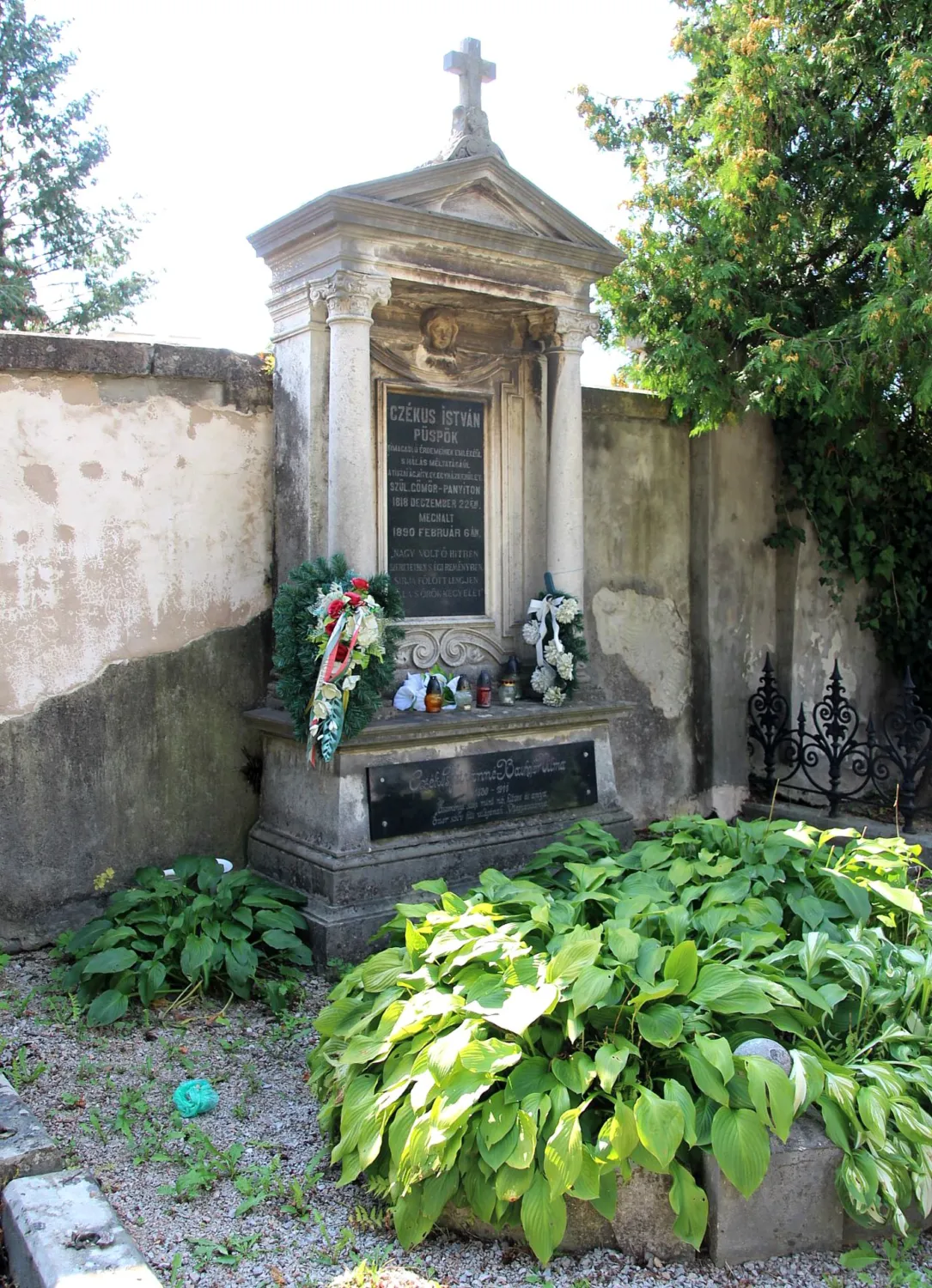
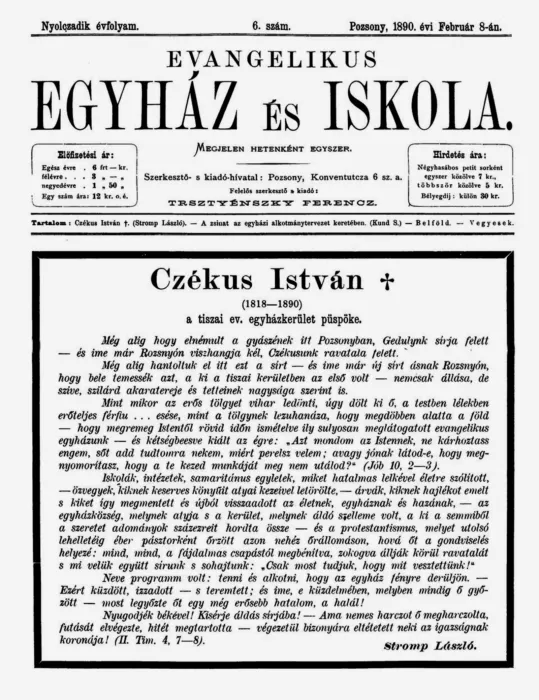
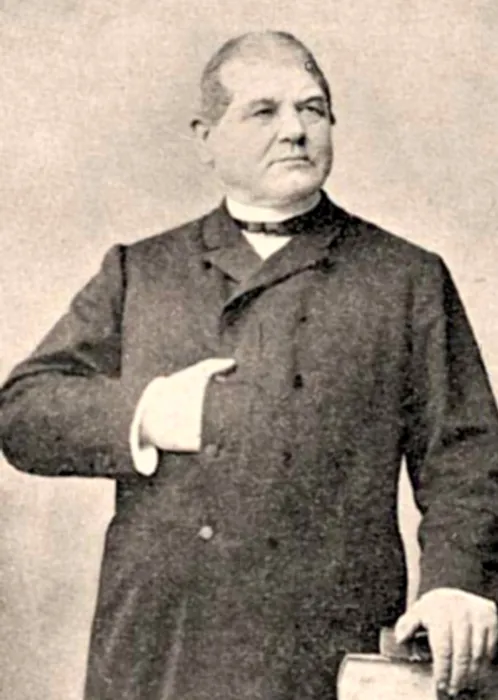
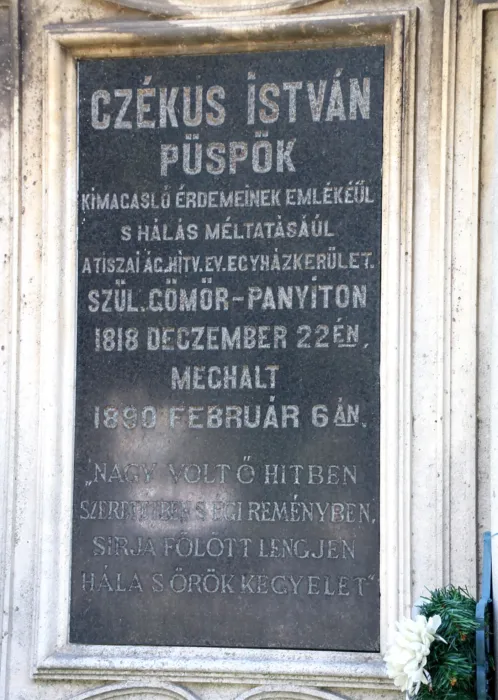
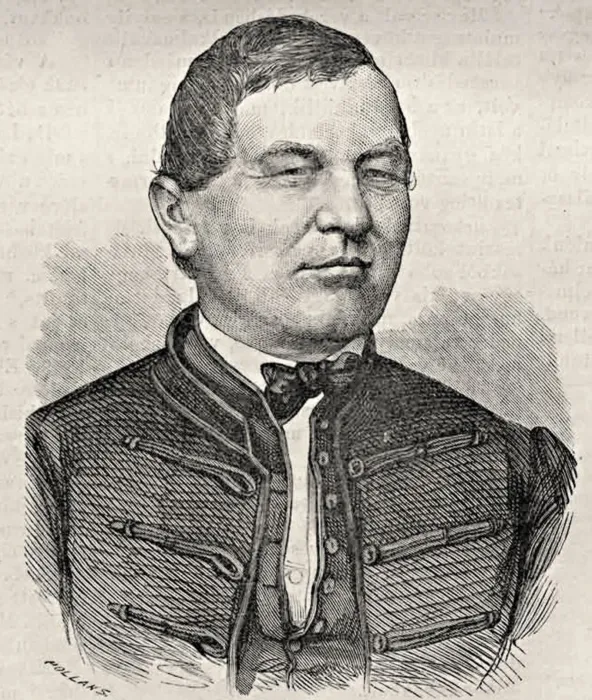
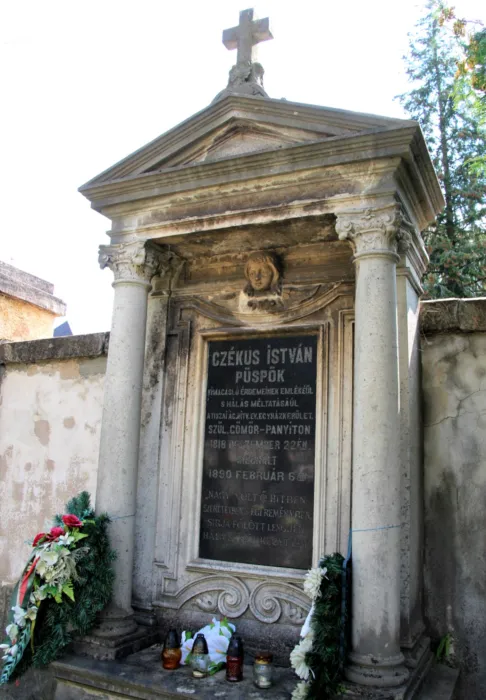
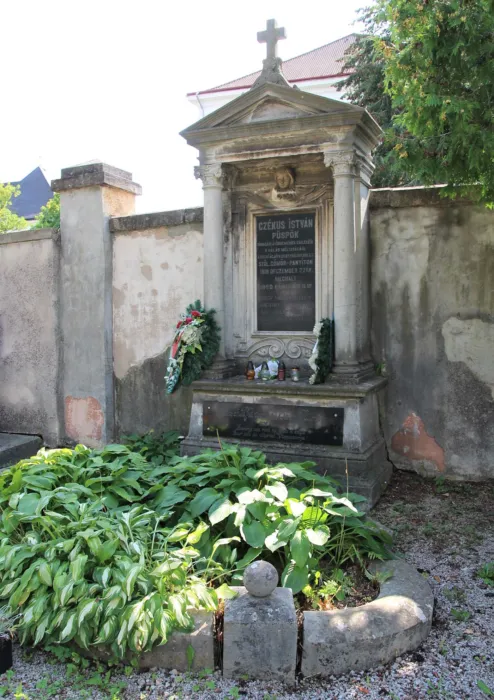
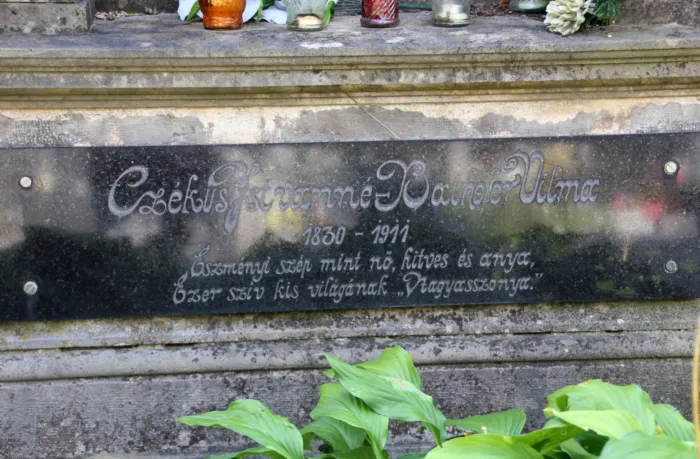
The grave of the Lutheran bishop István Czékus
Cemeteries, tombstones, graves
István Czékus was born on December 22, 1818 in Gömörpanyit, to noble but poor parents (his father was Márton Czékus, his mother was Erzsébet Bacsó) who tried to arouse and nourish the desire to learn in their son. To his father's indescribable joy, there was no shortage of this, and the diligent boy excelled even in the village school in Panyit. In addition, he earned his degree by serving as a choir singer. He also enrolled as a choir singer in the Rozsnyó gymnasium and, without receiving any assistance from his parents other than the provision of a white robe, he completed his gymnasium studies. He completed the liberal arts course with excellent success in Levoča. From there he went to Bratislava to study theology in order to prepare for a career as a pastor. His diligence, talent, and seriousness earned him the trust of his schoolmates and teachers alike, and, as was customary in Protestant colleges, he was entrusted with private tutoring. He had enough income from this to support himself. He also won scholarships. He was elected secretary of the self-study circle and school senior. ; He took the candidate's exam in Bratislava in 1843. After that, he took a teaching position in Pest for a few years, furthering his education through continuous studies. From there he went to the University of Tübingen, where he spent a year. After his return, he was employed as a chaplain by the already famous church orator Székács in Pest. In this way, he mastered the science of priestly practice and pastoral care. ; He was soon elected the first pastor of the vacant church in Vác. Vácott was a pastor and teacher in one person for two and a half years, and accompanied by the blessings of his followers, he moved to Kecskemét, where he spent five years. He is the actual founder of the church of the Kecskemét church. He taught voluntarily four hours a week in the elementary school (in addition, he taught German as an extraordinary teacher in the Helvetic high school). He was the initiator of a new era in the life of his church and school. ; He moved from Kecskemét to Sajógömör in 1855, to Dobsina in 1858, and to Rozsnyó in 1859. The most populous and most prosperous churches of his native county competed for him. ; With his work, eloquence, love and zeal, he breathed life into his followers everywhere. ; He founded granaries in Sajógömör and the affiliated Lökösház branch church (so that the people could get cheap or free seeds and food in times of famine), which generated a good income for the church and school. In addition to his duties as a pastor, he also served as a teacher in Dobsinán. In Rozsnyón, he made the economic indicators of the church flourish: he capitalized on the sacrificial zeal of the faithful to such an extent that after a few years of operation, the church had a granary containing three hundred bushels of grain and nearly 5,000 HUF in capital. ; in 1860, he established a church and women's guardianship institution to help poor churches, the latter being the first in our country; in 1861, he had the church in Rozsnyón renovated by collecting enthusiastic donations; in 1863, he raised the idea of finally building a high school. With his tireless zeal, he gave such momentum to this activity that more than 6,000 HUF was collected, so his plan could be realized. ; In 1866, he launched two charitable burial societies in Rozsnyó - without any difference in denomination. ; In 1868, he worked on the establishment of the city kindergarten, going from house to house for help, and thus the kindergarten was born. ; Czékus's zealous and enthusiastic work was recognized not only in the congregations in which he served, but also in other churches. They expressed their trust by granting him greater and greater authority within the church government. As a young pastor in Pest County, he held the position of diocesan sub-secretary. In Gömör, he was first elected as a district school inspector, in 1860 as a sub-deacon of Gömör, and at the same time as the chief notary of the Tisza diocese. ; In 1863, he proposed the establishment of a Tisza-district pastor's teacher and teacher's widow, and orphan-guardian institution. The diocese adopted its statutes based on his proposal, and after these statutes came into force on January 1, 1866, during the five years of his treasury, through shares, paid fees and zealous donations, it increased to nearly sixty thousand HUF. ; During his term as archdeacon, he also established a separate pastor's granary in the Gömör diocese in Dobsina. He has the greatest merit in calming the Pátensian movements that were most incited in the diocese of Gömör, in calming the agitated spirits, together with the supervisors Miklós Szentiványi and Pál Szontágh. ; The philias do not escape his attention either, he builds new schools in them, repairs and expands old ones, and takes care of the remuneration of teachers. ; In the field of church literature, as an active contributor to the "Protestáns égyházi s iskolaí lapok", the author of a religious education manual that was distributed throughout the Lutheran church (in Hungarian, German and Tót languages), and he also gained general recognition through his distinguished church speeches published in collections. The Tisza church district elected him superintendent by a large majority. ; As a bishop, he embraced the cause of the Nyíregyháza teacher training institute. For the Prešov religious institute, which he developed into a 4-year-old institution with 4 regular teachers instead of 2, he raised a fund of over 30,000 forints from nothing. ; He married in 1850, his wife was Bauhofer Vilma. (Bauhofer Vilma ((originally baptized as Luise Wilhelmine in 1830 in Sopron)) often visited the court of Archduchess Maria Dorottya. In 1850, she was married to István Czékus in Buda Castle. Vilma Bauhofer, who died in 1911.) The couple had 9 children, and Bishop Zoltán Túróczy is their grandson. ; The archives of the Buda Castle congregation preserve a file called Czékus-hagiaték, which contains several valuable photographs, birth certificates, and obituaries regarding the family of Vilma Bauhofer and István Czékus. ; Works: ; The Orphanage of Benares. Translated from German. Rozsnyó, 1866. ; Pictures from the Pagan World. Translated from German. Pest, 1869. ; The Persecution of Christians on the Island of Madagascar. Translated after Zaremba. U. ott, 1869. ; The Working of God on the Islands of the South Sea. Translated from German. U. ott, 1869. ; Confirmation Teaching for the Children of the Evangelical Church. Rozsnyó, 1870. (Two editions.) ; Holy Sermon on the Occasion of the Consecration of the Flag of the 51st Battalion of the Hungarian Army on September 10, 1876 in the Town of Jolsva. U. ott, 1877. ; The Story of the Conversion of an African Robber Chief. Translated from German. Bpest, 1878. ; Holy Sermon, which was delivered by the II. In memory of the centenary of the decree of tolerance issued by Emperor Joseph on October 25, 1781, held in the church of Rozsnyó on October 30, 1881. Rozsnyó, 1881. ; In addition to these, several occasional and other speeches were published, the guideline written for confirmation education went through several editions in Hungarian and German, and was also translated into Slovak. ; He wrote articles for the Protestant People's Library (1857. Mária Dorottya's main biography), Lelki Kincstár (1860. The Gusztáv Adolf association), Külöféle Papi Dolgozatok (1860. II. III.) Prot. Calendar (1861. Sámuel Szontagh's biography), Házi Kincstár (1862. Lajos Szontagh's biography and Report and at the same time a speech to prot. women). From 1858 he wrote numerous articles for the Protestant Church and School Newspaper, of which he was an excellent contributor.