
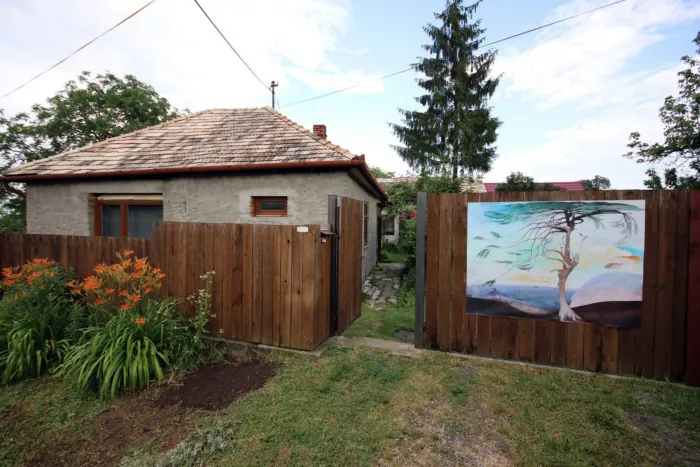
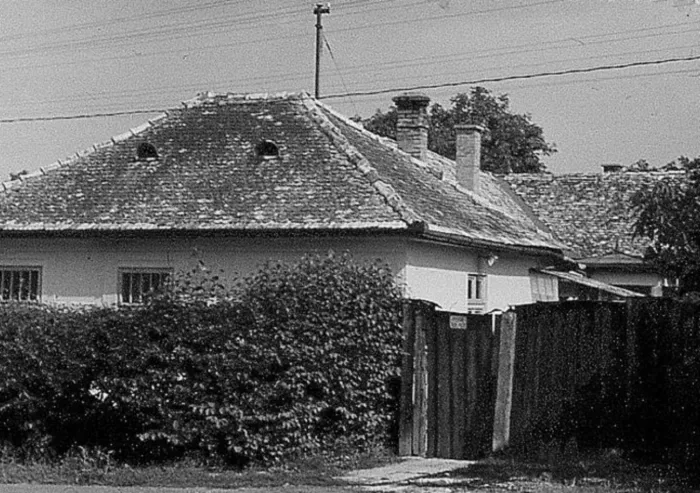
Memorial plaque of Tivadar Kosztka Csontváry in Gács
Statue, monument, memorial plaque
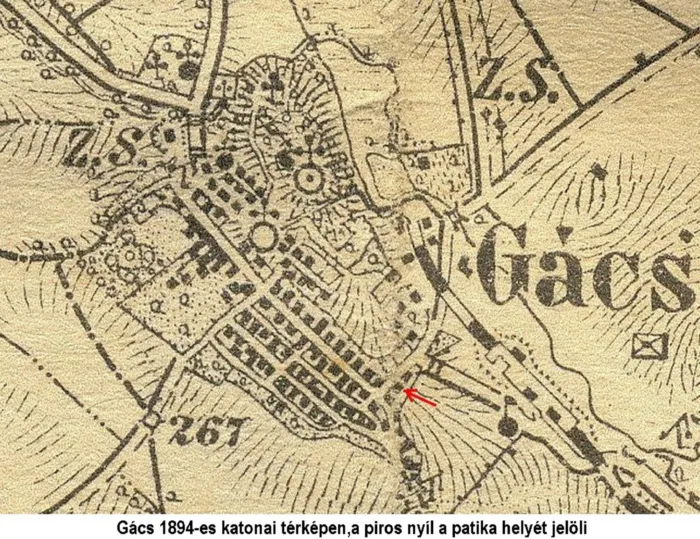
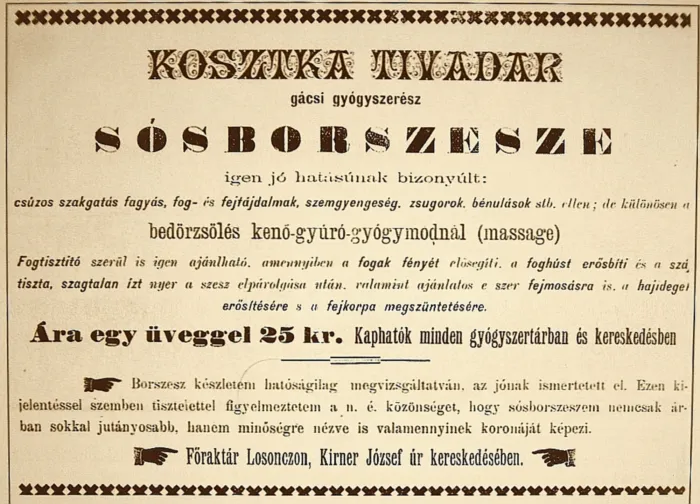
“Gács has all the qualities to be a world-famous place … tourism is what could bring in a lot of money, as there are so many things to see here: an ancient castle, a park, a fish pond, a pheasant game garden, a cloth factory, excellent drinking water, good air, a mild climate…” – wrote, among other things, Kosztka Tivadar, a pharmacist from Gács, in the Losoncz és Vidéke newspaper in 1885. ; ; The painter, who later became famous under the name Csontváry, was born on July 5, 1853 in Kisszeben (Sabinov) in Sáros County, and died 100 years ago on June 20, 1919 in Budapest. After his university studies, he became a pharmacist’s apprentice in Igló. Here he received the mystical calling-experience according to which he would become “the world’s greatest day trip painter, greater than Raphael.” ; ; In October 1884, he began his independent pharmaceutical activity in Gács, near Losonc. At that time, he did not attract attention with his paintings, but with his public activities and articles published in the regional press, even taking on conflicts with the Count Forgách family or the local priest, Zsigmond Miessl. In addition to his articles, he also published advertisements and offered his salt wine spirit, which “proved to have a very good effect”, to the general public. ; ; He already painted during his years in Gács, as is well evidenced by the oil painting in which he immortalized the Forgách castle, the park and the fish pond below, among the aforementioned attractions. It is likely that he also painted the picture depicting a heron that can be seen in the permanent exhibition of the Nógrád Museum and Gallery in Losonc. ; ; In 1894, Tivadar Kosztka rented out the pharmacy in Gács and set out to follow the path foretold in his vision. After studying in Munich, Karlsruhe, and Paris, he lived only for painting, searching for and finding the “sunlight colors.” His first exhibition in Budapest in 1905 was followed two years later by an exhibition in Paris, and then two more Budapest exhibitions. After his death, most of his works were saved for posterity by Gedeon Gerlóczy. ; ; His impressive canvases could last be admired in Buda Castle in 2015. ; On June 21, 2019, the Gács landmarks listed by Csontváry were expanded by another one. On the occasion of the 100th anniversary of the artist's death, the Gács Municipality and the Phoenix Lutetia Civic Association of Losonc inaugurated a memorial plaque with the support of Bethlen Gábor Alapkezelő zrt. and the Kultminor Minority Cultural Fund. ; ; The black marble plaque placed on the limestone block of Tugar, next to the well-known self-portrait, reads in Slovak-Hungarian, "Tivadar Csontváry Kosztka, pharmacist and painter 1853-1919, lived and created in this house." Since the old pharmacy, which has been rebuilt several times, is privately owned, the monument was placed under a walnut tree near the house. ; ; József Puntigán, the leader of the initiator Phoenix Lutetia Civic Association, and Andrea Demecs, president of Csemadok in Losonc, were the hosts of the inauguration ceremony. Hungarian and Slovak folk songs were performed as an opening performance by the Galáris singing group operating under the auspices of the Losonci Csemadok Foundation. István Korponai from Pinc sang the song Patikus, a poem by János Lackfi that he had set to music for the occasion, with guitar accompaniment. A poem by painter and poet Gyula Szabó was also performed, translated by Vojtech Kondrót. A student from the local school recited a poem by a 13-year-old girl from Kisszeben called Osamelý céder. ; ; Large-scale copies of the Lone Cedar and other well-known Csontváry paintings, attached to the pharmacy fence, formed a spectacular backdrop for the celebration. Among those gathered were a good number of interested people from the narrower and wider region, from both sides of the border. ; ; Nándor Skuczi, President of the General Assembly of Nógrád County, and Ján Lunter, President of Bánya County, delivered speeches at the inauguration. Both emphasized the significance of the common history, the importance of preserving cultural heritage, and the continuation of close cross-border cooperation. Both Nándor Skuczi and Ján Lunter called the Gács memorial an example to follow, for which they congratulated the Mayor of Gács and the Phoenix Lutetia Civic Association. ; ; József Puntigán and Alexander Udvardy, Mayors of Gács, spoke about Tivadar Kosztka Csontváry, his activities in Gács, and the former pharmacy, alternately in Hungarian and Slovak. The mayor, who has been in office for only half a year, also envisaged the creation of a permanent Csontváry memorial room in Gács, in collaboration with Salgótarján, as part of a cross-border project. József Puntigán, the driving force behind the event, emphasized in his closing remarks that by perpetuating the memory of Csontváry, a hundred-year-old debt had been repaid. ; The memorial plaque was unveiled by Nándor Skuczi and Ján Lunter. ; ; The celebration continued in the classicist Roman Catholic church built in 1835 under the castle, where a memorial mass in Hungarian-Slovak-Latin was celebrated by Gábor Rákay, formerly the parish priest of Losonc, currently the episcopal vicar of Rozsny, assisted by Father František Gácsi and Father Tamás, the pastor of Losonc. In his speech, the chief celebrant highlighted the stewardship of the talents received from the Gospel of Matthew, and then quoted John Paul II, who addressed artists in a letter that God is the Creator, created from nothing, and the artist, the creator, can only create by feeding on the talent received from God. Referring to the example of Csontváry, he asked the congregation to try to use the talents given to them by the Lord in their own way. The Mass was enhanced by the participation of the Pro Kultúra Male Choir from Fülek, led by conductor Miklós Fehér and organist János Simon. ; ; During the Csontváry Memorial Year announced by UNESCO, further events are expected in Gács and Losonc.