
Czejte Castle
Building, structure
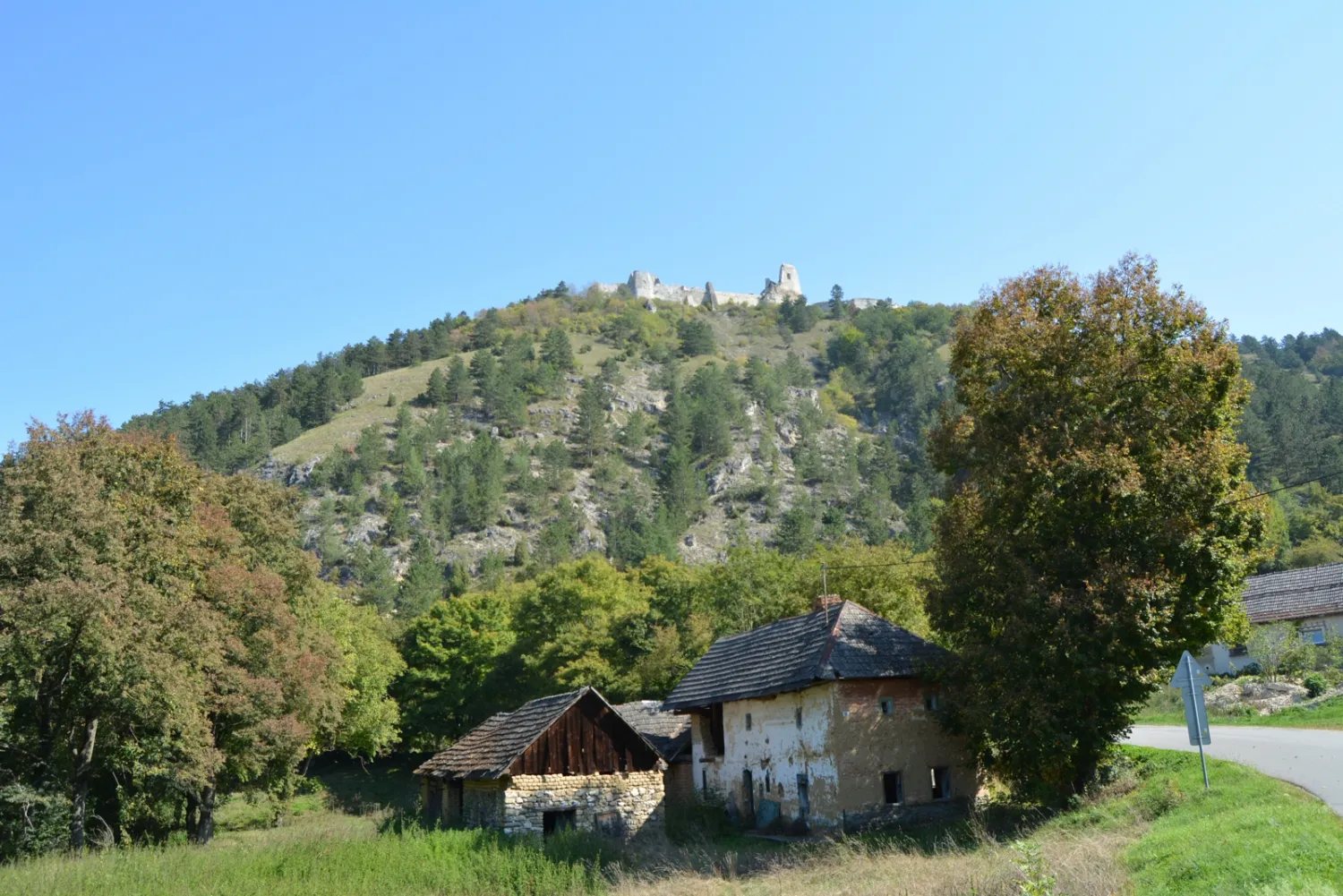
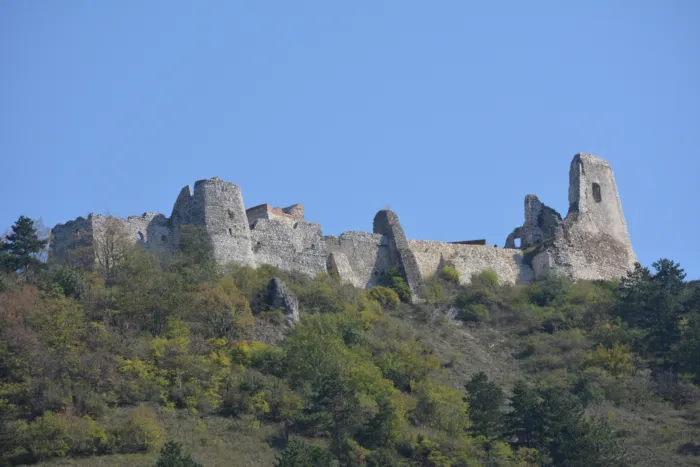
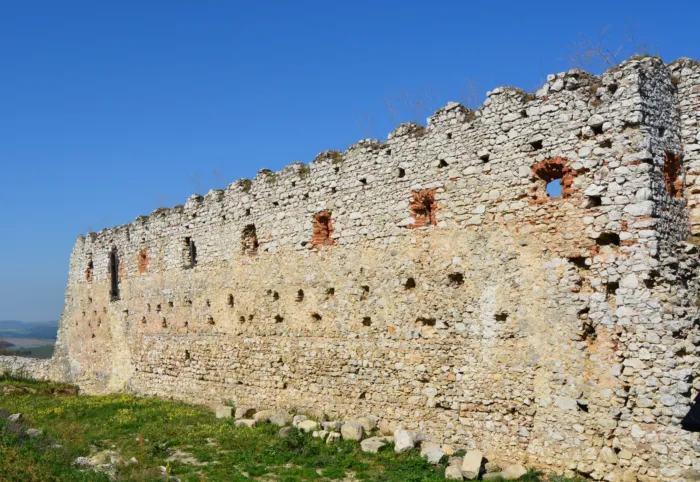
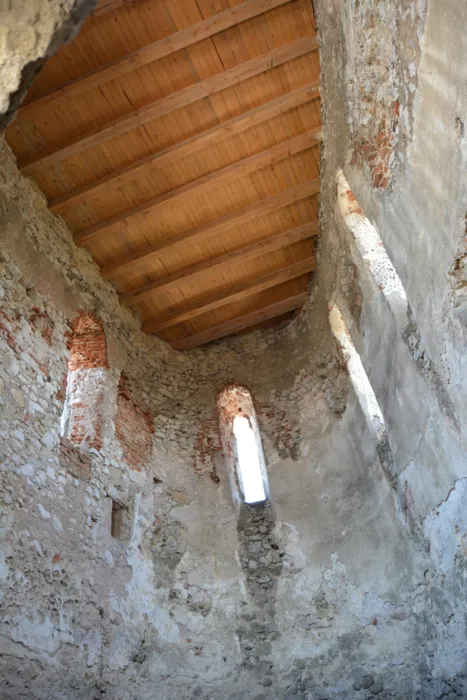
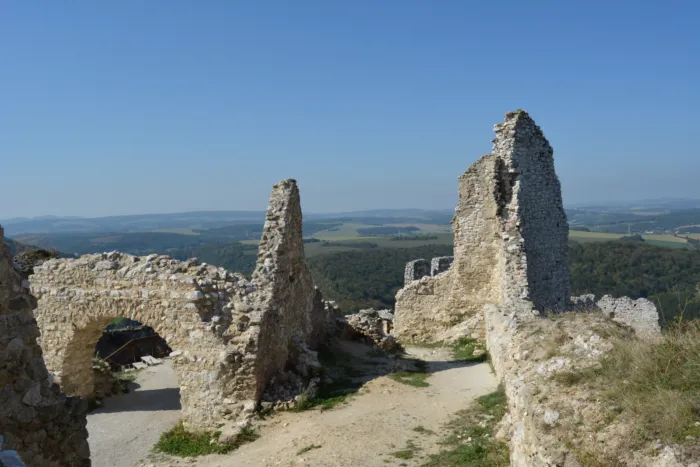
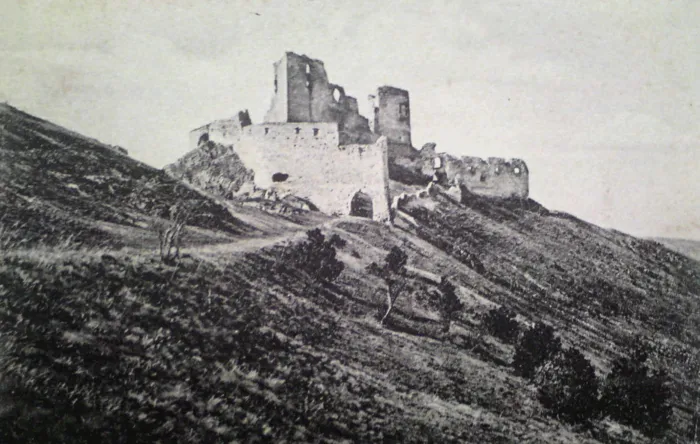
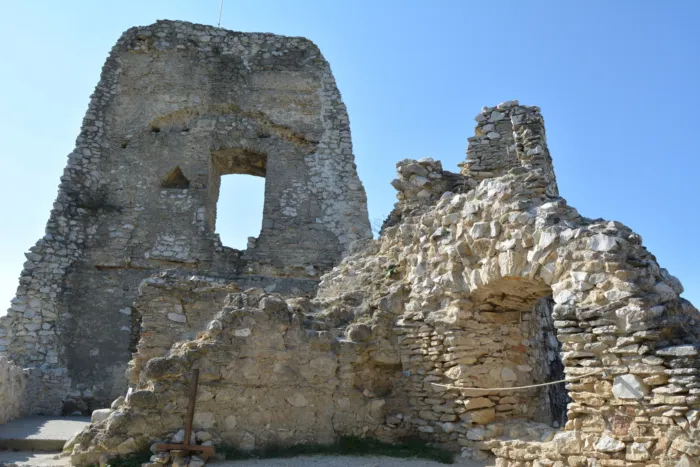
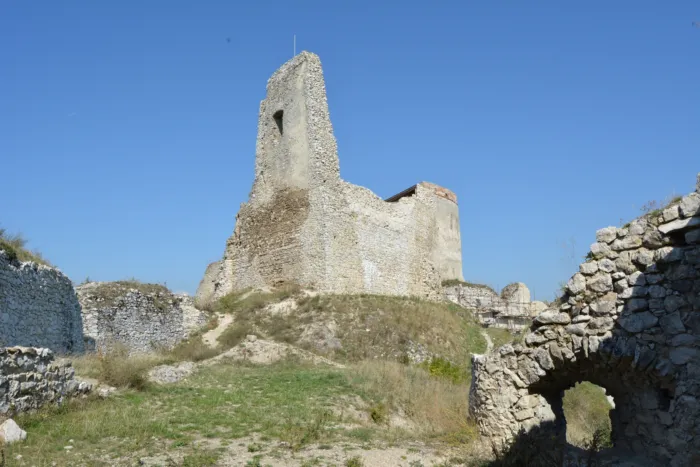
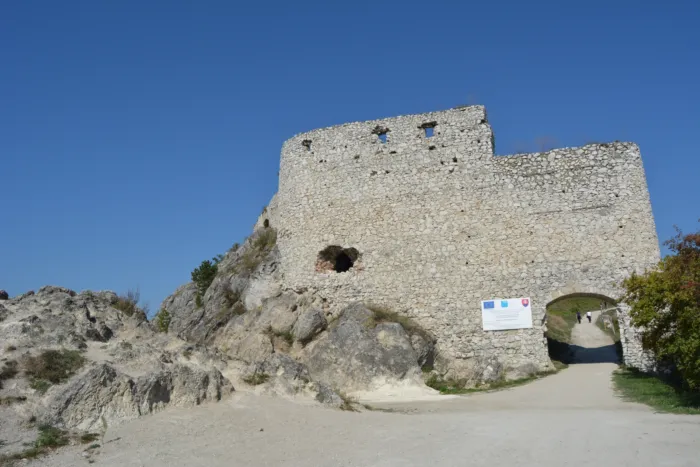
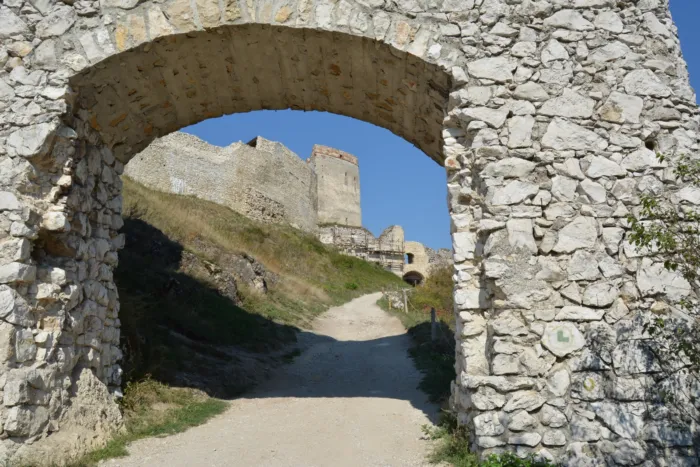
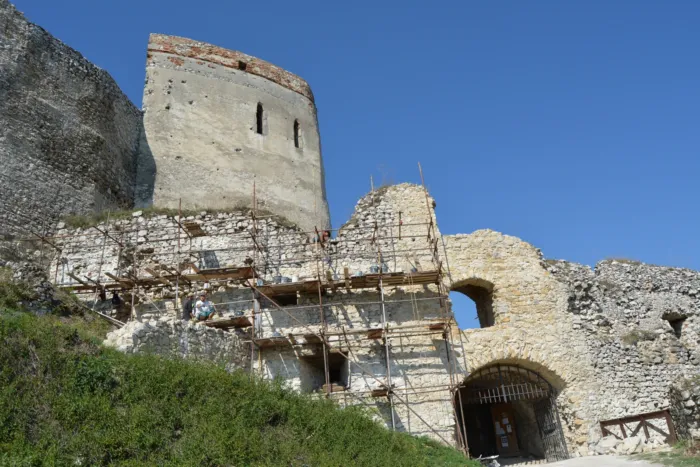
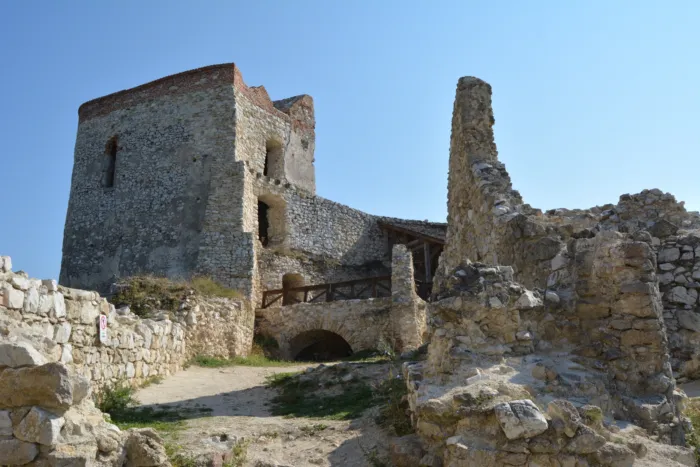
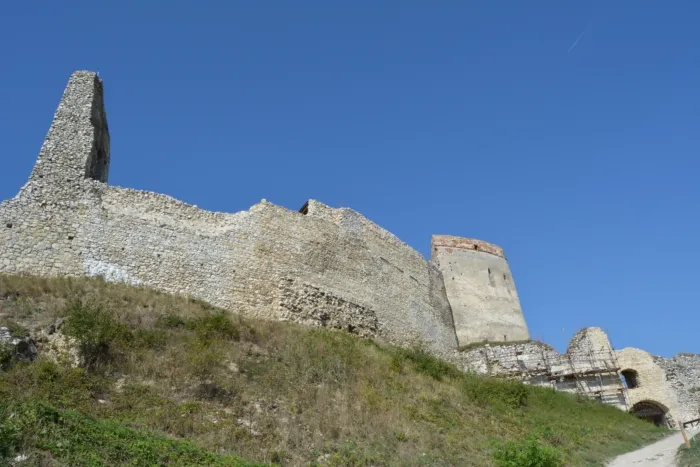
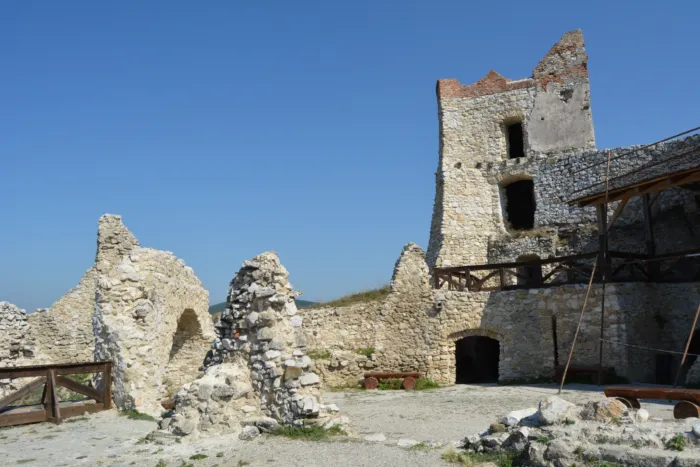
Csejte Castle Further from the settlement of Csejte, in the northwest direction, on a barren hill, the walls of the large stone castle are located. On the marked tourist trail leading here, we first reach the opening of the castle gate surrounded by a high wall. A row of cannon emplacements to the left indicates that during the 16th century the landlord family tried to modernize the fortress that served as their residence. The long wall pass slowly rises to the next gate, which marks the entrance to the lower castle. The defensive structure was beautifully restored during the reconstruction works between 2012-2014. Various residential and economic rooms are lined up along the thick stone walls of the lower castle. The castle wall, reinforced with buttresses towards the steep, ravine hillsides, is still largely standing, while the parts leading to the upper castle were completely destroyed by imperial mercenaries at the beginning of the 18th century. Thanks to the reconstruction works carried out between 2012 and 2014, the extremely poor condition of the walls was largely saved. Climbing up the small rocky peak, we reach the narrow castle courtyard, which was once surrounded by multi-storey palace wings. According to the archaeological research carried out so far, the oldest building of Csejte Castle is the old tower on the SE side, which ends at an acute angle, of which only a single side wall has survived. The renovation stabilized and strengthened it. Starting from here, a stone wall surrounded the steep peak, and then the wings of the residential palace were gradually built over the centuries of the Middle Ages. To this day, the most intact building is the castle chapel, which was erected on a huge stone foundation. The walls of the chapel were strengthened and the chapel was covered during the reconstruction works. The medieval fortress was never the scene of major sieges or battles, and remained a private feudal castle until the end. In the 16th century, the castle was rebuilt in the 17th century. In the 19th century, when artillery began to be used en masse, Csejte was not transformed into a fortified castle with bastions, only a few cannon emplacements were cut into the walls. This was not necessary in a region far from the Turkish wars of conquest; the castle with an irregular ground plan and inner towers continued to exist, while its landlords – including the infamous Elizabeth Báthory – lived their lives in the village’s Renaissance castle. ; ; History: The charter describing the boundaries of the Vágújhely settlement dates back to 1263, according to which the nobleman Kázmér of the Hontpázmány clan and his relatives held the lands of Csejte as a gift from the ruler. They were able to have the early core of the fortress built on the steep cliff top. In 1276, they successfully defended the castle against the II. During the attack of the army of the Czech king Ottokar. At the end of the 13th century, this was also occupied by the army of the Trenčín oligarch, Máté Csák, along with many castle estates in the Váh River region. Over the next two decades, the baron expanded his rule over vast areas of the Upland – peacefully or by force. The population of about 13 counties declared Lord Máté their lord, who opposed the foreign claimants to the throne who came in succession. His power was ensured by an army of thousands of small and large familiars forced into armed service. His reign was only ended by his death in 1321, and his province was soon occupied by the armed forces of Charles Robert of Anjou, who had risen from a claimant to the throne of Naples to become King of Hungary. In the following decades, he administered the serf villages belonging to the estate as a royal bailiff, and he also collected various customs and revenues. Thanks to a generous donation from King Sigismund of Luxembourg, it came into the possession of the Polish-born Ispan of Bratislava, Stibor, in 1392, who amassed a huge fortune. The ruler's greatest confidant, the nobleman who also held the title of Voivode of Transylvania, died in 1414, and his body was laid to rest in the Royal Coronation Cathedral of Székesfehérvár, where it had been customary for distinguished barons to be buried since the Anjou kings. A fragment of his tombstone was found in the city in 1923, and his head, which allowed for identification, was found in 1970. The baron's vast castle estates were inherited by his only son, Stibor the Younger, who died in 1434 without leaving a male heir. However, Csejte did not remain in royal possession for long, as Baron Mihály Ország Guthi acquired it as a permanent gift in 1436. The Guthiaké remained in power until 1567, when this noble family also died out without leaving a male heir, so the castle estate was transferred to the management of the Royal Chamber. Since during this period the War Council sought to bring the most important private castles in the direction of Turkish attacks under its jurisdiction, in 1569 it transferred the castle estate of Csejte and the market town of Borsmonostor, which were a safe distance from the war areas, to the owner Nádasdy family as a mortgage estate in exchange for the key fortification of Transdanubia, Kanizsa Castle, and 50 thousand forints. The famous Turkish-beating general of the era, the “strong black beg”, acquired it as an eternal estate in 1602, in exchange for 36 thousand forints. The lord's widow, Elizabeth Báthory, was arrested in 1610 at the Csejte castle by the officials of the Palatine György Thurzó, along with her courtiers. Accused of murdering the maids, the lady was taken to the grim stone castle, where she was kept in solitary confinement until her death three years later. There was never a proper trial in her case, so many different rumors have spread about her over the centuries. From the abuse that was considered commonplace in the era to the whispers about the lady getting involved in political intrigues, it is now impossible to unravel the truth from the whispered reports about the lady getting involved in political intrigues. In any case, by isolating Elizabeth, the Nádasdy family was able to avoid the possible confiscation of their property, while two old women and a servant were executed after their conviction. In 1663, the Turkish-Tatar raids raged and plundered near the Csejte Castle, which served as the center of the private feudal estate. In 1671, the Vienna Chamber confiscated all the property of the regional judge Ferenc Nádasdy, who was found guilty of conspiring against Emperor Leopold of Habsburg and executed for this, including the Csejte Castle estate. Emperor Leopold of Habsburg and King Leopold soon divided the estate in half between the noble families of Homonnai Drugeth and Erdődy. It played its last military role in the Kuruc War of Independence led by Ferenc II Rákóczi, when the strategically insignificant fortress was occupied by the rebels at the end of 1703. In 1707, 4,000 infantry and cavalry led by Imperial General Guido stormed and captured it, while the following year, after a day of cannonade on the orders of Prince Rákóczi of Transylvania, it was recaptured by the French military engineer troops of De La Motte. However, after the losing Battle of Trenčín in August 1708, the Kurucs were forced out of this region as well. Csejte Castle was once again occupied by Imperial mercenaries, who blew up the walls of the fortress to prevent rebels against the Habsburg Emperor from using it again. Since then, the picturesque ruins have been deteriorating, and the state has only carried out minor conservation measures until 2010. More than 1 million euros were available from EU and domestic sources for the reconstruction costs of the castle, which began in 2012. Between 2012 and 2014, the full archaeological excavation and the conservation of the salvageable parts were finally possible. The castle walls were stabilized, the collapsed parts were replaced, the chapel and some interior parts of the castle were covered. The castle has been open to visitors again since the summer of 2014.