
Csallóköz bagpipe tradition
Cultural heritage
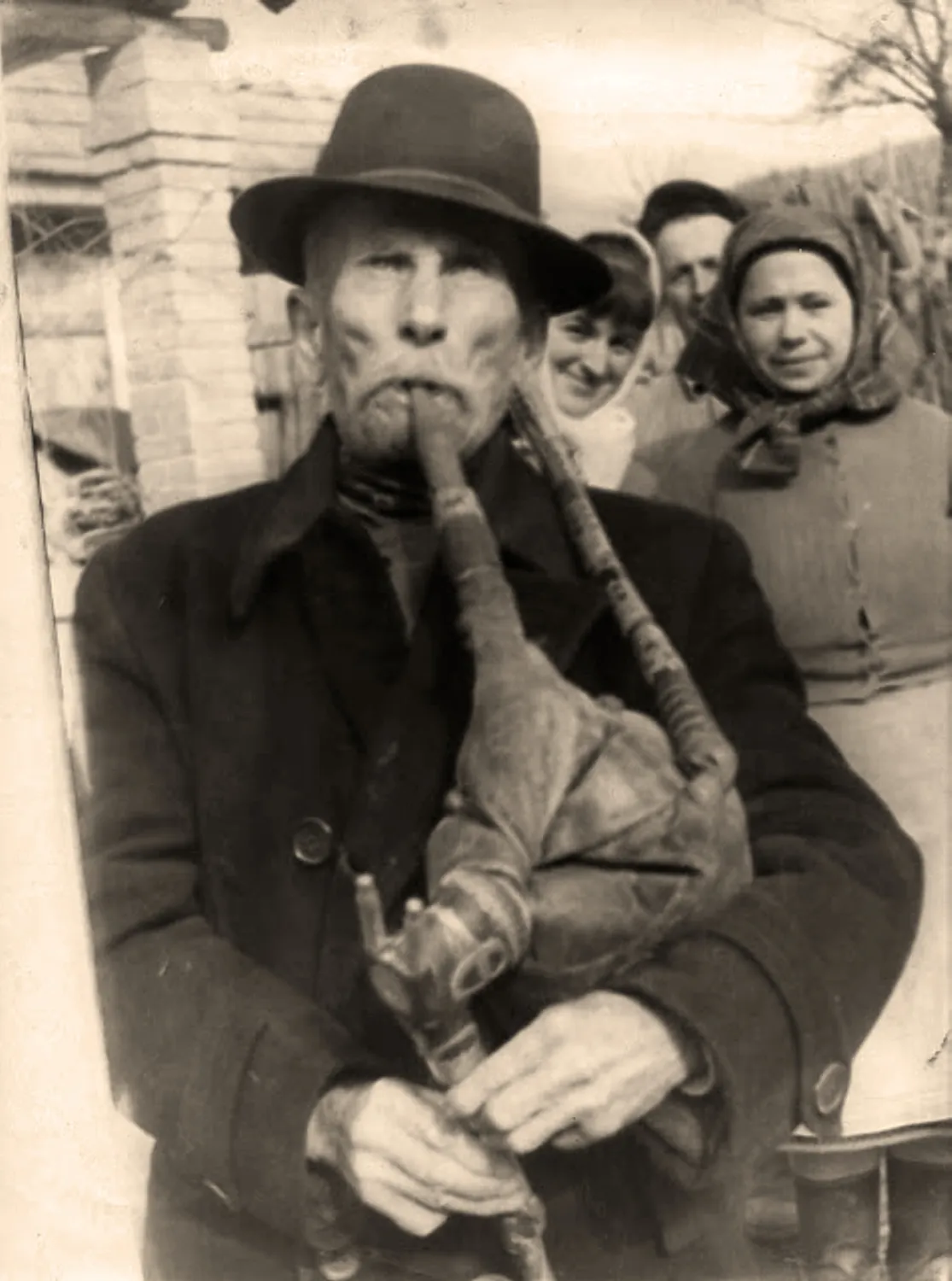
One of the most important parts of the musical history of Csallóköz is the bagpipe tradition, which in turn is inseparable from the cultural history of the region. A musical culture whose roots go back to an unimaginable past, and which remained archaic until the folk music collections of the twentieth century. The adjective “archaic” is no coincidence, since the origins of this musical culture spanning the whole of Eurasia can indeed be found in the Neolithic era. Over time, the traditional mouth-blown reed pipe has hardly changed, except that a bladder or hose was also used to make it sound. This reed pipe played with the help of a hose is what we call a bagpipe today. It is likely that in addition to the earliest percussion instruments, the split reed pipe must have very soon also fulfilled a magical and cultic function. In this way, it became an inseparable part of the culture of tribal cultures and later of urban civilizations, and it reached the twentieth century in such a way that, while more and more advanced musical instruments were developed, the pipe music tradition was completely integrated into the complex system of traditional cultures. ; This musical tradition of Csallóköz was discovered by folk music research very early on. It was drawn to the attention of such famous researchers as Béla Bartók or László Lajtha, who were classically educated musicians and whose interest extended primarily to music and its features (melody, rhythm, ornamentation, etc.) and to the typology of melodies. However, it soon became clear that musical phenomena exist in the complex system of traditional culture and cannot be separated from the text, the instrument, the performers, the situation and the environment where the given melody was performed, etc. Due to the nature of the matter, there were soon researchers who examined musical phenomena in the broadest possible context, so folk music research became a specific field of ethnography. György Szomjas-Schiffert, Tibor Ág, Ernő Barsi, Béla Marczell, Gergely Agócs, Iván Nagy, etc. already examined the bagpipe tradition of Csallóköz with this approach. ; Their research reveals how the bagpipe tradition was integrated into the complex system of traditional regional culture. In addition to entertaining dance occasions, bagpipe music also survived primarily as part of ancient calendar customs. The bagpiper and bagpipe music are a fundamental part of most calendar and community or other customs of Csallóköz that can be linked to the turning points of human life (Christmas, carnival fund-raising, weddings, etc.). In almost all cases, the ancient magical function of the bagpipe and bagpipe music is also clearly recognizable. At the same time, these traditions are inseparable from the Neolithic form of farming, pastoralism. A specific pastoral culture emerged in the vast floodplain-like area of the region, among whose specific features a specific musical tradition could also be described, one of the most striking elements of which was the bagpipe tradition.