
The Romanesque monuments of Bény
Built heritage
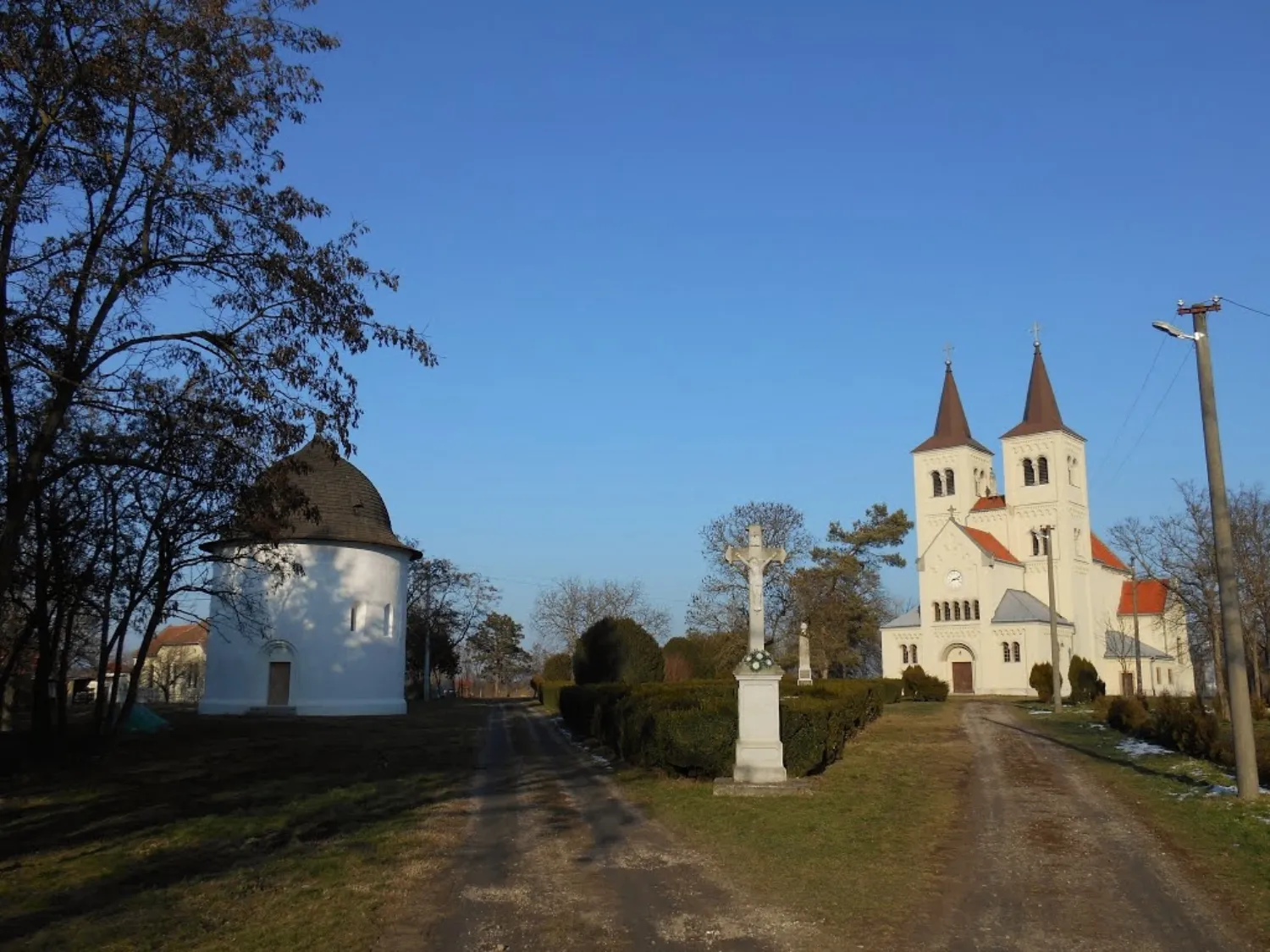
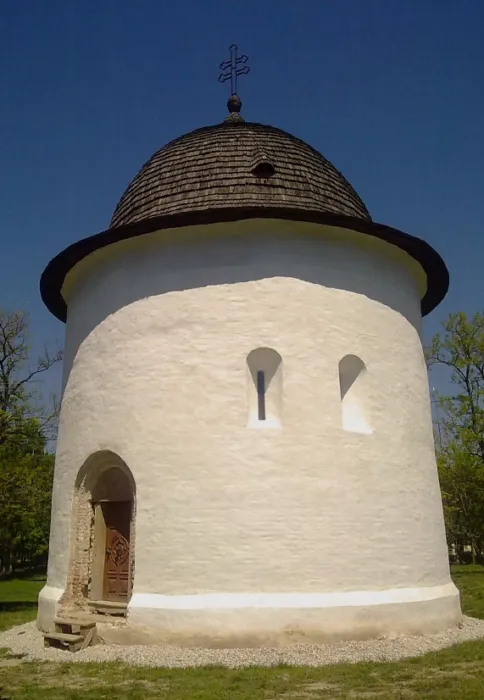
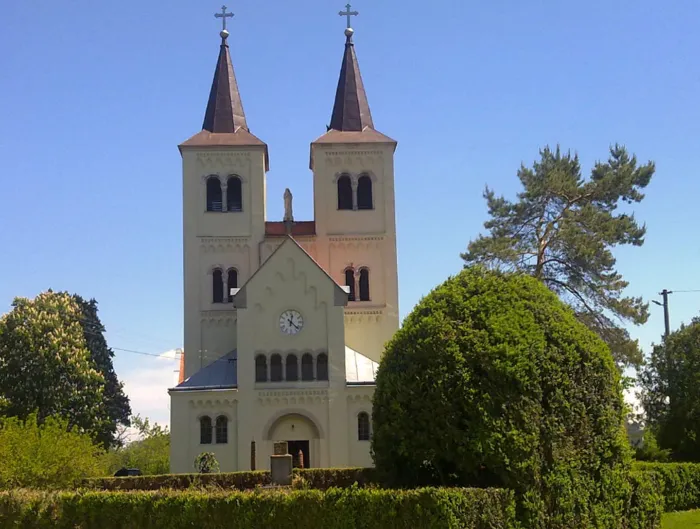
The settlement of Bény, which was recorded in the Roman period, has preserved its unique buildings and its unique folk costume in the world. The built environment and cultural heritage of the settlement are primarily characterized by the rotunda and the Two-Tower Church. It is notable for its huge circular ramparts, its Romanesque provost church and its circular church. The monuments carry the message of distant times, and their uniqueness lies in the fact that few similar architectural monuments have survived in the Carpathian Basin. ,
For the description of the Bény monument complex, we drew from Kálmán Haiczl's study published in 1937. ; ; Opinions are divided about the origin of the ramparts: some believe they are the work of the Quadi, others consider them to be Roman ramparts, and associate them with Marcus Aurelius' campaign against the Quadi in AD 173, during which time the first book of the philosopher emperor's Meditations may have been written. The Romans were also present in the defense of the limes in later times, as evidenced most eloquently by the find of late imperial gold coins found on the outskirts of the village in the 1960s, which can be seen in the Bratislava Castle Museum of the Slovak National Museum. ,
The village of Bény was named after the son of the German knight Hunt named Byn, to whom King Stephen bestowed both Bénys as a reward for his loyal services. Historical folk tradition holds that our founding king gathered his troops, including the knight Byn, in the Bény ramparts that he led against Koppány. The provostship and the monastery were built after 1217, as was the circular church next to it. The unique architectural values of the rotunda, built in honor of the twelve apostles, are enhanced by its special acoustics. The 12 seating areas in its inner wall each form a different singing voice, which provides a unique sound to the songs sung here. Only fragments of the once rich fresco decoration of the rotunda have survived. The church visitation records of 1732 and 1755 attribute the founding of the Premontre provostship of Kisbény to Ispan Lampert. Others, however, consider Ispan Omode to be the founder of the provostship, who made a vow to do so before setting off on the Holy Land campaign with King Andrew II. However, Kálmán Haiczl, based on the testamentary certificate of the Ság convent issued in 1273, attributes the founding to Ispan Omode's son, Master István. Based on this, the foundation of the monastery can be dated to the middle of the 13th century. It originally belonged to the St. Stephen provostship of Esztergom, became a branch of the Sion-hegy Abbey in 1294, and then came under the supervision of the Premontre provostship of Ságh in 1516. We have no data about the provostship until the Mohács disaster, which is a sign that it enjoyed undisturbed peace. The first blow must have hit it before 1530, because the 1530 census of the income of the Esztergom archdiocese reports on “damages caused by the Turks.” In the 1532 census, we read that Bény was occupied by Balassa Menyhér after the Turkish devastation. The monks of the monastery also fled from Bény. King Ferdinand I donated it to the Jesuit college in Nagyszombat. In the war against the Turks in 1664, de Souches slaughtered the Turks who had fled between the ramparts of Bény. After the liberation of Vienna, during the liberation campaign, the Polish troops marching there completely destroyed Bény. ,
In 1696, Nagybény was the mortgaged estate of János Bottyán. Its inhabitants left their village deserted due to frequent military settlements and extortion by the passing military. Kisbény was the estate of the Esztergom chapter. A ruined village where the ruins of churches and chapels can be seen. During the War of Independence of Ferenc Rákóczi II in 1709, the Esztergom imperialists began repairing the ramparts of Bény in order to provide them with guards, thus making it more difficult to feed Érsekújvár. The reconstruction could only begin after the Peace of Szatmár. By this time, the monastery in Bényi, the adjacent St. Catherine's Chapel and the round chapel of the apostles were already in very poor condition. The monastery was not needed due to the lack of monks, so only the chapel of the apostles was repaired. ,
The eternal merit of the parish priest of Kéménd, Ferenc Palkovics (1698–1731), is that the church of the provostship of Kisbényi, this great treasure of Hungarian Romanesque architecture, did not perish, but has survived in its ancient form to this day. ,Palkovics had the church renovated in the 1720s, which was consecrated by Bishop László Mednyánszky in 1732. ,
The well in Bényi ; ; “Once, our King Saint Ladislaus fled from his pursuers in a small group. ; At dusk, they were tired and went to rest in the stone moat of Bíny. The Katunays and their horses were also thirsty, then King Saint Ladislaus drew his sword from its sheath and stabbed him in the grassy head, then looked up at the sky, prayed to the Virgin Mary, then he drew his sword and water gushed out from the place, a spring was formed. From which the tired Katunays and their animals could quench their thirst.” ; (Informant: Imréné Tóth, sz. Rozália Páldi, 1903) ,
The Turks in Bíny ; ; “The Turks have been living here in Bíny for more than a hundred years. The castle of Kísző, with its main ramparts, was the seat of the Turkish pasha for a long time. On one holiday, the pasha exclaimed: “These beautiful women from Garaménty are beautiful, their skirts are just a little long.” The older women heard this and slyly whispered to each other that they would please the pasha. They cut a seam at the top of the skirts so that they would not fall down, and they sewed a flap on the skirts, so that the waists of the women looked longer and slimmer. But they even cut a seam at the bottom, so that the hem of the skirt hung below the kneecaps. Our grandfathers and grandmothers have not told us how much joy the pasha felt in it.” ; (Informant: Mrs. Imré Csókás, née Katalin Székely, 1901, Mrs. Ernő Jankus, née Katalin Takács 1914) ,
King Saint Stephen ; ; “Before the coronation of Saint Stephen, a group of pagan Hungarians infiltrated the fortified town of Bíny. Since Bíny is located not far from Esztergomtú, next to the Garam, Stephen was very disturbed by the fact that pagans were living in the nearby fields. He ordered that a considerable number of carts be loaded with stones. The axles of the carts should not be greased, so that the wheels would turn dry. The carts were loaded with soma dolls, which were tied to the katuns on both sides, as many as could be in each row. Two pairs of oxen pulled a cart. Each cart had only one fit man, who drove the oxen into a large whip. When they were ready, he set off towards Bíny. They reached the border of Kéméngy on the Roman road to Rígi, then turned under the castle towards Bíny. The heavy load was loaded with carts creaked, creaked, rattled. The oxen drivers jumped onto the great river and called out to them with loud cries, urging the animals on. The guards on the bank of the river in Bín heard it, looked in that direction, and were surprised to see the army approaching under the castle hill. They quickly entered the fortified city and reported to their vizier that Stephen was approaching them with a large army, that he would soon cross the bank of the river, and that he would cross the southern entrance not far away. At this, great alarm arose among the pagan Hungarians in the fortified city. The vizier gave the order to quickly flee through the western main entrance. ; By the time the carts had crossed the outer rampart, the frightened pagans had only their place left, and they fled. Saint Stephen immediately entered the fortified city at the head of a small group, and easily occupied its central peak.” ; (Informant: András Székely, 1870, Vince Csókás, 1894)