
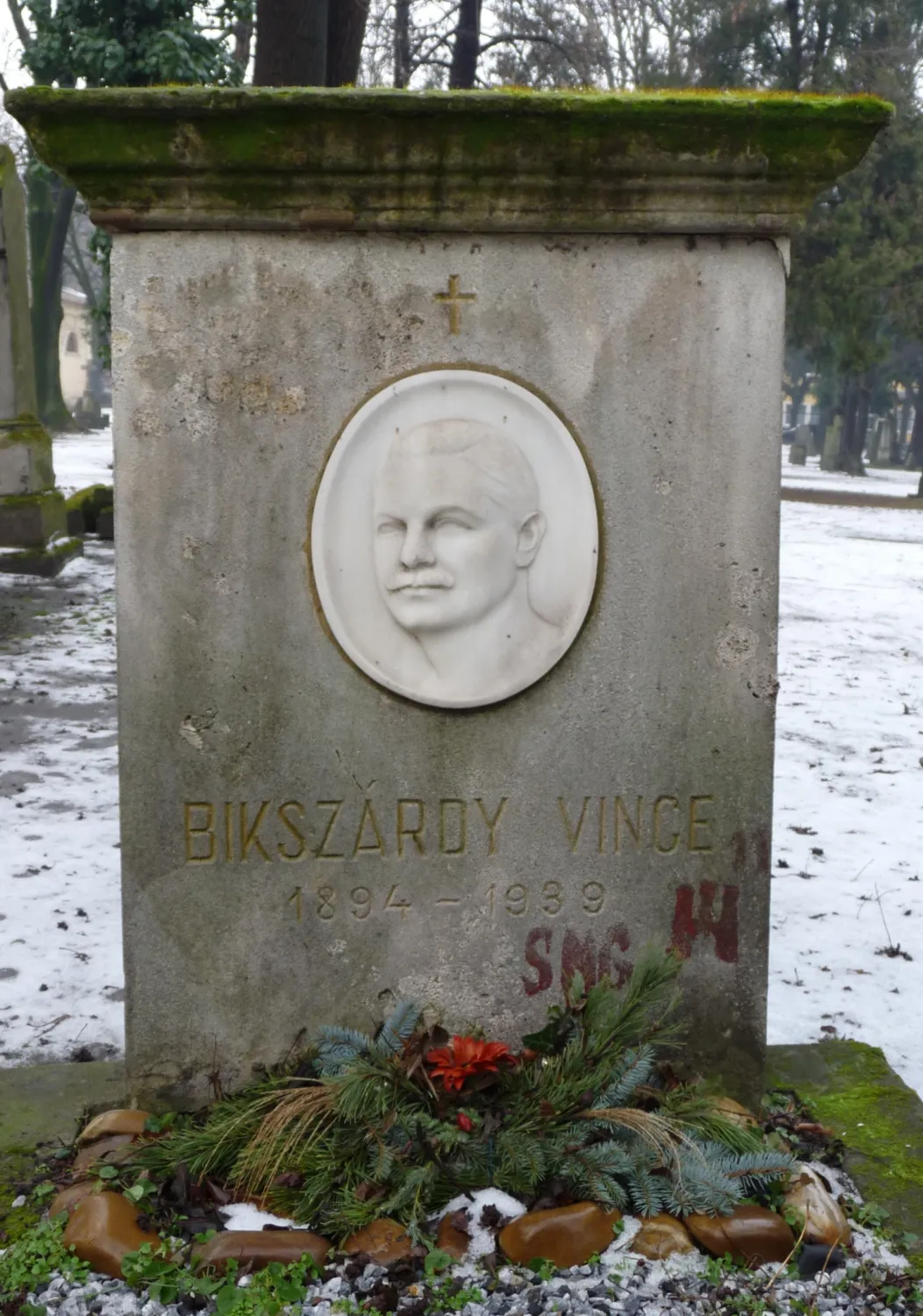
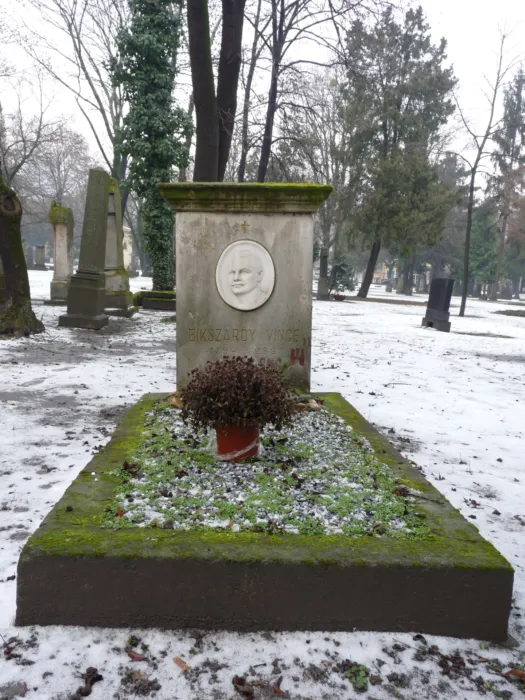
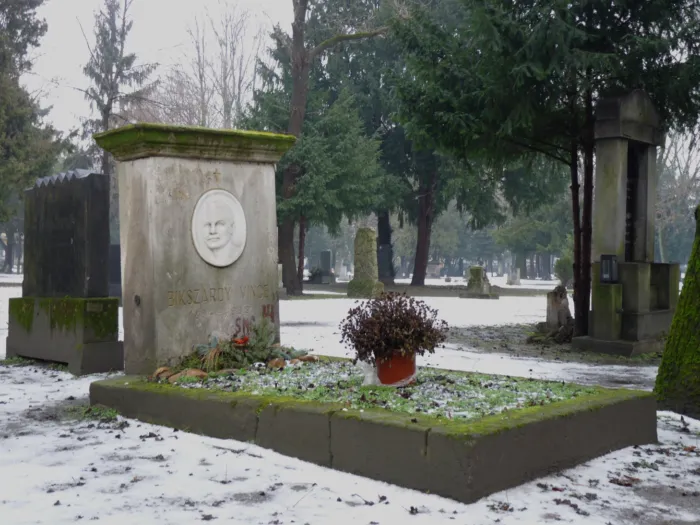
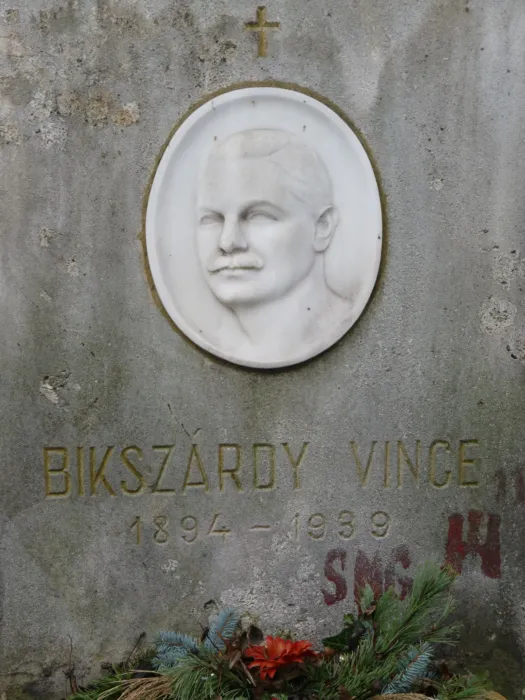
Grave of Vince Bikszárdy
Cemeteries, tombstones, graves
He was born on June 2, 1894 in Bratislava. After completing four grades of secondary school, he entered the monarchy's elite school, the Naval Cadet School, in 1913. During the World War, he stood firm in numerous heroic battles, and his courage was rewarded with three high decorations. During the disaster of the ill-fated battleship Szent István, he saved the lives of many of his fellow sailors with his presence of mind. He always liked to reminisce about the sea in the company of his family and friends, proving that a Hungarian sailor never denies himself if the old Hungarian sea takes hold of his soul. ; Even when he returned to civilian life, he was characterized by a sense of duty and expertise. He worked as a cameraman at the Atlon cinema, and lived with his family near today's Szabadság-tér, on what was then Kutik Street. In the 1938 Bratislava municipal elections, he ran third on the Hungarian Party list and was elected as a representative of the workers. However, the representative body did not form due to the following events. ; Vince Bikszárdy headed for the popular excursion spot, Vaskutacska, at the head of the Hungarian youth. The Hlinka Guard, which was established at that time, and the Hungarians themselves believed that in order to cultivate unity and the spirit of community, the already disunited Hungarians should be mobilized for a peaceful, self-defense demonstration. The nearly two thousand participants of the previously announced Sunday march - leaving the Red Bridge - were surrounded by Hlinka Guards from both sides and from the heights. The Hungarian team - without suspecting anything - walked into the trap. Other well-known leading figures were also there (for example, Rezső Peéry, a Bratislava teacher, editor, a member of the board of directors of Sarló and a literary critic), but Bikszárdy announced himself as the leader when officially summoned. The uniformed men led him away. The further fate and death of the then 45-year-old, vigorous Bikszárdy are still unclear. According to the report issued in prison, he ended his life by hand the next day (he hung himself with a tie). The Hungarian Party's expert group doubted the prison report, as they saw that the victim's hands were mangled, so it is almost certain that he was beaten to death. Vince Bikszárdy died on April 24, 1939. ; Count János Esterházy, a representative in the Bratislava parliament, did not receive an answer to his interpellation regarding Bikszárdy's mysterious death. His funeral at the Szent András Cemetery was attended by a thousand people. According to the participants, mounted police dispersed those stranded outside the cemetery. The Hungarian Party declared the deceased its own dead and called on its followers to refrain from any joy for a week as a sign of mourning. The eulogy was given by Esterházy. ; After the Vienna decision, Bikszárdy was among those who most generously contributed to the Hungarian organizing and creative work. He stood firm until the last moment of his life. ; Vince Bikszárdy rests on the southern side of sector I/1/2. The marble plaque on the tombstone is the work of Gyula Bártfay (1888 - 1979), the father of Tibor Bártfay. ; More about Vince Bikszárdy's life: Attila Simon: In the wake of an unfinished martyrdom - the forgotten story of Vince Bikszárdy and the Horthy Guard. In: Praise and Criticism of Central Europeanism. Bratislava, 2013, pp. 599-614.