
Beretkei Reformed Orphanage
Built heritage
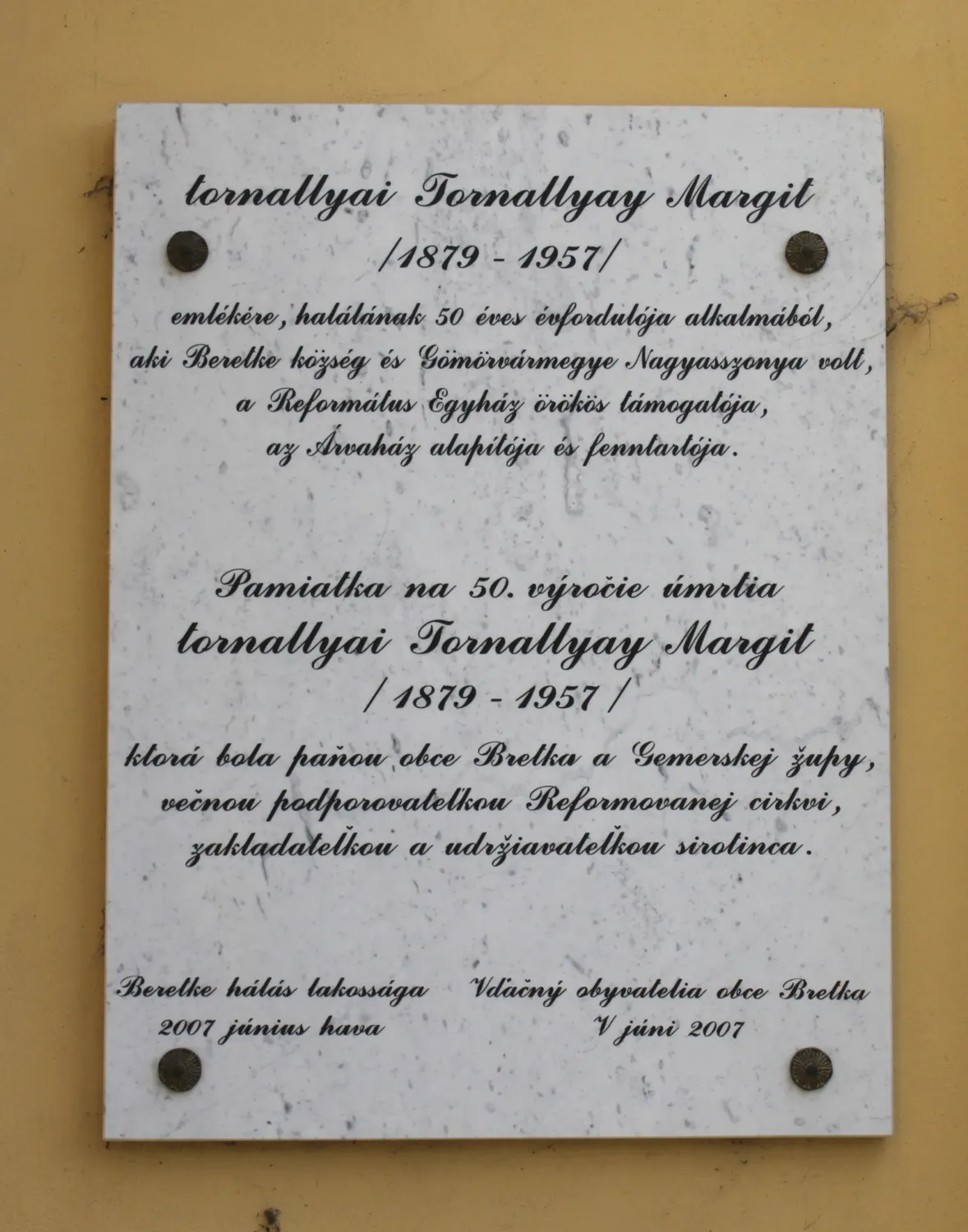
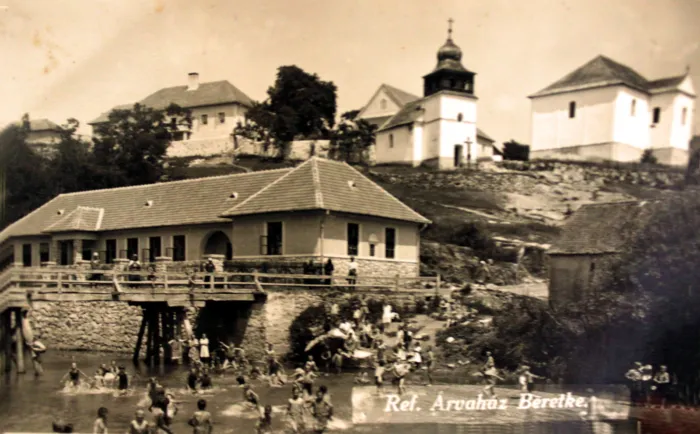
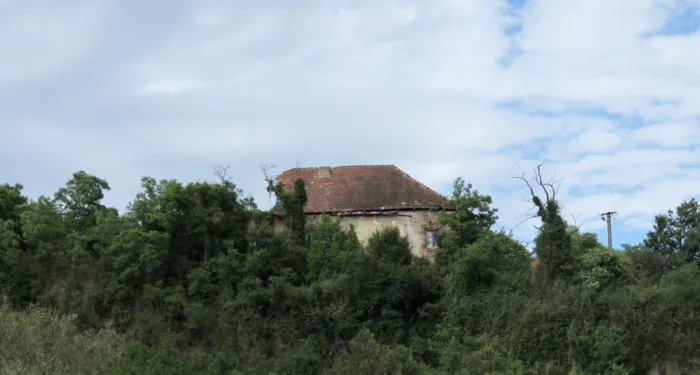
“The Beretke rocks are the stones that whisper miracles and are silent and eloquent [...], let us listen to the speech of these silent rocks about the power of love.” ; ; Lajos Gérecz, orphanage director ; ; Far from all the noise of modern civilization, among the gentle hills of Dél-Gömör, at the confluence of the Sajó and Murány streams, lies the charming settlement of Beretke. The village of about 350 inhabitants is almost entirely inhabited by Hungarians. The majority of them follow the Catholic religion, a smaller part are Reformed. However, only the latter have their church, as the Catholics’ were destroyed in World War II. ; Previously, there were several noble manor houses here, but by the 19th century only two of them remained. One is the Baroque mansion built by Zsigmond Beretky, which currently houses the village office, and the other is the castle also built by the Beretkys in 1723 on top of a prominent rocky hill in the middle of the village. Apart from the locals, few people know that the latter housed the first universally maintained orphanage of the Reformed Church of Slovenia and Transcarpathia from 1929 to 1944. ; ; History ; The history of the orphanage dates back to a Reformed girls' conference held in Rimaszombat in May 1928. At this event, the Transcarpathian pastor Gyula Bácsy proposed purchasing the hotel building of the Rozsnyó spa, which was then looking for a new owner, for the purpose of an orphanage. The proposal was well received by the participants and was submitted to the General Convention, which was responsible for the affairs of the church. Even at the conference, Bácsy was asked to lead the institution. He accepted. Without waiting for further developments, he moved to Beretke, near Rozsnyó, and became the pastor of the small local Reformed congregation. At that time, it seemed to many that the convention meeting would be just a formality, but events took a different direction. The convention, it is true, took a stand against the purchase of the building by only one vote – mainly citing financial reasons. Bácsy, in his disappointment, would have liked to go back to Transcarpathia, but he could not, as he was already an ordained pastor in Beretke. “The rectory stood on a high rock in Beretke,” he writes in his memoirs, “among waist-high thorns, from there I watched what God intended to do with me. The income of the pastor in Beretke was so meager that it was not only impossible to make a decent living, but also impossible to make a living at all […] But I calmed down quietly and set to work. First of all, I had the thorns uprooted, I carried several hundred cartloads of earth to the rock and established a flower garden there.” In this situation, however, the orphanage’s affairs took another, unexpected turn. The landowner of Beretke, Margit Tornallyay - at the instigation of Gyula Bácsy - donated one of her local castles to the Reformed Church and donated 100 thousand crowns to the costs of renovating the building. The Beretkei Reformed Orphanage opened its doors in this building on October 31, 1929, with 10 boys and 2 girls. ; The institution only accepted Reformed orphans from legal marriages, half-orphans, and later children in extremely poor social situations, who mainly came from poor agricultural, day laborer, or industrial families. The average number of children during the orphanage's existence ranged between thirty and forty. The director of the institution for the first six years was Gyula Bácsy. He was assisted by his wife, one or sometimes two educators or deaconesses, a cook, and a handyman. After Bácsy's departure, the director of the local Reformed elementary school, Lajos Gérecz, took over the management of the institution. ; ; Working weekdays ; The orphans who arrived at Beretke were welcomed in impeccable conditions in every respect. The boys and girls slept in separate bedrooms. Their daily lives were determined by the triad of learning-work-play activities. They did many jobs around the orphanage: cleaning, washing, cutting wood or gardening. They also paid great attention to the physical preparation of the orphans, but the emphasis was on religious spiritual education. ; Their education took place in the village's Reformed elementary school. Those with better grades were sent to the Evangelical middle school in Sajógömör. They had to walk the approximately five-kilometer journey between Beretke and Sajógömör twice a day. The growing up male orphans were mainly given to work as apprentices, but some of the more talented ones continued their studies in high school or teacher training. From the first year onwards, they ensured that the children had an unforgettable summer vacation every year. The so-called During the holiday campaign, families who were willing to provide for their summer care could apply for them. ; How the average day of the orphans of Beretke passed is vividly described in one of the writings of the orphanage director Lajos Gérecz: “It is morning. The clock strikes six. The little bell of the orphanage, a gift from Ferenc Egry, rings. Its sound can be heard far away in the Sajó valley. The house, which had been resting for the evening, comes to life. The children jump up from their little beds. They immediately start getting dressed. There is no time for idleness. The older ones are already dressed. They help the little ones with brotherly love. Only the older ones can clean the little beds properly. The two “sevens” mop the concrete floor and corridor by seven o’clock. Then the bell rings again. The army of children are already standing in a military line waiting for the command to do gymnastics. … Morning gymnastics lasts fifteen minutes. Then we have breakfast. Breakfast is bread and milk. Then we go to church to ask for God’s blessing. for our daily work. There is school from eight to twelve. Lunch at noon. We sing and pray before every meal. Lunch consists of soup, vegetables and bread. There is pasta and meat twice a week. From one to three there is teaching again. From three to four there is free time. Snack at four. Then study until six, with a fifteen-minute break in between. In the afternoons and on Thursdays we usually do the garden work, because the orphanage has a very good garden. We make the garden especially useful in the fall, until donations arrive... Half past six. It is evening. The little bell of the orphanage rings out in a distant voice. We gather in the dining room with a hymnbook and a Bible... We give thanks to the Almighty with the word of prayer that we were able to spend today under his protective wings.” ; “The custom,” recalls Zoltán Borsos from Zselíz, a former resident of the orphanage, “was that the new child always had to bring a new tale. […] Then there were also traditional storytellers, and I was one of them. In the evenings we would tell stories until we heard a sleeping sigh. Then the storyteller would ask: ‘Is anyone still awake?’ If they said yes, he would ask again: ‘Shall I continue?’ If they said yes, he would continue telling the story until the last orphan fell asleep.” ; ; Wartimes ; The orphanage had many generous supporters and helpers. Most of them came from the diocese of Gömör. However, the aforementioned Margit Tornallyay and her brother, Zoltán Tornallyay, a landowner and chief guardian of the parish in Tornallya, stood out among them. “At the time when my grandparents died,” says Zoltán Tornallyay Jr., 81, who lives in Budapest, “there was an inheritance discussion between my aunt, Margit Tornallyay, and my father. After my aunt lived in Beretke with her godmother, Erzsébet Fialka, they decided that the Beretke estate - which was almost as large as her tornalja - would belong to her, and her tornalja would belong to Zoltán Tornallyay, my father. My aunt farmed in Beretke. She had a very good farmhand, Barna Szaniszló, who kept the farm in excellent order.” Since she had no family or children, she spent a significant part of her wealth on supporting the Reformed Church, primarily on maintaining the orphanage. ; Her brother, Zoltán Tornallyay, also followed the fate of the institution with special attention throughout. He contributed to its foundation with a donation of 10,000 crowns. He was a member of the convent orphanage committee from its establishment, and then its chairman for many years. ; According to the first Vienna decision signed on November 2, 1938, Beretke was returned to Hungary. After the border change, the orphanage building was modernized, which meant the introduction of electricity and piped drinking water. The Second World War did not have an impact on the institution for a long time, but as it dragged on, this gradually changed. ; In September 1944, upon hearing the news of the approaching front, the institution's management tried to place the orphans in the safety of their relatives or host families. Among the last three children sent was Erzsébet Szoják, who later recalled what happened: “I went to Pelsőc on foot with two other children. […] They stayed there because they had found the people they were going to, so I continued on from there alone. I cried a lot, thinking how good it is for those who have someone to go to. That’s how I got to Berzété crying. I thought my grandmother’s family and my sister, Józsika, lived there. I found them, I knocked on their door, and we fell on each other’s necks crying. Finally, I found the people I belonged to.” However, two orphans remained in Beretke, and they survived the front crossing in a forest cave with director Lajos Gérecz. The village was already hit by Soviet shelling at the end of November, and the shelling became regular after December 25. Virtually only the four walls of both the Catholic and the Reformed churches remain, but at least they protected the orphanage behind them, which thus received only a few hits. The Soviet soldiers occupied the village on January 12 and took almost everything that could be moved from the orphanage. ; ; Deprived, destitute ; After the war, the orphans who had been sent did not return, and the orphanage director Lajos Gérecz was appointed a teacher in Málnapatak (Málinec) in 1947. Since the orphanage building became habitable after minor repairs, Zoltán Borza and his family moved here from the parsonage, which was also hit. ; The building was nationalized after the communist takeover. The Reformed Church got it back after the change of regime. Traces of World War II can still be seen on its walls today. A Roma family currently lives in it. Sometimes ideas are born for its renovation and utilization - most recently, its transformation into a tourist house was suggested - but their implementation is still pending. ; But what happened to the Tornallyay family, who played such a major role in the establishment and maintenance of the orphanage? They remained on their ancestral land during the passage of the front and after the war - this ultimately proved to be a wrong decision. The members of the family were deprived of all their property under the Beneš decrees as traitors and enemies of the Slovak nation. However, Margit Tornallyay did not refuse to leave Beretke after this, and until her death in 1957, she lived with the family of her former farm officer, in complete poverty. Her brother, Zoltán Tornallyay, was attacked and severely abused by a group of local communists who had become emboldened after the Soviet occupation. After the war, he tried to put his Tornalja farm in order, but he was no longer able to do so. First, he was deprived of his forest, then his land, and finally his castle. He died in 1946 from multiple strokes. ; Perhaps it was a merciful twist of fate that the state authorities established a district orphanage and foundling home in the family's confiscated castle in Tornalja, which has been operating since January 1, 1950. Thus, the former property of the Tornalja family, or at least part of it, serves orphaned and abandoned children to this day. ;
Vilmos Galo: "And the stones will ring..."
; The orphanage opened its doors to orphans on October 31, 1929. It was the first universal orphanage of the Universal Reformed Church of Slovenia and Transcarpathia. The institution housed orphans and half-orphans, who were primarily children of poor families, industrialists, farmers, and day laborers. The landowner Margit Tornallyay played a major role in the founding of the orphanage, offering one of her castles to the orphanage and a grant of 100,000 crowns. The first director of the orphanage was the pastor Gyula Bácsy from Transcarpathia, who did a lot for the orphanage and the orphans with his dedicated work. The orphanage closed its doors at the end of 1944. Unfortunately, the building was damaged during World War II, and the furnishings were also lost. It is currently uninhabitable and in a dilapidated state.