
Beckó (Bolondóc) Castle
Building, structure
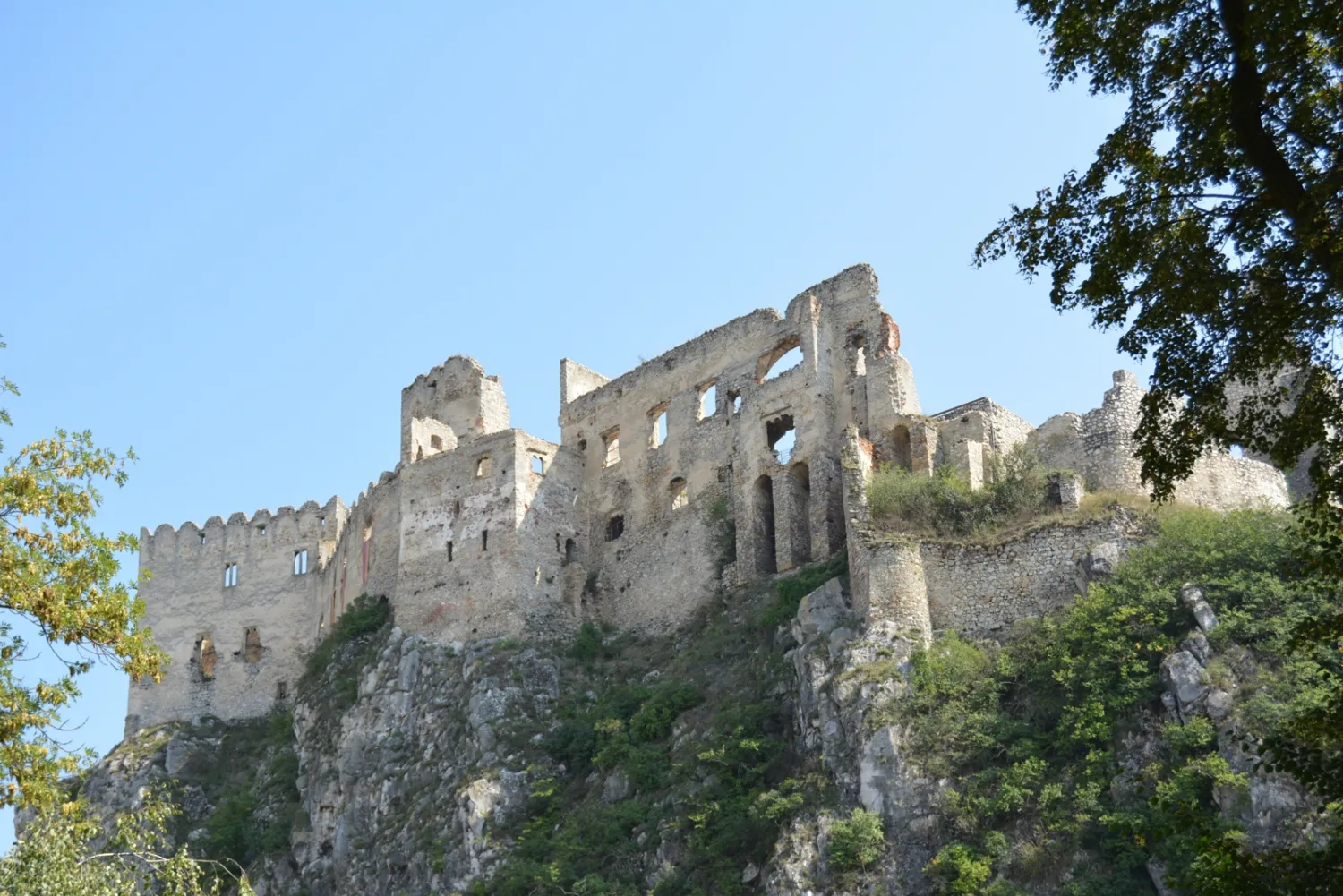
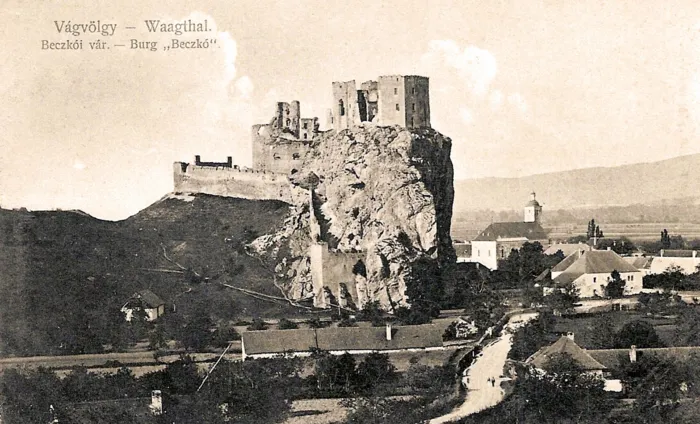
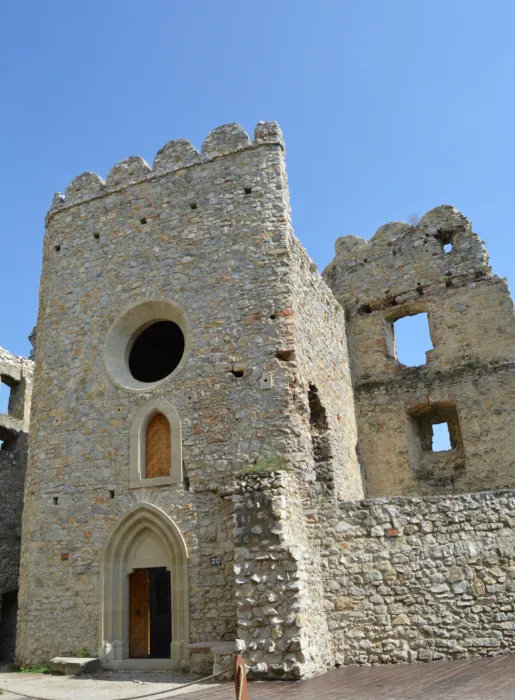
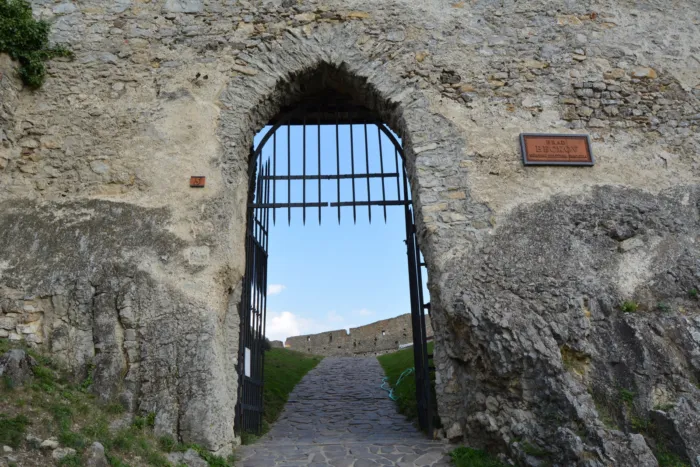
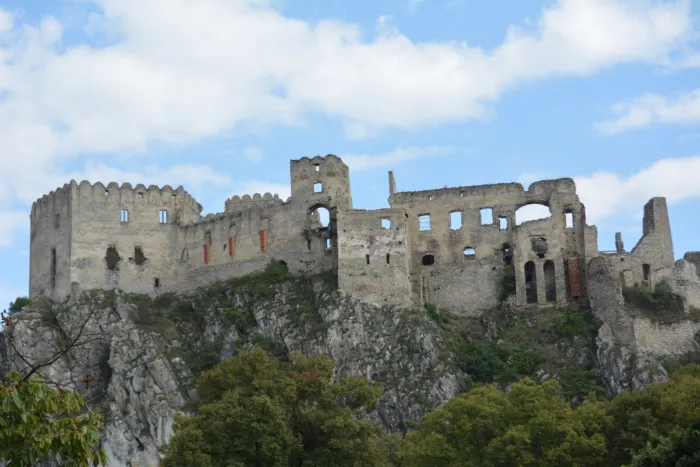
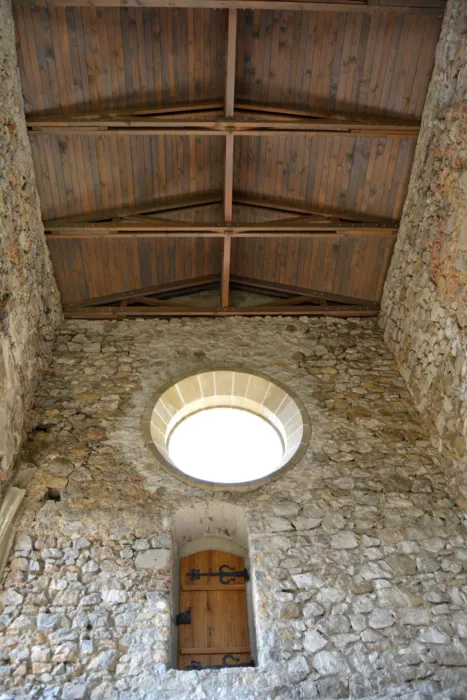
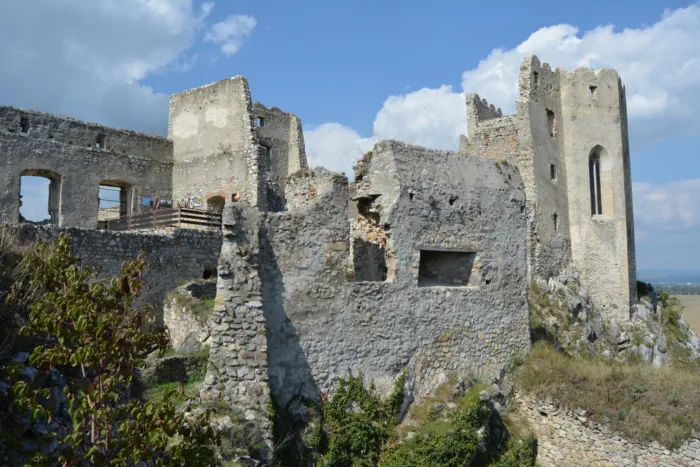
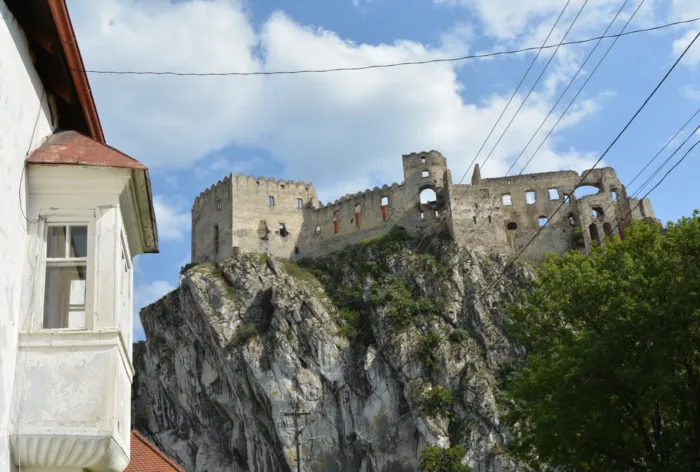
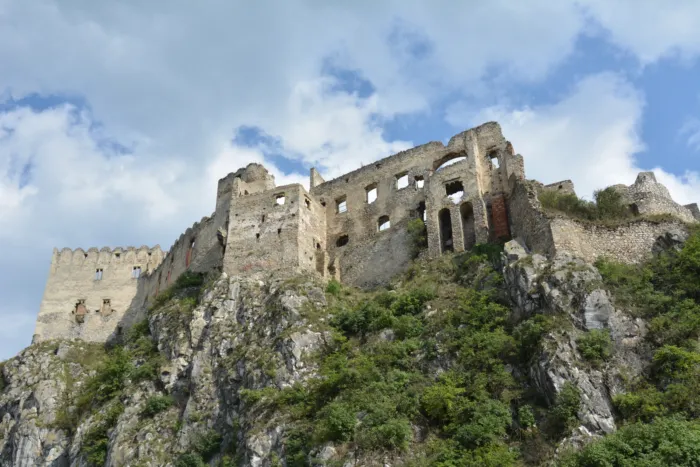
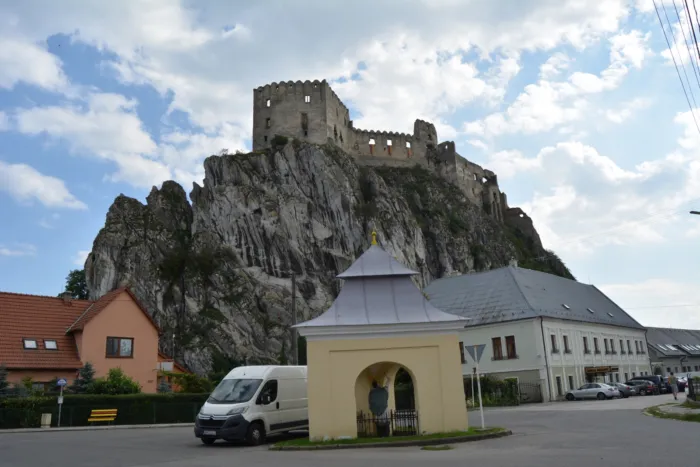
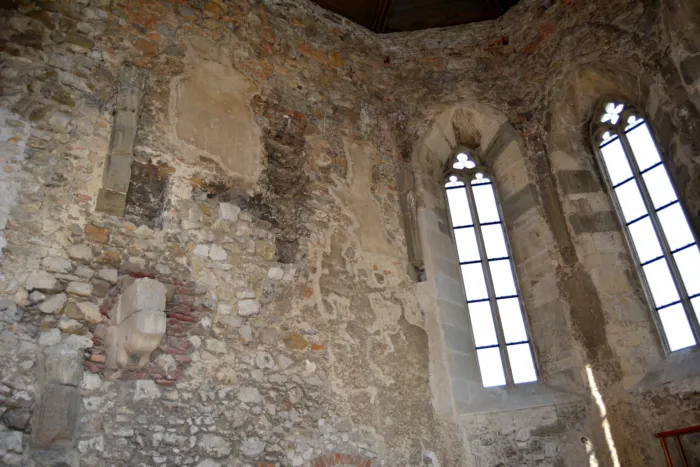
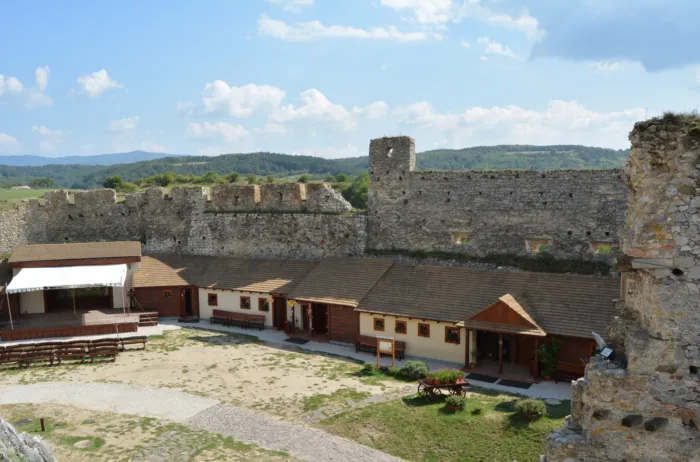
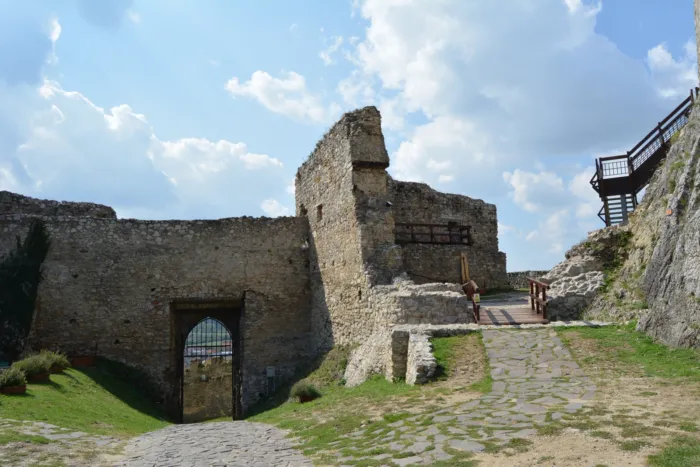
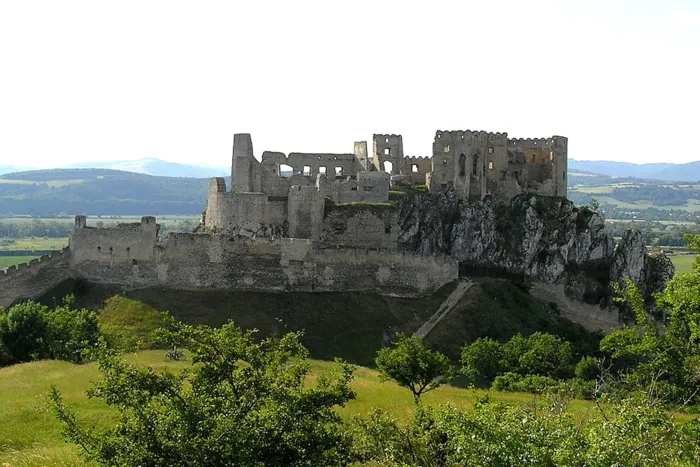
According to the Slovak archaeologists who conducted the excavations, a wooden Moravian fortress stood on this site even before 896, but they have not yet been able to find any trace of it. The first written mention of Beckó, which was most likely built in the 12th century and served as the seat of a castle governor, has survived to this day only from the historian Anonymous, who wrote about it after 1205. The armed men who retreated to the stone castle crowning a steep cliff peak repelled the attacking Mongol cavalry during the Tatar invasion of 1241. At the beginning of the 14th century, along with many other fortresses in the Váh River region, Beckó was captured by the armed men of the oligarch Máté Csák. The baron's rule only ended with his death in 1321, after which the castle and all its serf villages came into the possession of King Charles Robert. King Sigismund of Luxembourg donated it to Baron Stibor, one of his most loyal supporters, of Polish origin, who built his luxurious noble residence here. This 15th century period can be considered the heyday of Beckó Castle. After the death of the Transylvanian voivode Stibor, the castle estate was inherited by his only son, and then, after his death in 1434, by Katalin Stiborici – as part of the legal daughter’s quarter. After the noble lady married the royal groom Pál Bánffy of Alsólindva, the Beckó castle estate also enriched this noble family. The castle, which rises on a high cliff, remained in the ownership of the Bánffy family for the rest of its existence. Since Beckó was far from the bloody battlefields of the Turkish occupation in the 16th and 17th centuries, its landlords could live relatively peacefully behind the secure walls. The chronicles recorded only one case, according to which in 1599 a raiding Tatar cavalry attacked it, but the guard successfully repelled their attack. Since Beckó Castle was not considered a militarily important place, its private landowners did not build it in accordance with the warfare of the era, but only fortified the upper castle with a single cannon bastion. During the 17th century Transylvanian campaigns against the imperial and royal house of Habsburg {princes Bocskai, Bethlen and György I Rákóczi}, its guard most likely voluntarily opened the gate to the arriving Transylvanian armies. In 1644, the noble family died out without leaving a male heir with Lord Kristóf Bánffy. The heirs of the daughter line {they belonged to six families!} did not care about maintaining the fortress, but only about the lawsuit for the acquisition of the estate consisting of 17 serf villages, so the fortress, which had once seen bright days, began to deteriorate. The last military event in Beckó occurred in 1707, when László Ocskay's raiding Kuruc horsemen attacked and captured the small town surrounded by a stone wall, and then marched against the castle. However, its defenders bloodily repelled the insurgents' attack with their rapid volleys, whereupon the Kurucs plundered the town and the churches in revenge, and according to contemporary sources, they even stripped the local women naked and drove them out into the snowy streets. After Prince Rákóczi lost a decisive battle at Trenčín in 1708, the rebels who took up arms against the Habsburg house were finally forced out of this region. In 1711, after the defeat of the Rákóczi War of Independence, Beckó Castle, probably because of its loyal owners, escaped the order to demolish Hungarian castles. However, it soon met its end in 1729, when the entire castle burned down in a fire, and due to the enormous restoration costs, its owners did not rebuild it, but moved to more comfortable castles in the surrounding serf villages. In the following centuries, its walls and buildings were gradually destroyed, until archaeological excavations and restoration began in 1970. Although the monument protection works have now been completed, according to the data of the 2002 field visit, there are closed parts that cannot be viewed by visitors curious about the past. ; Description: ; Beckó Castle was built on a lonely 70-meter-high limestone cliff protruding from the plain at the foot of the Inóc Mountains along the Vág River, on the left bank of the river. Its height above sea level is 245 meters. The medieval fortress, with its considerable area, stretches out along the relatively narrow cliff ridge in a roughly N-S direction. Entering the former outermost gate – which has now been destroyed – we reach a long wall gorge. From there, through another gate, we arrive at the large courtyard of the lower castle, which is surrounded by high castle walls. Next to the vertical rock wall, the castle wall extends completely to the foot of the mountainside to the NE. The loopholes of the huge, thick-walled bastion built in the 16th century open up towards the castle courtyard. From these, the defenders could have subjected the besiegers who had broken into the lower level to devastating cannon fire. From the castle courtyard, the road leads to the left, rising higher and higher, and we arrive at the upper castle. On the right side, we are greeted by a square old tower, next to it is a round tower, and the aforementioned cannon bastion rises. The western side is occupied by the rooms of the L-shaped living quarters. From here, our path leads to the highest point of the cliff ridge. The polygonal castle chapel stands almost to its full height, the magnificent Gothic arches of which are still partially visible. At the end of the cliff peak, we are greeted by the ruins of the multi-storey palace built by Voivode Stibor. Its northwestern side has collapsed to the foundations, but in other places the walls built by the builders in the Gothic style stand to their full height. The imposing building was considered one of the most luxurious noble residences in Hungary in the 15th century. ; The legend of Beckó Castle: ; According to legend, the castle was built by Voivode Stibor for his court jester named Becko, who managed to make him laugh after an exhausting hunt along with the other nobles. Voivode Stibor, in his good mood, promised him that he would fulfill any wish he had. ; The court jester Becko wanted Voivode Stibor to build him a castle on a nearby rock. Since Voivode Stibor took the nobleman's word seriously, he did as he promised - he built the castle on a nearby rock. However, Stibor liked the built castle so much that he offered to give Becko's court jester as much gold as he weighed for the castle. Becko agreed on the condition that the castle would bear his name. This is how it got its name, Beckó Castle.