
Bojnice Castle
Building, structure
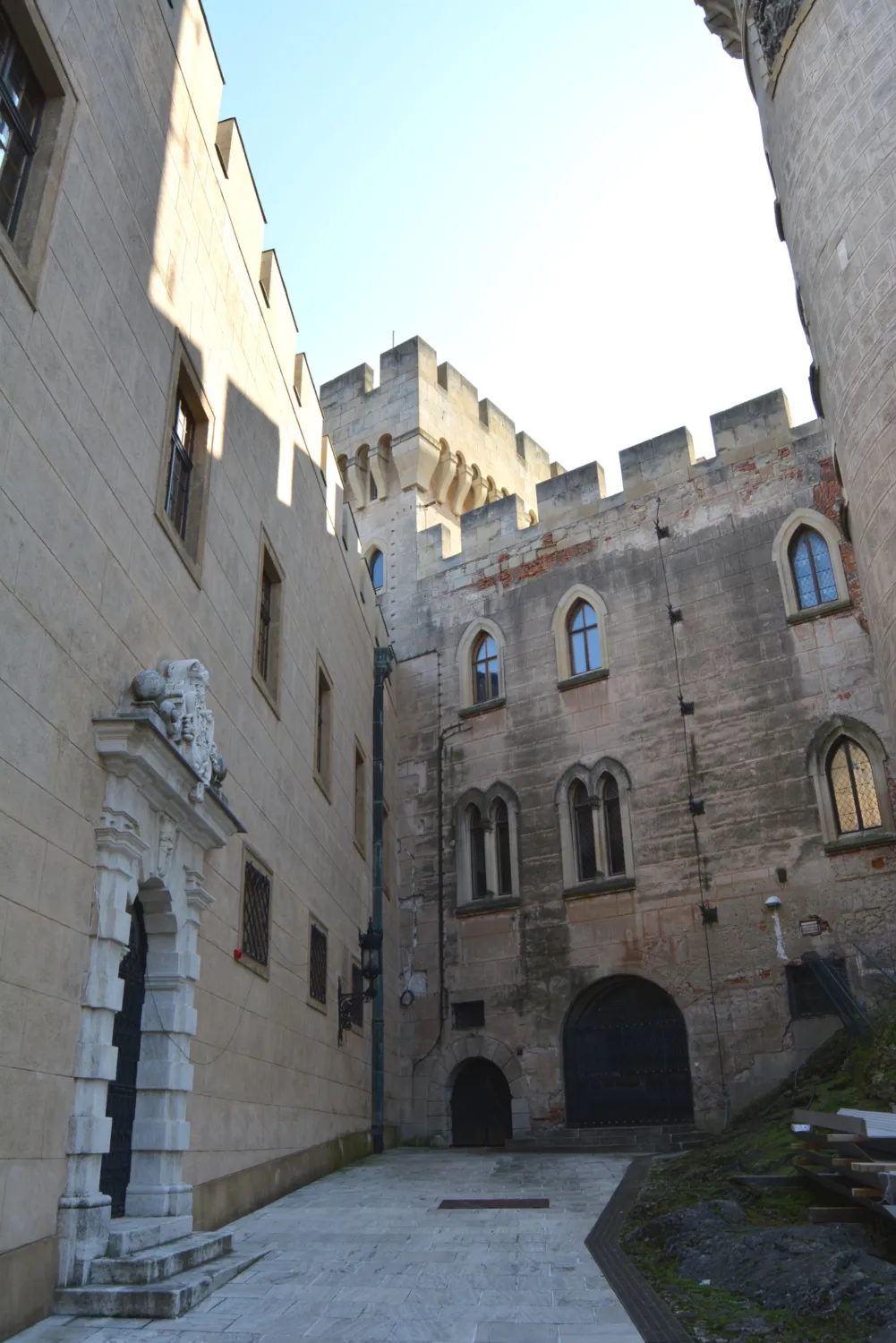
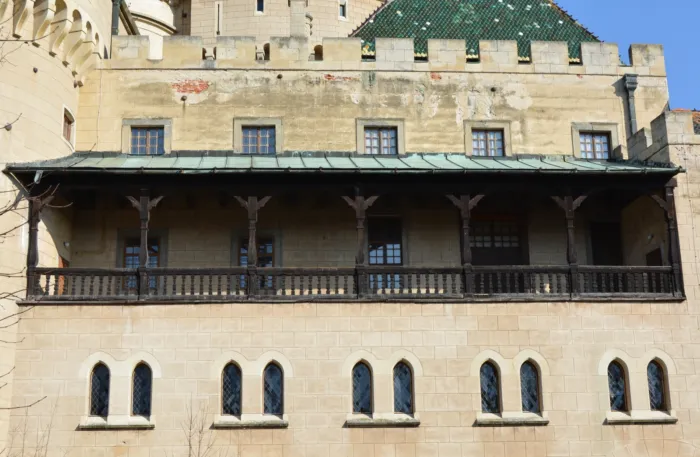
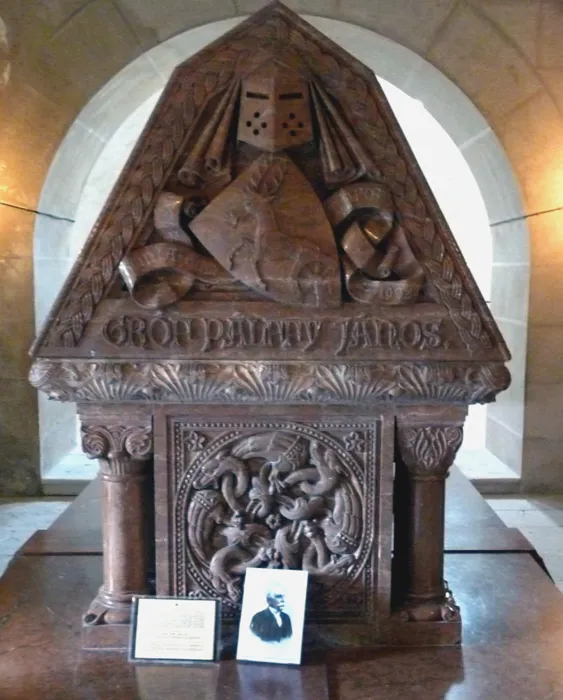
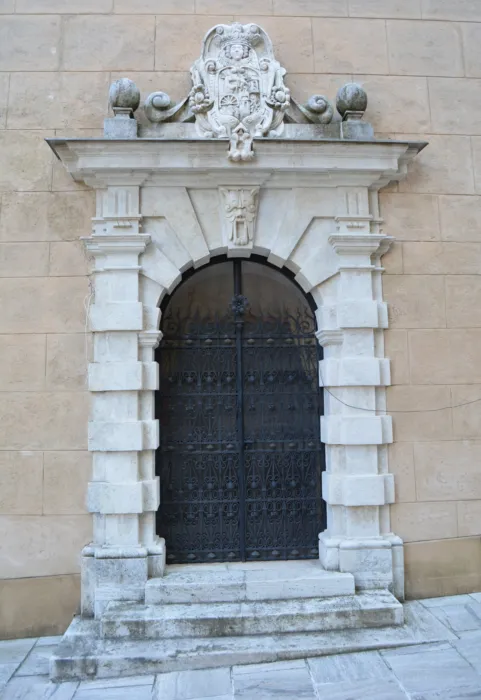
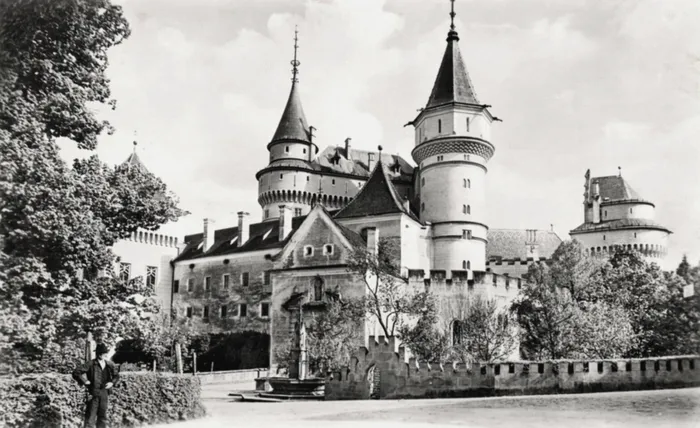
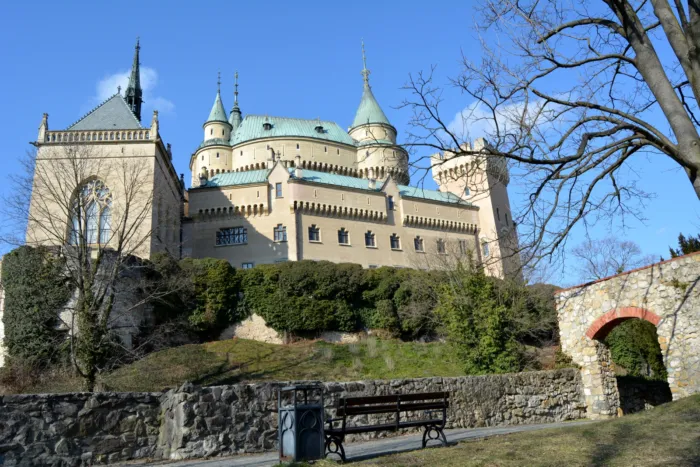
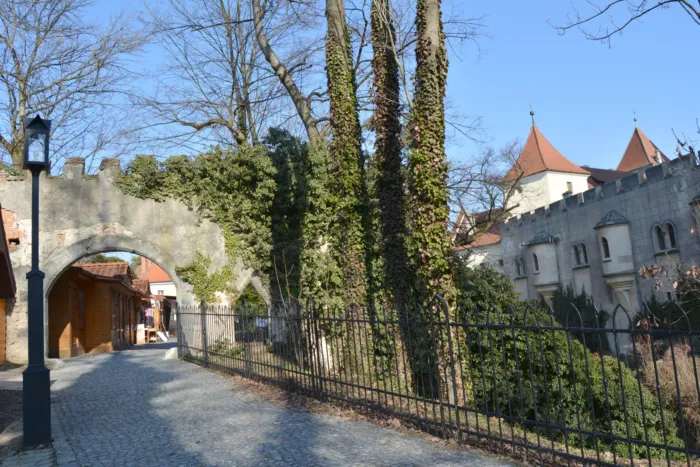
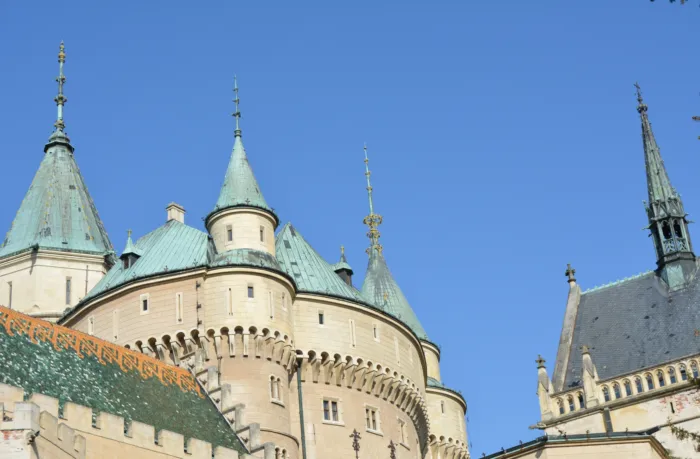
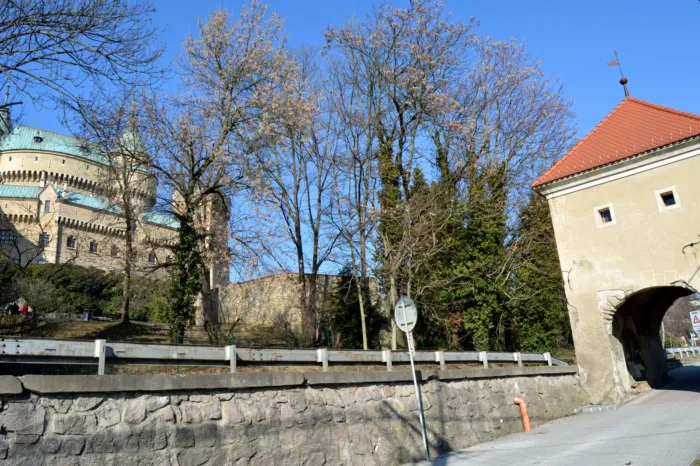
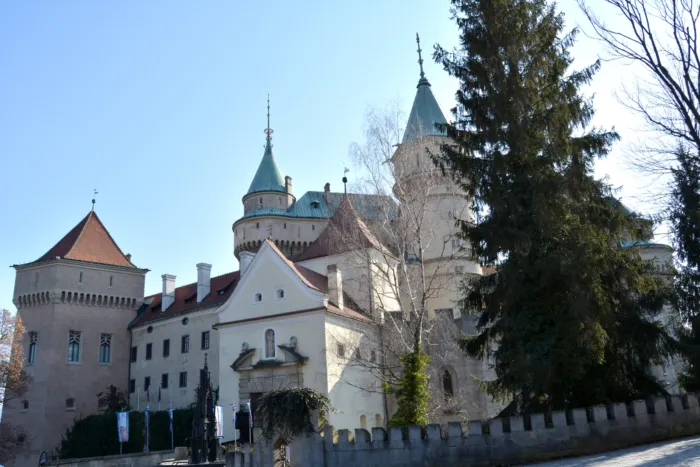
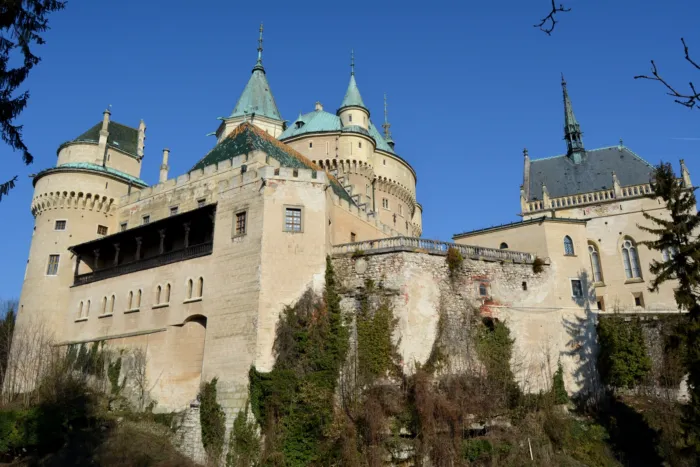
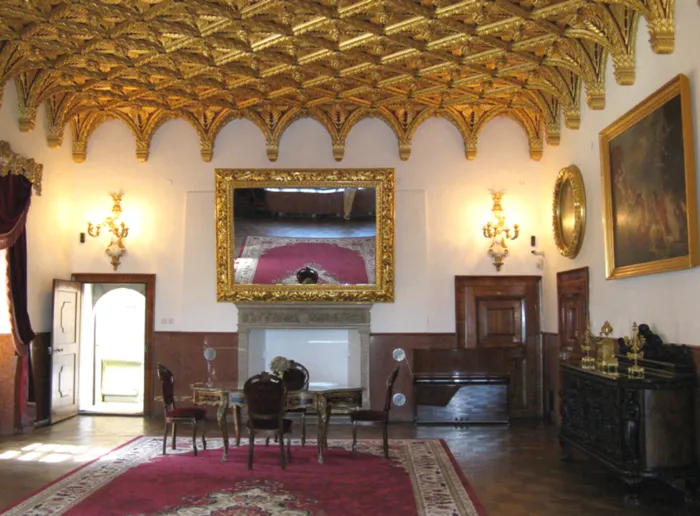
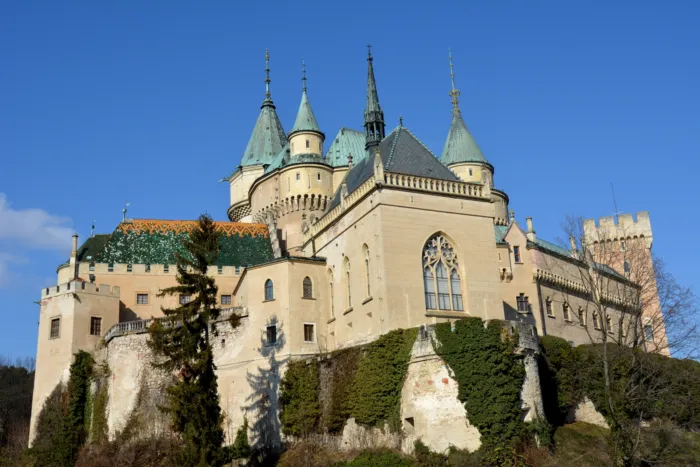
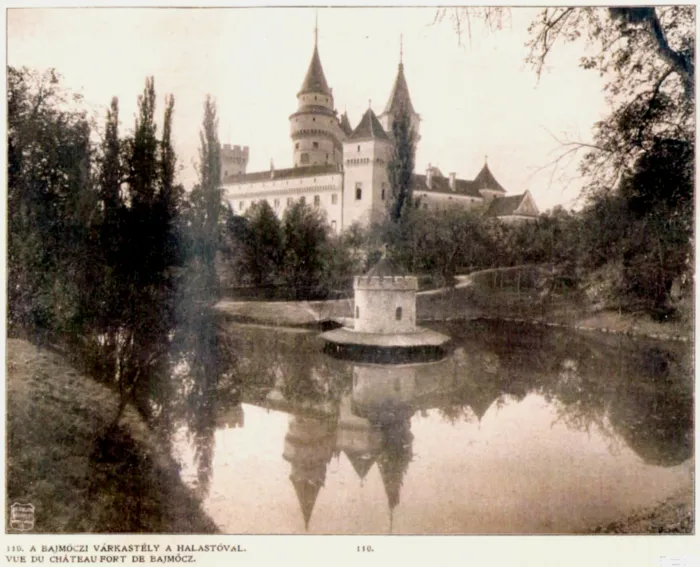
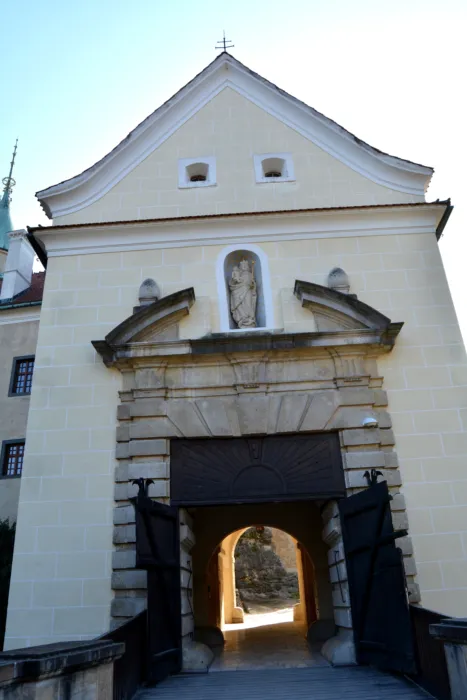
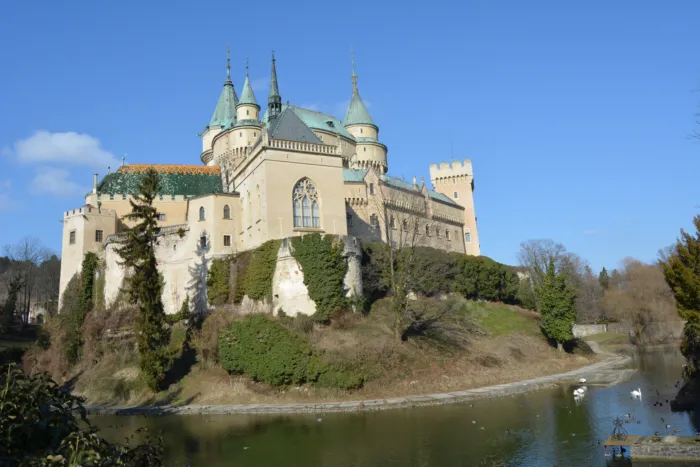
In the western part of the city of Bojnice, on a small hill, the fortress, which in its current form resembles a French castle, can be reached by a walking path that rises steadily through the vast park. The cliff is surrounded by a wide moat, into which the former castle builders channeled the water of the springs that burst here. Although the buildings were significantly transformed at the end of the 19th century at the request of the owner, the foundations still retain their medieval forms. The corners of the polygonal outer fortification are divided by tall towers, and buildings line the walls. In the past, food and firewood were stored here, as were the stables for horses and the accommodation for the large number of personnel. The building block of the inner castle also forms an irregular polygon, with tall towers rising towards the sky at its corners. Everywhere we can see the cantilevered, buttressed gables typical of French castles, and neo-Gothic architectural details – as dreamed up by the Budapest architect József Hubert at the turn of the 19th and 20th centuries. The work, which lasted for decades, cost 2 million gold crowns, which was a huge sum at the time, and unfortunately completely falsified the original medieval castle. According to the archaeological research carried out so far, the early core of Bojmóc in the 13th century may have been a castle on the cliff with a diameter of 30–35 meters, enclosing an oval area. Based on the nationally known castle building practice, the early part may have been a round old tower and a stone wall surrounding the steep edge, while farm buildings and stables rose in the courtyard. This was expanded in the 15th century with a larger outer castle, which was reinforced with thick-walled towers. In the 16th century, In the 19th century, when firearms began to be used on a large scale, the fortress, which had always been privately owned, was not transformed to meet modern defense requirements, meaning that no cannon bastions were built. This medieval fortress, thanks to its owners loyal to the Habsburg emperor, survived the order to blow up Hungarian castles. However, between 1889 and 1908, its walls and buildings were significantly transformed on the orders of the owner, Count János Pálffy. In its current form, falsifying its original image, curious visitors can see a French castle, in which 182 rooms were created, of which nearly 50 are living rooms. In its original, medieval form, only the castle chapel, in whose crypt, in a red marble sarcophagus, the former lord of the castle, Count János Pálffy, rests, and the knights' hall have survived, the other details reflect how the architect and the owner, Count, dreamed of a "knight's castle". We can even go down to the cave deep in the cliff, where the castle's inhabitants could quench their thirst from clean water springs. ; Behind the streets surrounding the beautifully renovated, elongated brick-shaped main square of the city of Bojnice, which exudes a historical atmosphere, we can visit the city fortifications that have partially survived to this day. We can follow the relatively thin, single stone wall for a long time, partly built into the residential buildings on the southern side, while a longer section has survived in a restored state on the western side. The town, which was once dependent on the landlords, has two entrances, one near the castle, a square gate tower on the southwest side, while the other is a simple gate opening on the west stone wall. It was most likely also an exit towards the busy Nitra River valley, but this, along with the rest of the town walls, was demolished around the 18th century. The town of Bojnice was not considered a significant fortress in the Middle Ages; Turkish raiders raided and robbed the townspeople's houses in 1530 and 1599. History of the castle: After the Tatar invasion of 1241-42, at the instigation of King Béla IV, officials holding national dignitaries, wealthier families and castle serfs built smaller and larger castles one after another at points suitable for defense on the land they had received as donations. At an unknown date, the sons of Casimir the Comes of the Hont-Pázmány clan established the castle of Bojmóc on a small rocky outcrop rising from the valley of the Nitra River. Around 1297, the oligarch Máté Csák, who extended his rule to the counties of the Highlands, had it occupied by his armed men, and in 1302, the Czech claimant to the throne, later Hungarian ruler Wenceslas, whom he supported, issued a deed of donation. After the powerful lord died in 1321, his domain was quickly invaded by the army of King Charles Robert of Anjou. The Bojmóc castle estate, together with the nearby Keselőkő, was administered by a joint royal governor. After King Sigismund of Luxembourg ascended the throne, in order to strengthen the number of his followers, he granted this area to the Palatine of the Leusták family of Jolsvai during the huge land grants, whose son György died without leaving a son in 1427, so it returned to the management of the Royal Chamber. From 1430, it was owned by Lénárd Noffri of Italian origin and his brothers. Since there were four of them, they significantly expanded the fortress, and then the outer castle block was established. In the 1440s, the Czech Hussites, who had already brought significant parts of the Highlands under their rule, did not manage to capture the built fortification either. King Matthias Hunyadi donated the castle estate of the Noffri family, which had become extinct in 1489, to his illegitimate son, János Corvin, Duke of Liptov. The new landlord was attacked here by assassins hired by the Szapolyai noble family, but their plan failed. The direct leader of the dastardly assassination, Péter Pohi, the castle governor of Bojnice, was convicted by the royal court in Buda and executed by being cut into four pieces alive in the square in front of the Friss Palace. Bojnice was soon taken over by the Szapolyai, because in exchange for the money demanded from the deceased King Matthias, John Corvin was forced to pawn the significant castle estate to them. In the middle of the 16th century, it was taken from John Szapolyai, who was elected king of Hungary, by the mercenary armies of Ferdinand Habsburg, the Austrian Archduke and later also a Hungarian ruler. The victorious king donated it to the Thurzó family, one of his most important Hungarian supporters, who strengthened its walls to protect against the increasingly frequent Turkish raids. According to contemporary sources, the town was plundered and burned by pagan cavalry hordes in 1530 and 1599, but they did not dare to attack the strong Bajmóc castle. During the major campaigns of the 17th century, in 1605, its garrison opened the gate without firing a cannon to the hajdú troops of István Bocskai, who rose up against the tyranny of the Habsburg imperial house. From 1607, it came under the control of the Thurzó noble family again, who used it as the center of the feudal estate of the surrounding serf villages. At that time, it was no longer considered to have any significant military value, so the construction of modern cannon emplacements and bastions suitable for warfare with cannons was not carried out. In 1637, the Thurzó family also became extinct, but the ruler soon pawned it to the Pálffy family. Throughout history, a noble family loyal to the emperor could claim it as an eternal estate from 1643. It played its last military role in the war of independence led by Ferenc II Rákóczi, when the Kurucs were only able to enter its walls after a long-lasting starvation blockade, on July 8, 1704. Four years later, it was regained by its landlord, Count János Pálffy, the Croatian Ban. Since the nobleman was an unconditional supporter of the imperial house during the uprising, the Bojnice Castle that was his property escaped the order to blow up Hungarian fortifications. It continued to retain its medieval form until 1889, when, on the instructions of the owner, Count János Pálffy, the Budapest architect József Hubert carried out extensive renovations to Bojnice Castle based on the model of French castles. The work, which lasted for decades, cost 2 million gold crowns, a huge sum at the time, and was completed in 1908. In its current form, it evokes a fake “fairytale palace” that never existed in this region, which is admired by tourists who flock here from far away. ; The most impressive room of the castle is the Golden Hall, whose ceiling was carved from juniper wood and decorated with gold dust. If we look above our heads, 183 angel heads look down at us, and what is particularly interesting is that each head shows a different facial expression. ; The next masterpiece is the Blue Salon in the central part of the castle, which got its name from the color of the wall painting. However, the most interesting thing on the walls is not the blue color, but the busts of Hungarian kings, queens, knights and nobles looking back at us. There are also three dog statues in three corners, and they depict human qualities. The false, the intelligent and the cunning. ; In the crypt we find the final resting place of the last noble owner of the castle, Count János Ferenc Pálffy. The count, blessed with a passion for collecting, left a will before his death in 1908 that the castle should be open to everyone and remain as a museum for posterity.