
The Orthodox Synagogue of Érsekújvár
Building, structure
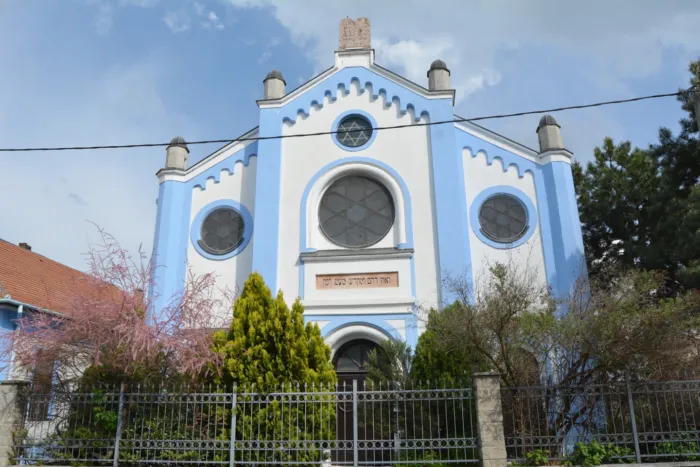
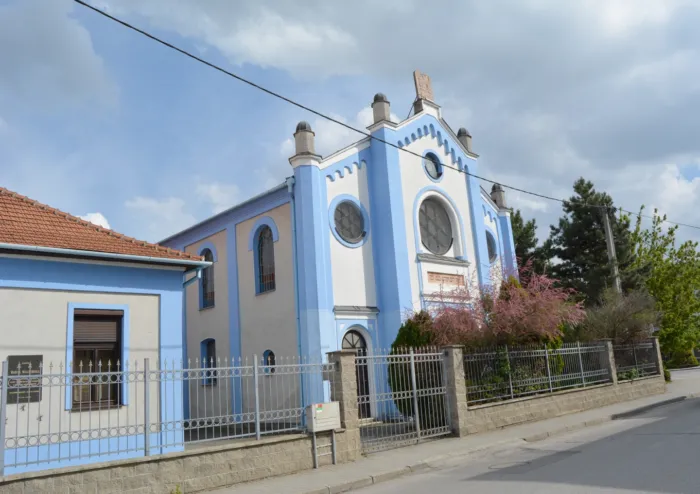
Jews were only allowed to move to Érsekújvár, an important fortified city of modern Upper Hungary, only after 1840. Before that, they could only trade and attend fairs, but they were not allowed to stay overnight within the walls. The second half of the 19th century was also a period of significant growth in the number of Jews here. ; There were two synagogues in Érsekújvár, one of which was built in 1859, in the style of the Dohány Street Synagogue in Budapest, which had been built not long before. Shortly afterwards, internal strife between Conservative Judaism and Reformists flared up so much that the then Hungarian Minister of Culture convened a council in 1868 (which met in Nagymihály for two years) with the aim of creating peace. But it was not possible, because the Orthodox stubbornly adhered to the old regulations, and the Reformists wanted to modernize and open up. After the unsuccessful council, a split occurred: the Orthodox seceded in order to keep their old customs and laws, which the synagogues built on the Dohány Street model did not comply with, because the so-called almemor – the table platform from which the Bible, the Holy Scriptures, and the five books of Moses are read – had to be in the middle of the building, between the entrance and the Ark of the Covenant. The meaning of this regulation is that everyone present – regardless of their location – should have an equal opportunity to listen to the words of the Word. The neologists, on the other hand, placed it forward so that everyone could face each other. Since the elders did not accept this, they decided to separate. For a while, they had a smaller prayer room, a little further in, on the same plot where the current synagogue stands, and then in 1880 they built the synagogue. ; The vast majority of the Jews of Újvár were deported from the ghetto established there, which was annexed to Hungary in 1938, to Auschwitz in two transports in June 1944, where most of them were killed. The city's Neolog synagogue was significantly damaged in a bombing during the war. After the war, its remains were demolished. The Orthodox synagogue remained intact, but it still bears the marks of the war - oil stains on the floor remind us that the Germans used it as a garage. After the war, when the Jews returned in small numbers, a decree of the Slovak National Council in 1946 came into force, according to which the Neologs and Orthodox were merged. After its congregation was lost, the building stood neglected for decades. ; The main facade of the puritan-looking, two-story, rectangular building with a portico has a three-part structure. Inside, there is a gallery resting on cast iron columns along two longer and one shorter side of the building: the women's place. The original furnishings of the synagogue have been preserved to this day. In the middle, we find the prominent podium, the bimah, for reading the Torah. Its most beautiful work of art is the Aron Hakodesk, the room of the holy Ark. The interior walls of the synagogue are decorated with paintings. The building also had a ventilation system, the copper grilles of which can still be seen on the ceiling. ; The Hebrew inscription above the entrance reads "V'chejle lohem i'mikdos mar l.p.k.", meaning: May this serve as a small sanctuary for you. The sum of the numerical values of the letters gives the year 5660 of the synagogue's first renovation and expansion, corresponding to 1920 in the civil calendar. The synagogue was extended by 6 meters, as the number of seats increased by about 80. At the same time, the almemor was also moved by 3 meters, so that its central location still meets the requirements of the Sulchan Areuch. ; The synagogue's most recent renovation took place between 1991 and 1995 exclusively with the strength and expense of the remaining community. This saved a significant building in the city from a historical and monument protection perspective for the future. The windows were originally colored glass, with symbolic Star of David and Ten Commandments motifs. Restoring the window mosaics, which were damaged during the bombings, to their original form is beyond the strength and financial capabilities of today's small community. In the vestibule - the pulis - there is a marble plaque embedded in the wall that once adorned the entrance to the now-defunct neolog synagogue built in 1859 and destroyed by bombing, with the inscription "Step through the gates of truth". ; There are several memorial sites in and outside the building. Inside the synagogue, 19 plaques bear the names of the city's Holocaust victims, and on its outer wall there is a memorial plaque donated by the Ministry of Culture of the Slovak Republic in 1992 in memory of the 4,386 victims deported from Érsekújvár. Similar memorial plaques were placed in 12 cities in the country, the 13th is located in Jerusalem at Yad Vashem (Israeli Holocaust Memorial). ; The renovated former Bet HaMidrash building next to the synagogue now houses a prayer hall and a cultural center used in the winter. On the outer wall, at the initiative of the Society of Slovak Christians and Jews, a memorial plaque in Slovak is placed in memory of Raoul Wallenberg, a Swedish diplomat who worked in Budapest during the war, to whom several Jews of Érsekújvár owe their salvation. The plaque was unveiled on July 7, 1997, the presumed 50th anniversary of Wallenberg's death. ; The synagogue building was declared a protected monument in 1991.