
The Archbishop's Palace (Primate's Palace)
Building, structure
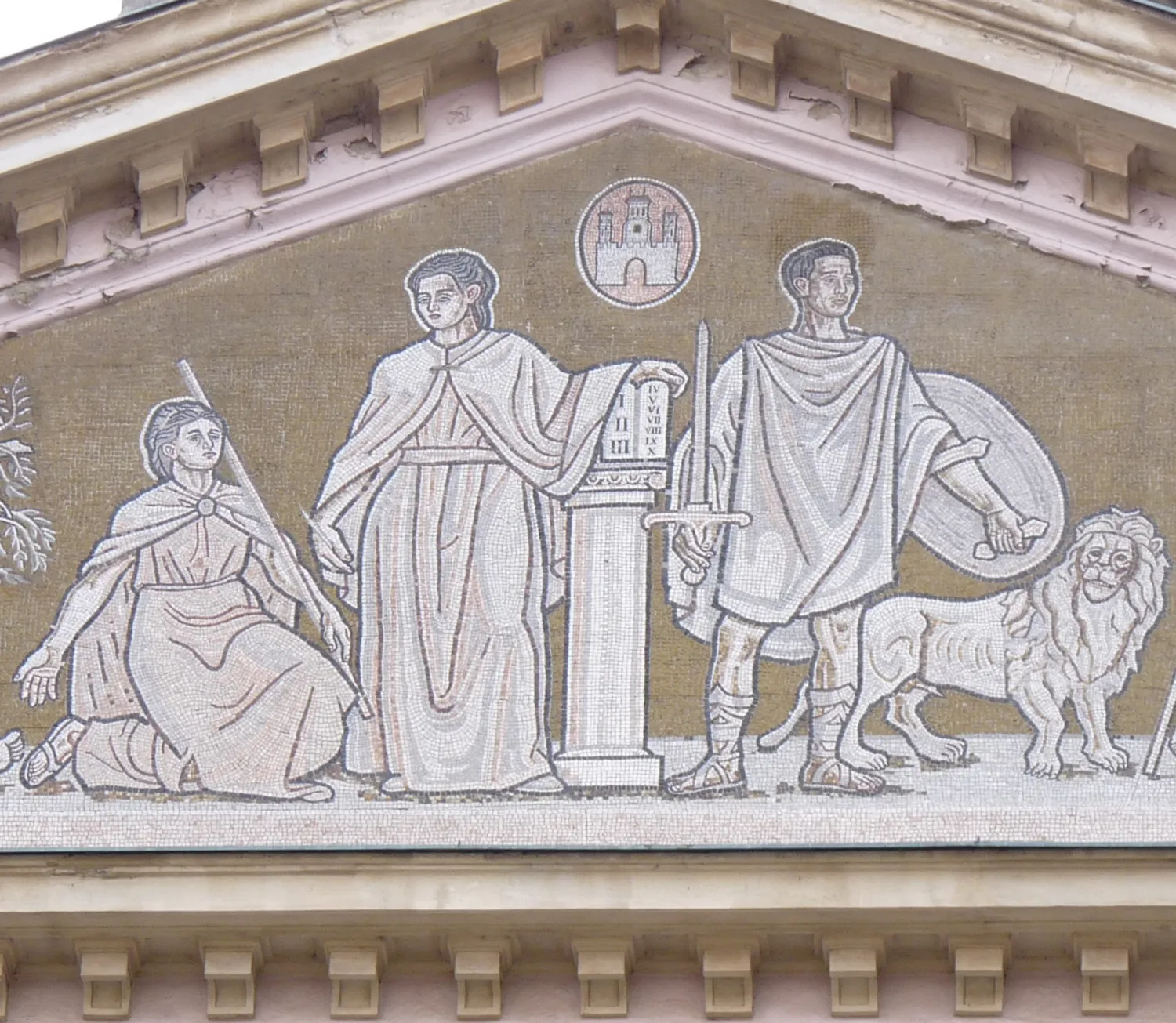
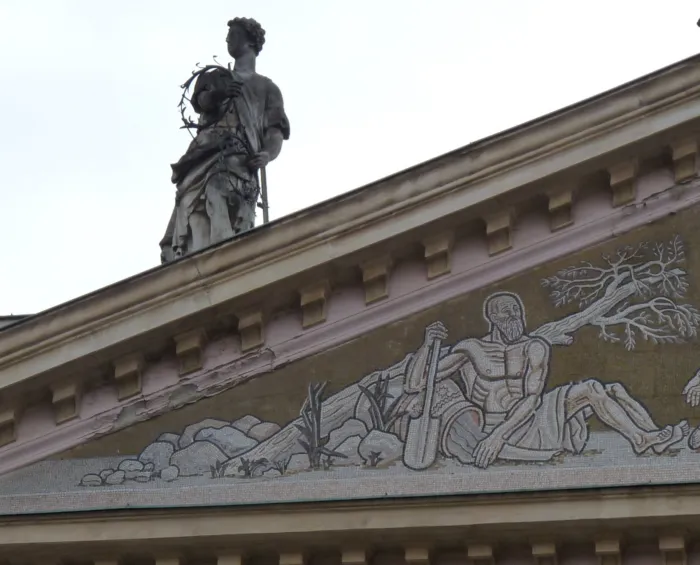
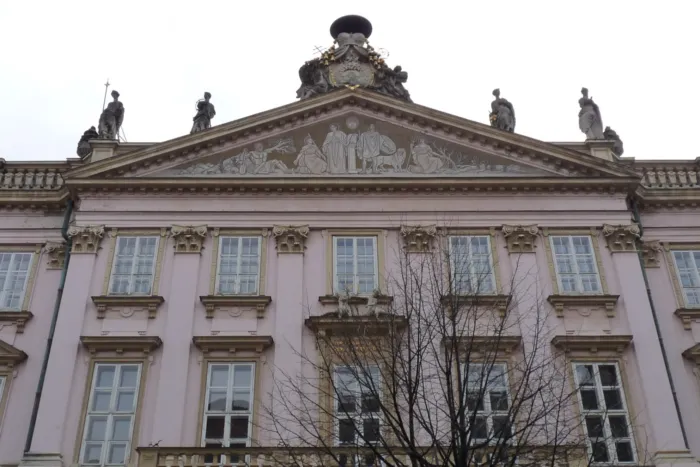
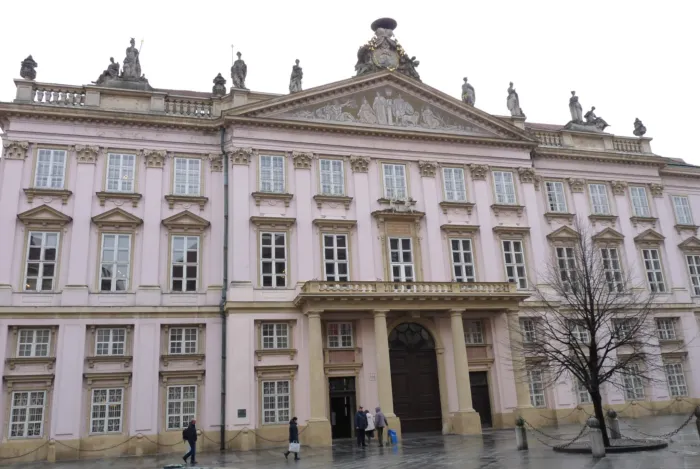
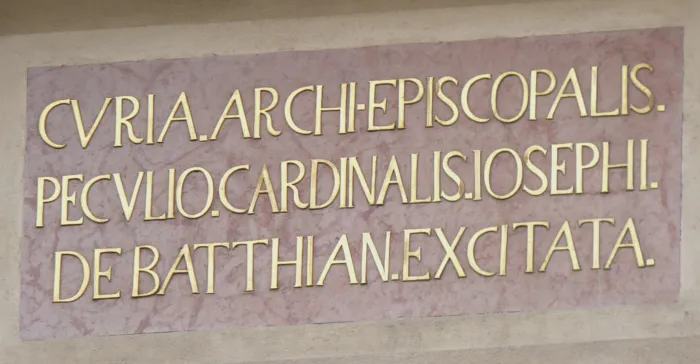
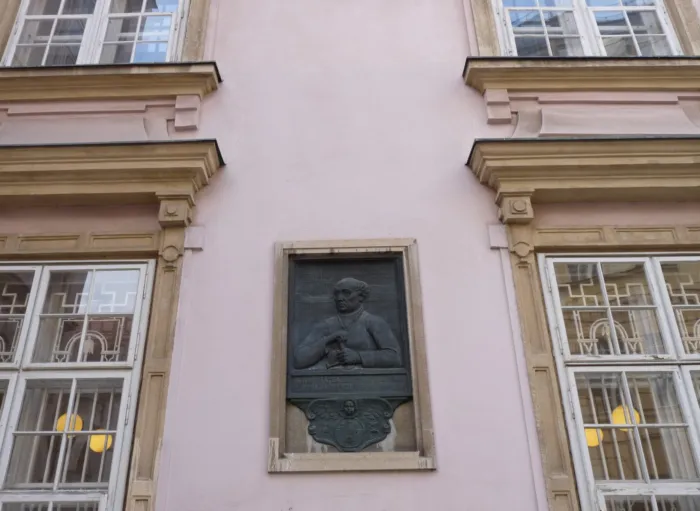
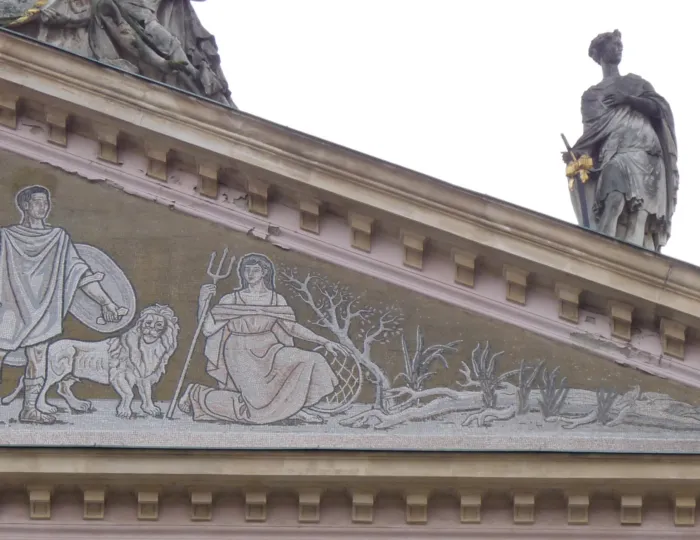
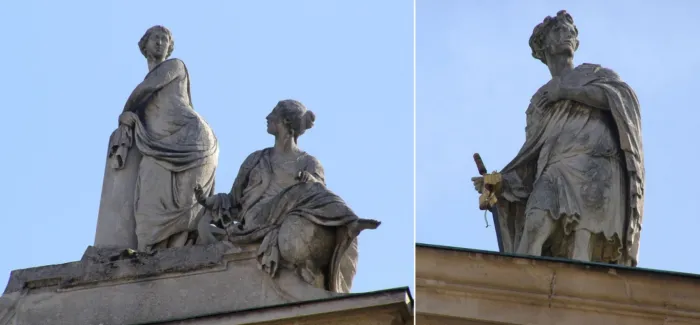
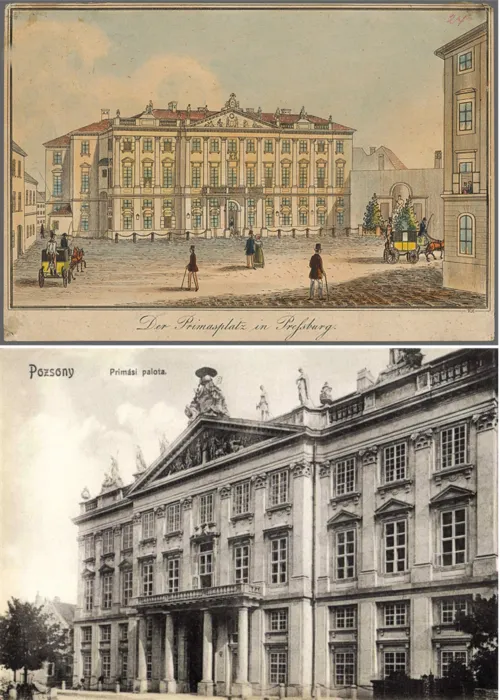
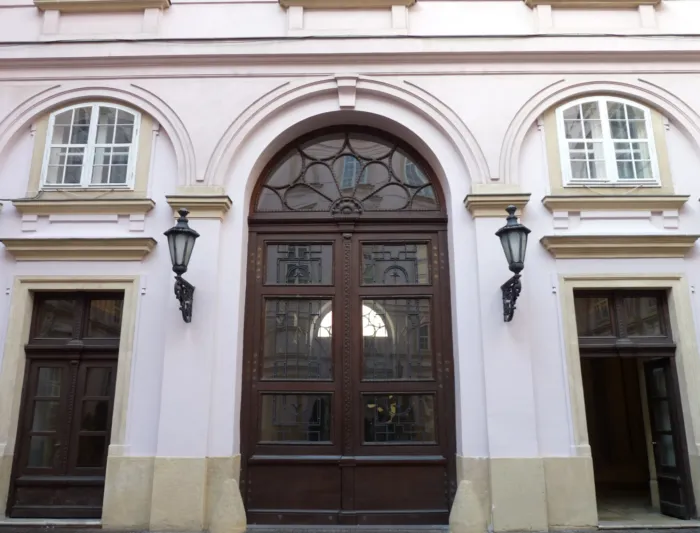
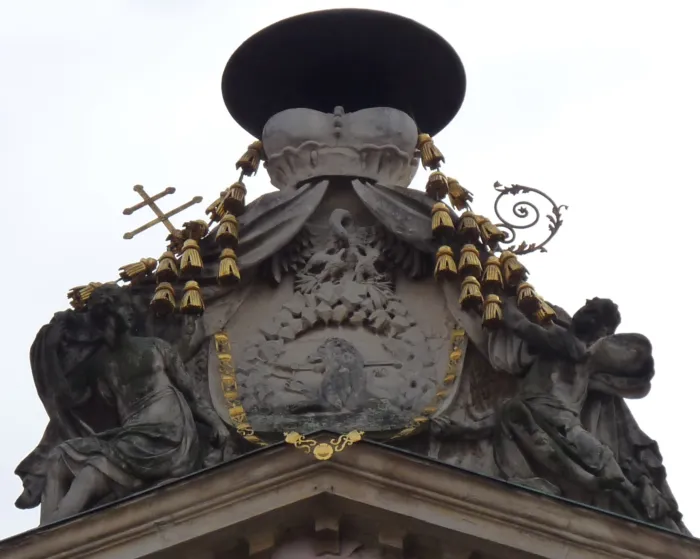
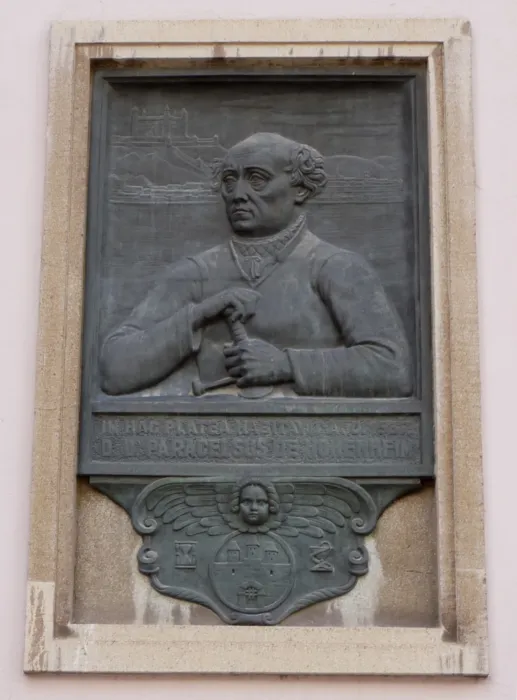
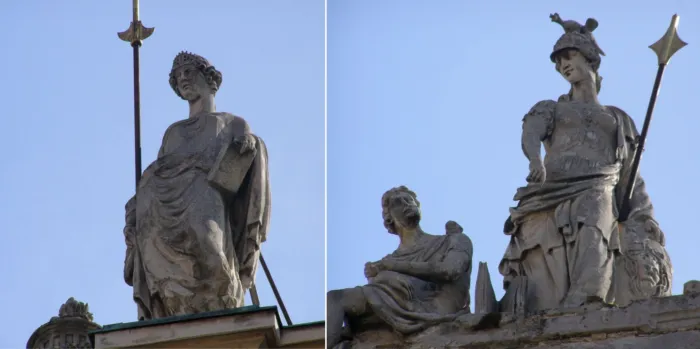
One of the most significant monuments of classicizing late Baroque architecture in Hungary was built by Cardinal József Batthyány, Archbishop of Esztergom, Prince-Primate of Hungary, between 1778 and 1781, based on the designs of Melchior Hefele. The primate enlisted the most renowned Viennese artists of the time for the interior decoration of the palace: the ceiling painting of the chapel was painted by Maulberts, and the altarpiece depicting the apotheosis of Saint Ladislaus was painted by Maulbertsch's assistant, Andreas Matthias Zalinger; The cardinal's hat above the coat of arms can still be found on the roof of the palace today. On the facade, a mosaic by Ernst Zmeták (made in 1957–59) can be seen in addition to the archbishop's coat of arms, as the original frescoes have been destroyed over time. Minerva can be found on the pediment of the palace, as well as allegorical statues reminiscent of honesty, faith, patriotism, and priestly dignity (works by Matthäus Kögler and Philipp Jakob Prokopp). On the side of the building facing Orsolya Street, you can see the Paracelsus memorial plaque (created by Lajos Mack), commemorating the world-famous physician and alchemist's visit to Bratislava in 1537. You can also see a horizontal line with the date "1850. febr-5", which marks the water level of the flooded Danube on that day. ; The palace can be entered through a three-axis vestibule, from which you can reach the main rooms via the grand staircase. The main floor overlooks the square, which is also directly connected to the ballroom in the east wing of the palace. The walls of the spacious ballroom are lined with mirrors, which is why it is called the Hall of Mirrors. ; The most important attraction of the palace is the collection of 17th-century English tapestries, which depict the love story of (Greek mythology) Leander and Hero. ; From the entrance hall of the palace you can reach an inner rectangular courtyard, the middle of which is occupied by the St. George Fountain, the central figure of which is a Baroque sculpture group depicting the famous knight. St. George's fight with the dragon symbolizes the Catholic Church's fight against the Reformation. ; On the right, at the back, is the St. Ladislaus Chapel, with a fresco of the miracle worker St. Ladislaus. Above the entrance to the chapel is a 17th-century Madonna relief. ; The former palace was built when the Archbishopric of Esztergom had to leave Esztergom, which was occupied by the Turks. It was rebuilt and expanded after the fire of 1590. Between 1611 and 1662, all books printed in Bratislava were printed here, and the old bishop's house also had a chapel dedicated to King St. Ladislaus. ; The St. George Fountain of the castle was originally brought here from the ornamental garden of Archbishop Ferenc Forgách, whose fame was founded by Archbishop György Lippay. After the garden was closed, the fountain first ended up in the garden of a bourgeois family house, later received as a gift from the city, and finally was placed in the courtyard of the palace. ; The Peace of Bratislava was signed in 1805 in the Hall of Mirrors on the first floor of the palace after the Battle of Austerlitz. At the signing of the treaty, the foreign minister of the victorious Napoleon Bonaparte, Maurice Talleyrand, represented the defeated Emperor Francis I, Prince John of Liechtenstein. It was there that István Széchenyi offered the annual income of his estates to found the Hungarian Academy of Sciences. King Ferdinand V of Hungary also signed the April Laws here on 11 April 1848, in the presence of Queen Maria Anna, Archduke Franz Charles and his son, Archduke Franz Joseph (later emperor and king), Archduke Stephen, and all members of the Batthyány government. Following the suppression of the 1848–49 revolution and war of independence, Major General Haynau also signed the sentences pronounced against the Hungarian revolutionaries here. After the parliament moved from Bratislava to Budapest, the palace premises were rented out. For a while, the women's preparatory institute, the Catholic Casino, operated here, and in addition, it housed the military staff officer course, the schools of industry and metalworking, and the warehouses of the Catholic burial association. ; On August 30, 1902, the entire building was purchased by the city and began to be renovated to house city offices, a museum, and a public library. During the renovations, tapestries hidden by Napoleon's soldiers and later forgotten were discovered. The valuable English tapestries were originally purchased by Prince-Primate József Batthyány from Cardinal Mazarin. The Archdiocese of Esztergom then wanted to sue the Mortlake factory for the valuable wall tapestries, but finally Archbishop Kolos Vaszary of Esztergom reached an agreement with the city. The agreement included that the tapestries were an integral part of the palace, they could not be sold or taken out of the palace, and they had to be made accessible to the public. ; Between the two world wars, literary lectures and author evenings were held in the palace's Hall of Mirrors: Zseni Várnai, Aladár Schöpflin, Zsigmond Móricz, and Thomas Mann also gave lectures here. ; On August 3, 1968, six fraternal socialist and communist parties signed a declaration here, which recorded a cooperation agreement on the preservation and defense of the achievements of socialism. Following the signing of the agreement, under the guise of “internationalist assistance,” these fraternal socialist countries occupied Czechoslovakia 18 days later.