
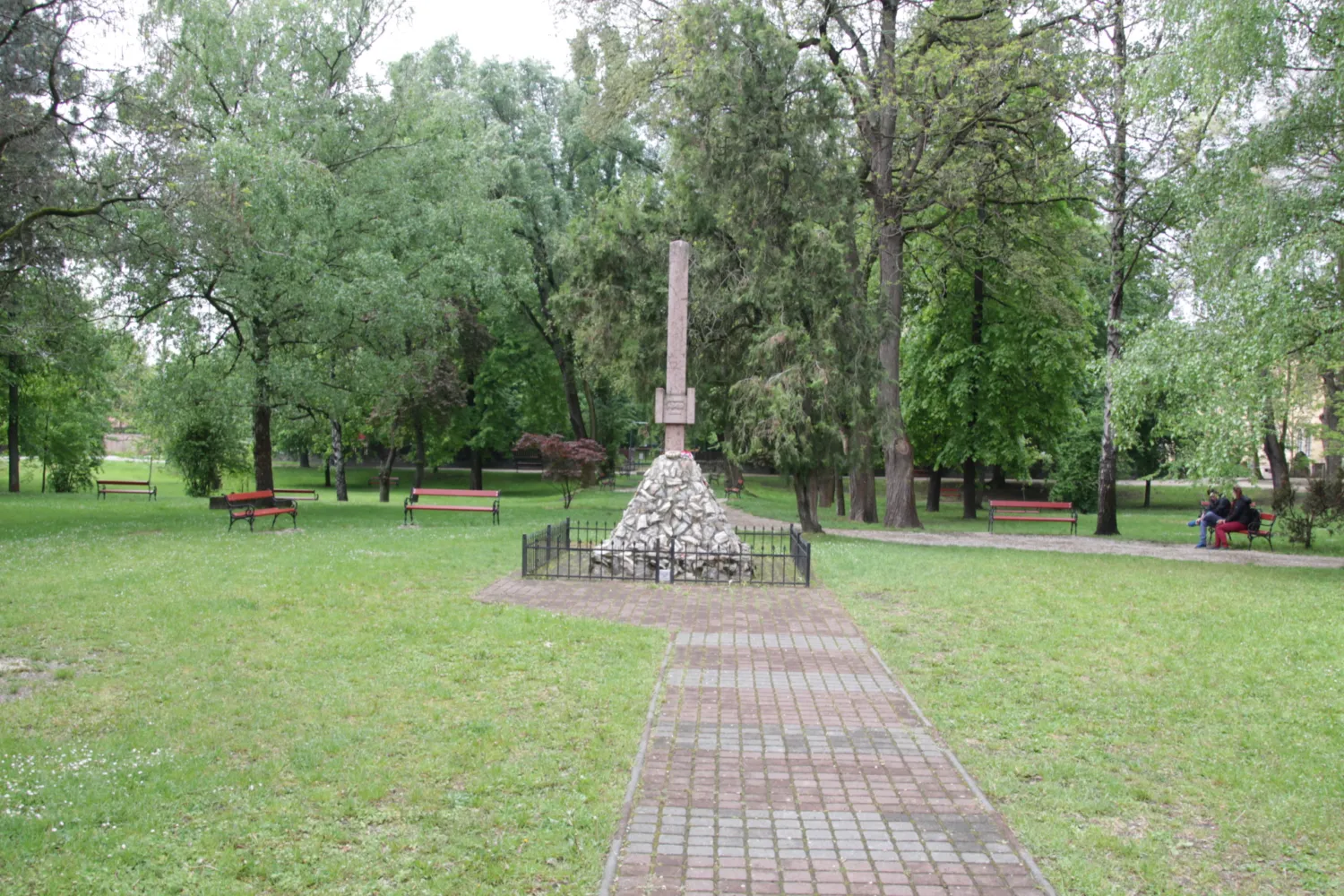
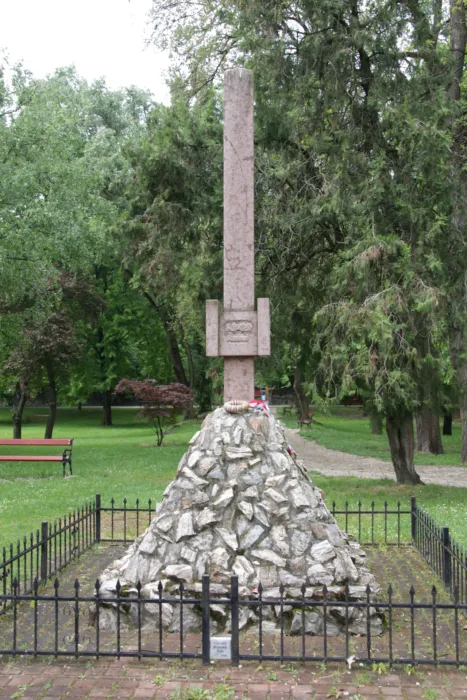
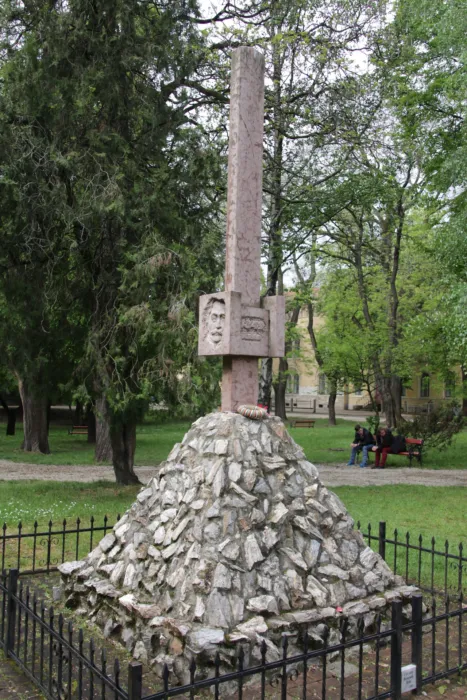
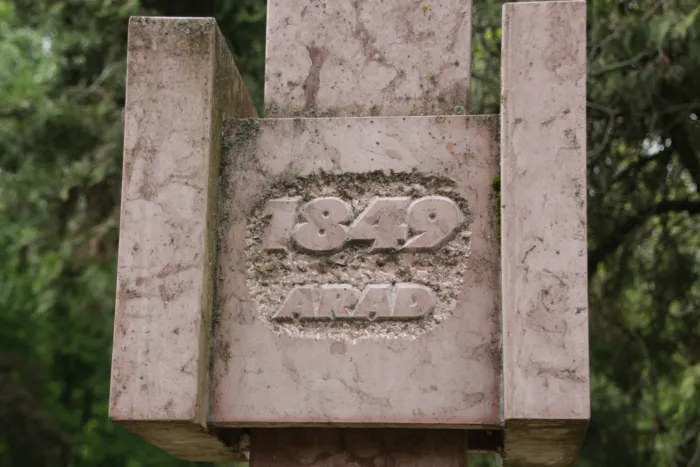
The monument to the martyrs of Arad in Révkomárom
Statue, monument, memorial plaque
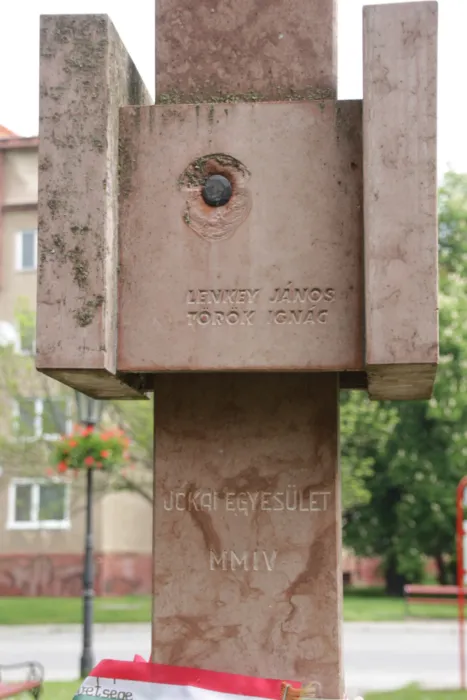
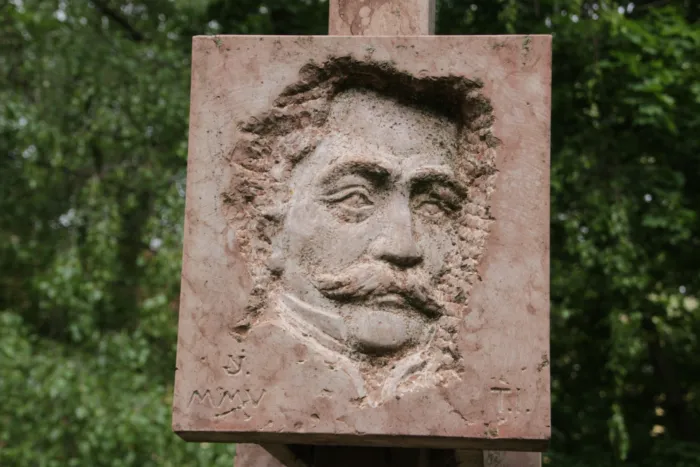
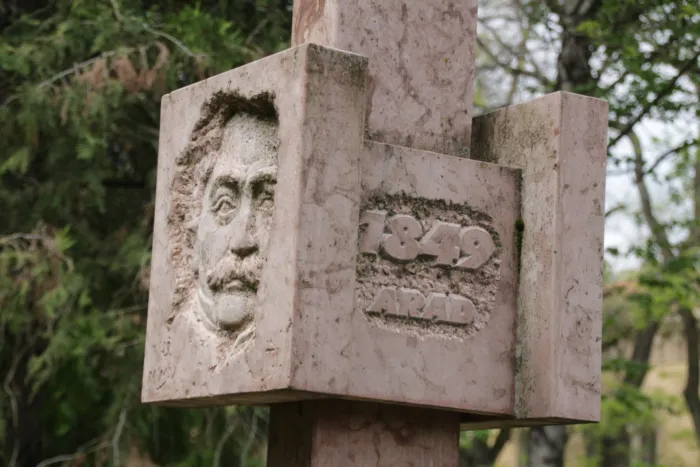
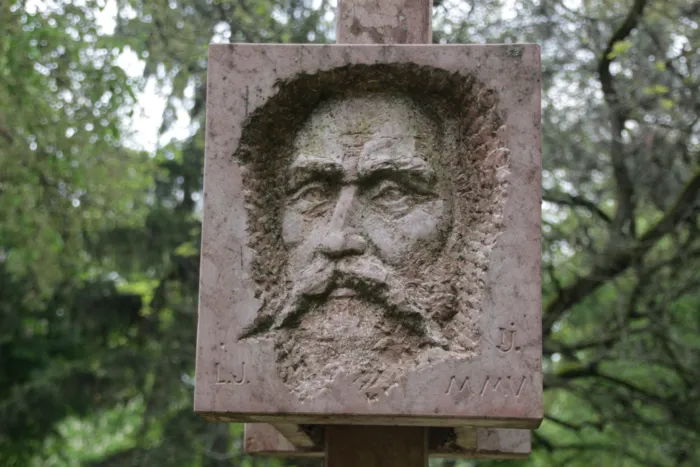
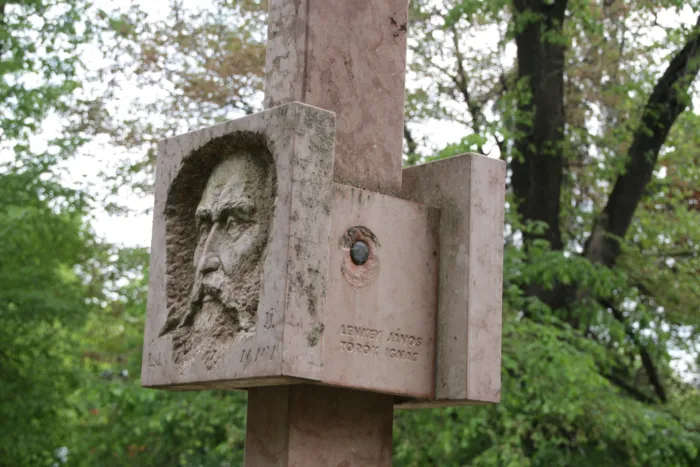
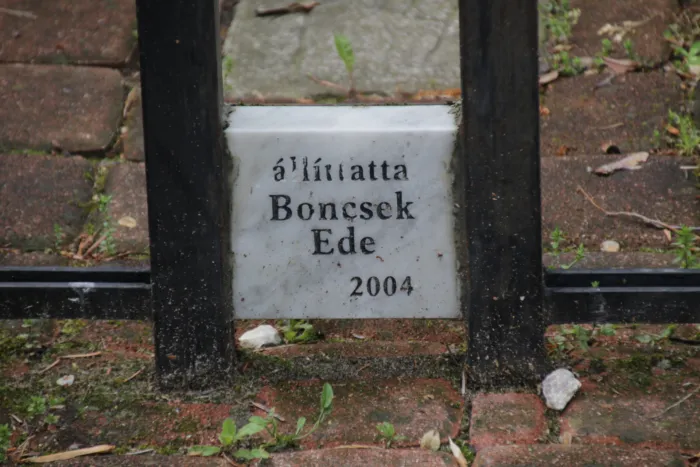
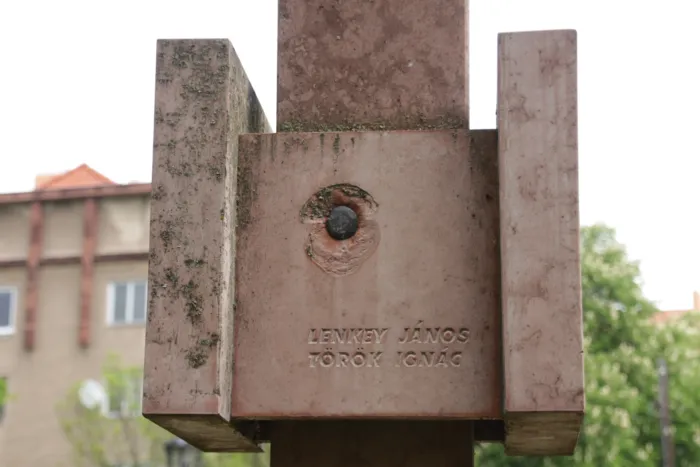
For more than a century and a half, the old Komárom did not have a public monument to honor the memory of the martyrs of Arad - and as an important stronghold of the War of Independence and as a city that later mourned the martyrs of Arad, it deserved one. The Jókai Public Education and Museum Association, founded in 1911, dissolved in 1945, and then relaunched in 2000, decided to erect it in the early 2000s, but despite applying for various locations in two states, it did not receive support. The monument was eventually realized through public donations, the issuance of 100-krona brick notes, and donations from local companies. ; ; Its history is interesting: originally, the ca. The 3 m high red marble obelisk, the work of stonemason Boldizsár Rysavy, was inaugurated on October 6, 2004, and the appeal of the Jókai Association to future generations was inserted into its pedestal. The relief portraits of the two Arad martyrs, who were closely associated with Komárom, also made of red marble, were placed on the obelisk a year later, on October 6, 2005, and they were ceremonially inaugurated. These two portraits of the same size and nature are the work of sculptor János Nagy. ; ; Generals Ignác Török and János Lenkey were the commanders of the impregnable Komárom fortress during the 1848-49 War of Independence (the former served there from the autumn of 1848, became commander in mid-January 1849, the latter was commander between March 15 and April 20, 1849, his successor, Richárd Guyon, emigrated to Turkey in mid-August 1849, thus escaping prosecution), György Klapka, who remained in Komárom after the surrender of Világos, eventually surrendered himself and his army in exchange for a free retreat. Ignác Török was one of the 'Arad Thirteen', as we learned in school, he was sentenced to death by hanging, and was executed on October 6, 1849. János Lenkey, who was imprisoned with his comrades in Arad and survived them by a few months, was not killed because he went mad in prison.