The movement of amateur poetry and prose (Mihály Tompa National Competition)
Intellectual heritage
The movement of amateur poetry and prose recitation, verse singing and lyrical stages (Tompa Mihály National Competition)
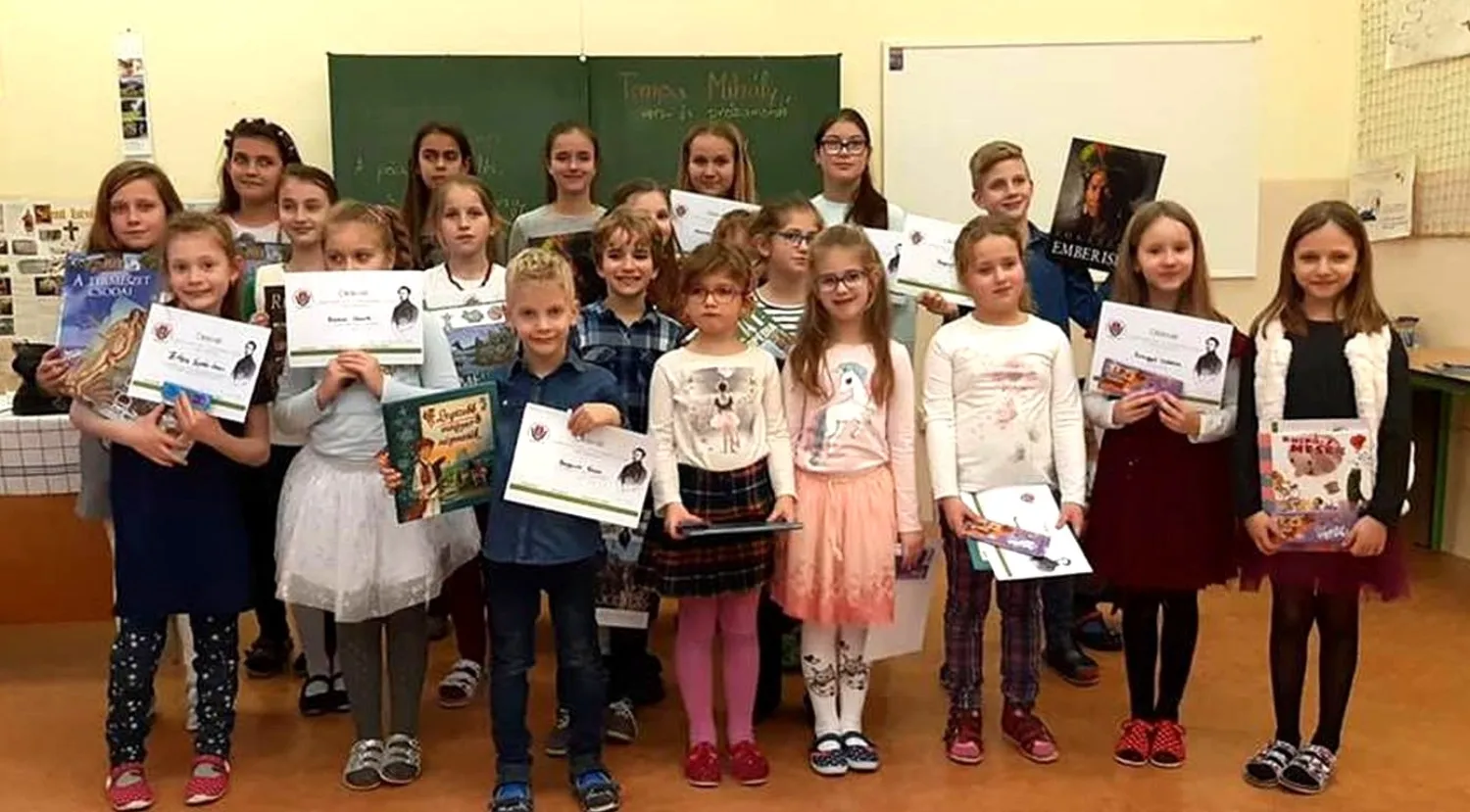
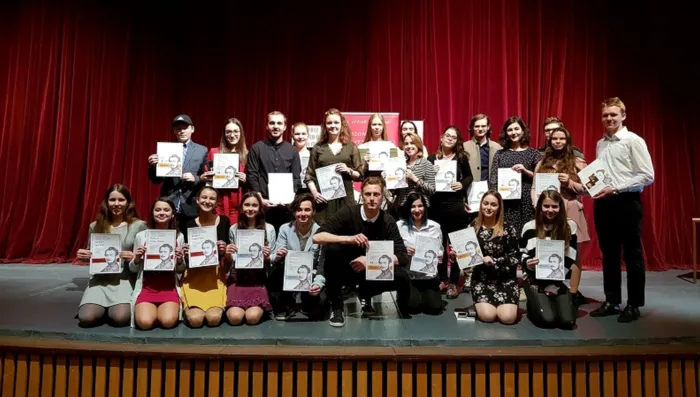
; The movement-like organization of Hungarian poetry and prose recitation in Slovakia began in 1955 under the auspices of the Csemadok in Komárom under the name of the National Recitation Competition. From 1964, the ninth event bore the name of Mór Jókai. This naming was connected to the 60th anniversary of the great storyteller's death. In addition to the "recitations", literary stages and amateur acting groups also took place at the Jókai Days in Komárom. ; ; In 1975, the national children's drama and puppetry parade began in Dunaszerdahely (DMT) at the Danube Menti Tavasz. Thus, the children's categories of poetry and prose recitation (primary school students) were separated from the Jókai Napok (JN) and from 1979 they operated as an integral part of the DMT. ; ; After the change of regime in 1989, the individual fields of expertise were replaced by professional societies established as partially independent legal entities in the Bratislava headquarters of the Csemadok, which were mostly managed by the former specialist representatives as executive secretaries (like the employees of the Csemadok) from the state budget, which ceased to exist in the first half of the 1990s. ; ; In the field of amateur acting, puppetry, poetry and prose recitation, the Association of Hungarian Amateur Actors of Czechoslovakia was established, and then, after the division of the country, the Association of Hungarian Amateur Actors of Slovakia. After the cessation of the central budget, the competition system was established. ; ; At the suggestion of the representatives of the profession, the Podium Society was founded. As an independent legal entity, it registered itself with the Slovak Ministry of the Interior and used the funding opportunities provided by the tender system. ; ; Prior to this, in accordance with the proposal of the Slovak Hungarian Amateur Actors' Society, with the approval of the National Council of Csemadok, the decision was made that the time had come for poetry and prose recitation as a stage art genre to become independent. The choice fell on Rimaszombaty for the sake of organizational possibilities, accessibility, a cultural home that meets all needs and, last but not least, the enrichment of the Hungarian cultural life of the region. It was also argued that if there is a traditional forum for the Czechs (Jiří Wolker Days in Prostejov) and the Slovaks (Hviezdoslavov Kubín), then the cultural life of the Hungarians in Slovakia can also be enriched by a national poetry and prose competition. Finally, in 1991, the categories of high school students and adults were separated from the Jókai Days, and the primary school age groups from the Danube Spring. Then they competed in Rimaszombat at the National Poetry and Prose Competition, which bears and is celebrated by Mihály Tompa. ; ; Initially, it copied the traditional organizational, methodological and dramaturgical concept, but in the middle of the two thousandths it required fundamental changes taking into account organizational, professional and, last but not least, financial aspects. ; ; The stage arts section of the Csemadok Cultural Institute has developed the competition rules, the evaluation criteria, the key system for advancement, the band system, and the coordination of each round. Since it is an upward-sloping event (class, school, district, district, national semi-finals, national final), it cannot be operated without schools. Currently, in 2020, there are 244 Hungarian-language primary schools, 16 high schools, and 14 vocational schools in Slovakia. ; ; There have been and are still initiatives that have dealt with poetry and prose recitation and competitions (My Mother's Black Rose, István Gyurcsó, László Mécs, Tibor Kulcsár, Atilla Kaszás, Sándor Márai), which are open events without a national network background. ; ; The Tompa Mihály National Competition in Rimaszombat, in addition to poetry and prose, was enriched with a new dimension with the categories of sung poems and lyrical stages (poetry theater). For 15 years, the highlight of the event was the awarding of the Tibor Kulcsár Award, which was discontinued in 2016 by the decision of the organizers. The list of awardees: Slovak Hungarian Teachers' Association, Lajos Ladányi, Aladár Urbán, László Újváry, Lajos Kürthy, Ottó Vass, Rózsa Varga, Eleonóra Csanaky, Éva Kamenár Horváth, Mária Bodnár, Tibor Gáspár, Jolán Bujanszky, Lívia Gál, József Péntek Kiss, Ágnes Bárdos, Gizella Holka, Csilla Szabó, Zuzsanna Szvorák, Mária Gubik, Sándor Tóth, Valéria Sebők, Anna Nyéky, Tamás Gál, András Pásztó, Mátyás Dráfi, János Juhász Dósa. ; ; According to statistical estimates, this upward-facing event is the only one of its kind in the cultural life of nationalities living beyond the borders of Hungary. It mobilizes 3000-3500 individuals (competitors, parents preparing, teachers) every year. ; ; The events of the Tompa Mihály National Competition are documented by Interactive Television, the Slovak Hungarian Cultural Institute, the Rikkancs festival newspaper, the Gömöri Hírlap, the Új Szó, the Vasárnap, and the Hungarian editorial staff of the Slovak Television and Radio. ; ; The competition is organized by the Rimaszombat Regional Committee of the Csemadok on behalf of the National Council of the Csemadok together with the co-organizers: the regional committees of the Csemadok, the Slovak Hungarian Cultural Institute, the Slovak Hungarian Teachers' Association, the Slovak Hungarian Parents' Association and the Gömör-Kishont Folk Culture Center in Rimaszombat. ; ; ; ; ; COMPETITION CATEGORIES: ; Category I: grades 1-3 of elementary schools, ; Category II: grades 4-6 of elementary schools/1st grade of 8-year high schools ; Category III: grades 7-9 of elementary schools/grades 2-4 of 8-year high schools ; Category IV: high school students/grades 5-8 of 4-year high schools, vocational secondary schools, 8-year high schools ; Category V: category: university students, adults (no age limit) ; VI. category: sung poems, from 12 years old individually or in groups ; VII. category: lyrical stage, poetry theater (no age limit) ; ; ROUNDS OF THE COMPETITION: ; class, school competitions / university, district and county competitions / national semi-finals / national final ; ; RANKING: ; Awards of the national final: 1st-2nd-3rd- prize – as per category, special prize for the most successful performer reciting a work by a Hungarian author, special prize of the jury, author, performer award (VI. category) ; ; The jury: ; 1st The jury for the district competitions and national semi-finals is composed by the regional committees of Csemadok. They may request the assistance of the competent regional committees of the Slovak Hungarian Teachers' Association. ; 2. The jury for the national final of the competition is composed by the Rimaszombat Regional Committee of Csemadok. The composition of the jury: Hungarian experts from Hungary, Hungarian experts. ; ; GENERAL INFORMATION ; According to the decision of the Csemadok OTE, one of the works must be the work of a Slovak Hungarian author