
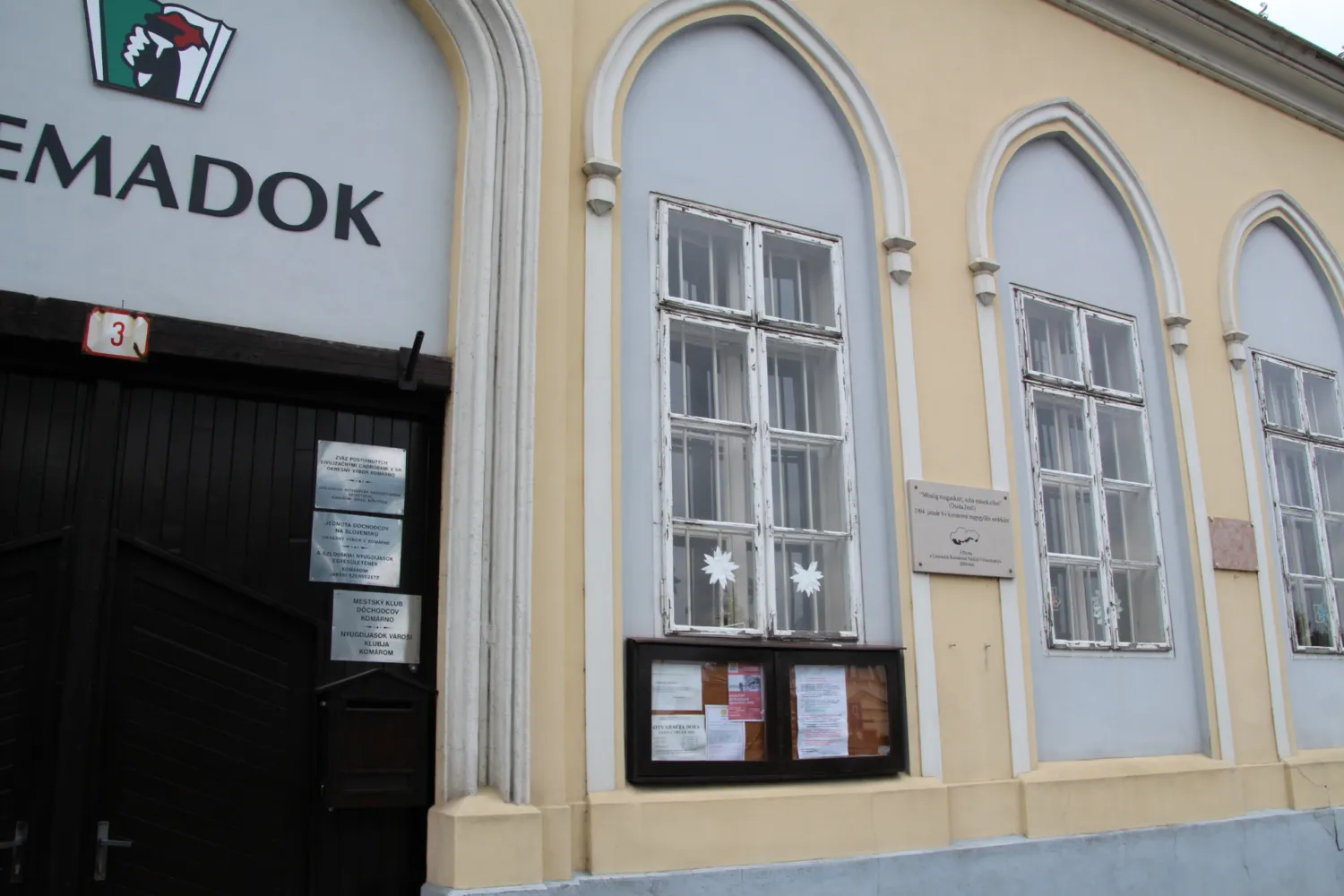
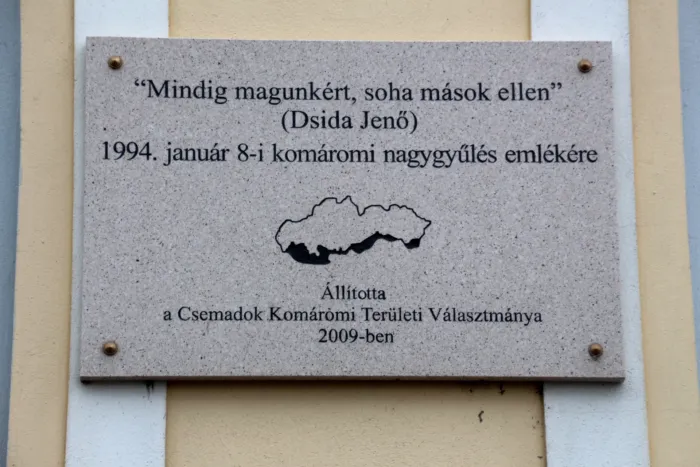
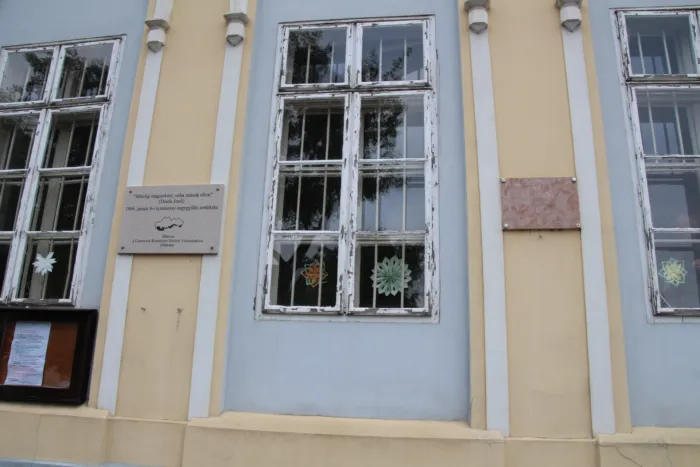
Memorial plaque commemorating the Komárom rally of January 8, 1994
Statue, monument, plaque
The memorial plaque was erected in memory of the Komárom assembly of January 8, 1994 by the Komárom Territorial Election of the Csemads in 2009. ; ; “Komárom 1994” ; An event of historic proportions took place on January 8, 1994 in the stronghold of Hungarian spirituality, Révkomárom. ; The mayors of the municipalities - villages and towns - inhabited by the Hungarian national community, representatives of the local governments, members of parliament of Hungarian nationality and leaders of Hungarian political parties and movements gathered here to discuss the pressing problems that surfaced with elemental force after the change of regime and urgently need to be resolved. The participants of the assembly discussed the state of the constitutional status of the Hungarian national community, the situation of local governments, and the concepts of territorial reorganization and public administration reform known until then. ; A similar gathering has not taken place since Trianon, during the existence of Czechoslovakia, which was established on the ruins of the Austro-Hungarian Monarchy. The participants of the Révkomárom assembly were representatives legitimized by the Hungarian population of the villages and towns of southern Slovakia. ; Local governments are often referred to as the “fourth estate”, alongside the legislative, executive and judicial powers. This is also an explanation for the fact that those exercising political power at any given time pay special attention to local governments and are constantly looking for opportunities to influence them. Fortunately, this can now only be achieved in Slovakia by means of laws, as the tools of manual control have practically been exhausted. It is known that a reassuring legal settlement of the situation of local governments can only be achieved in Slovakia by joining the European Charter of Local Government. ; Since its establishment, the Coexistence political movement has played an irreplaceable role in the creation of the sociality of the Hungarian national community. He treated local governments as a particularly important area of social organization, which are the sovereign pillars of the still fragile democracy. Their sovereignty is manifested above all in territoriality, in the independent solution of local organizational issues, in financial and tax matters, in the management of development problems and in statutory issues. This is also commonly called local autonomy. In connection with the above, it becomes obvious that local governments play an indispensable role in the life of the Hungarian national community. The Révkomárom assembly was a shining example of this. ; The need for a meeting of local governments of villages inhabited by members of the Hungarian national community arose when the bills of the parliamentary representatives of the Hungarian parties and movements strengthening the legal status of the Hungarians and other ethnic groups were repeatedly rejected by the legislature. The idea of establishing a local government assembly and a Hungarian national committee was also formulated at the 4th Congress of the Coexistence, in February 1993, in Komárom. In the absence of such a consensus among the Hungarian parties and movements, the idea of a meeting of local governments, and later its organization, was undertaken by the Association of Cities and Communes of Csallóköz. A large part of the organizational work was carried out by the executive body of the aforementioned inter-settlement association, the Council of the Association of Cities and Communes of Csallóköz. Given the situation that developed after the call of the CSVKT Council, after much deliberation and internal wrangling by the mayors (council members) who took an active role in the organizational work, with the immediate and broad support of Együttéles, and then with the involvement of the Hungarian Christian Democratic Movement, the Révkomárom assembly was able to take place. All those who effectively participated in the organization of the Komárom assembly from the beginning know for sure that the Hungarian-language press in Hungary – with a few exceptions – did not provide complete information about the preparations with complete credibility. The true and factual history of the antecedents of the Révkomárom assembly awaits today's and future generations. ;
Dr. József Kvarda