
St. Elizabeth's Church of the Árpád House
Building, structure
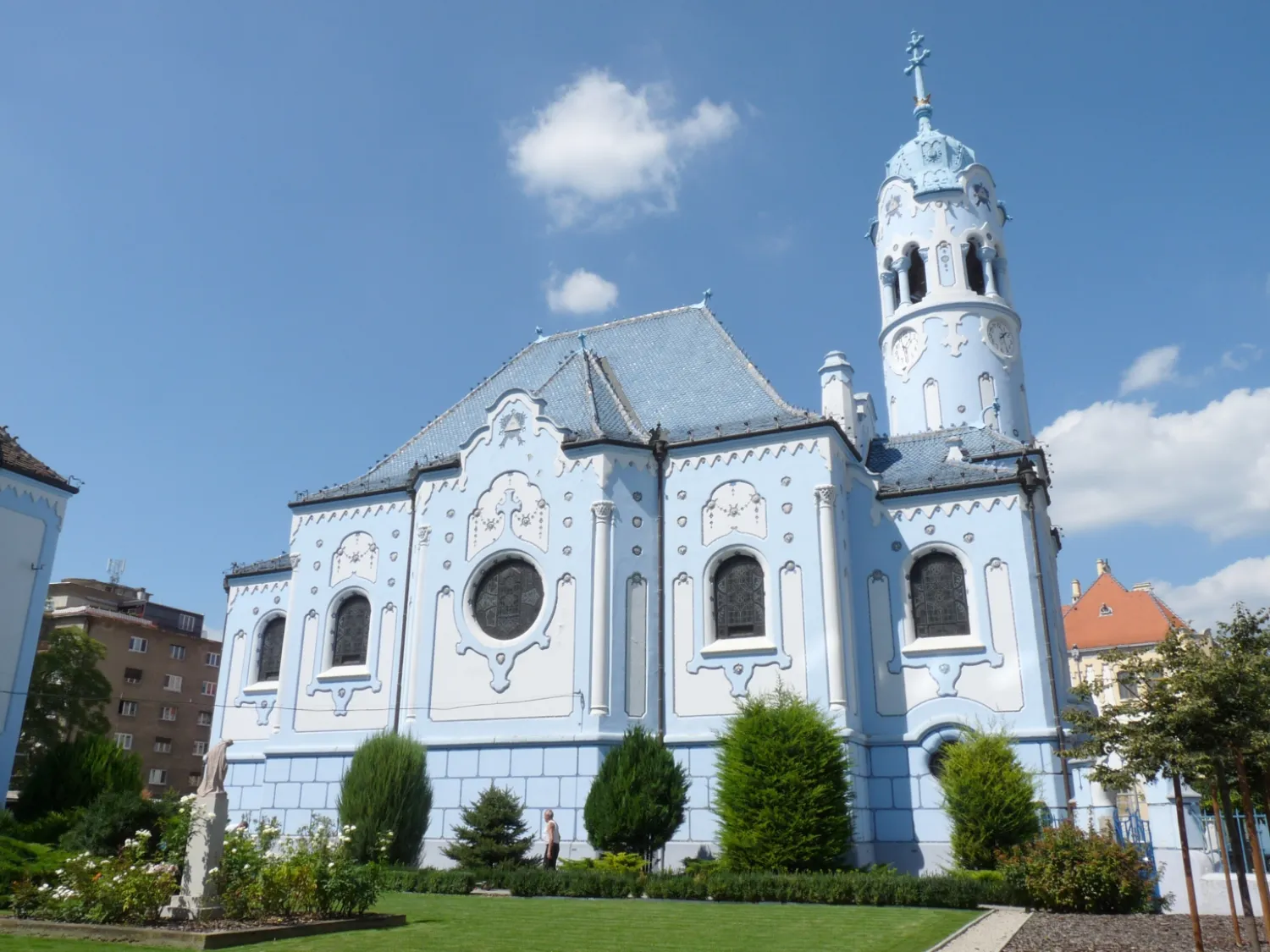
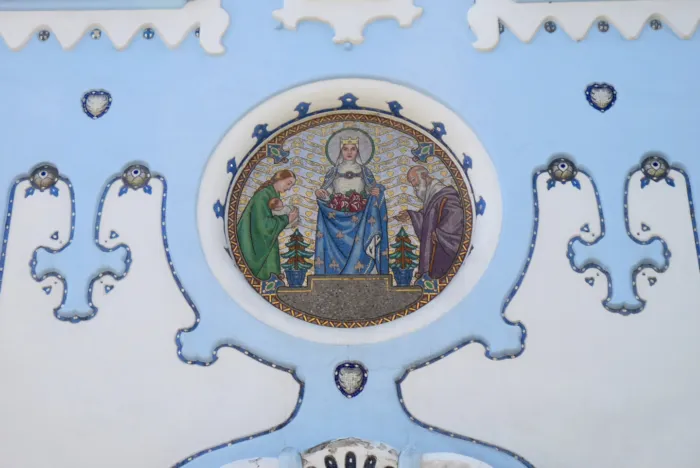
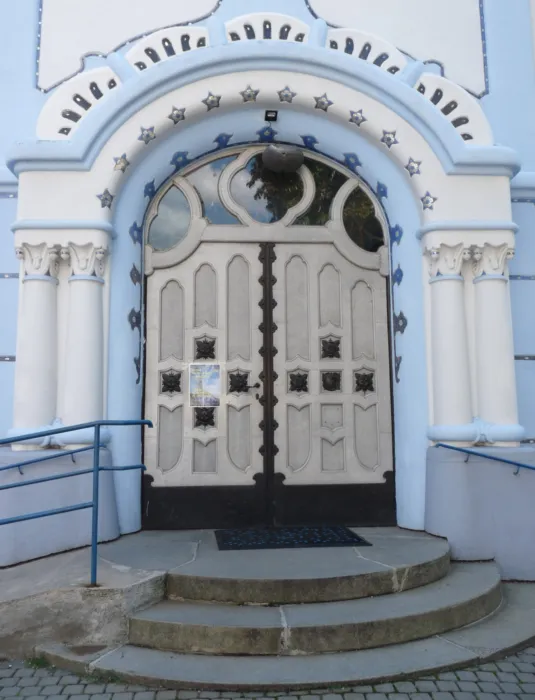
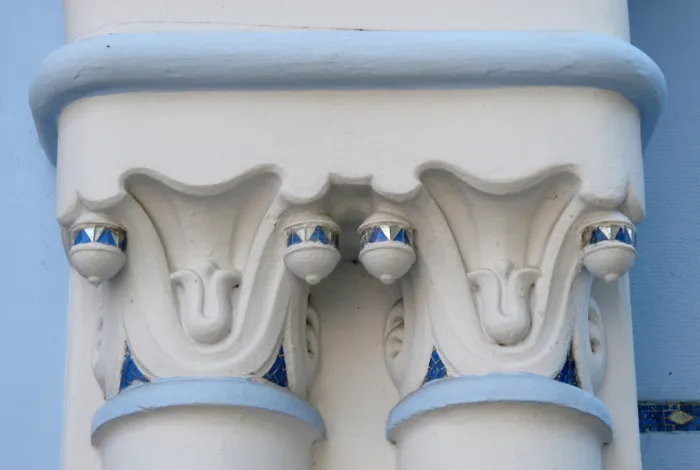
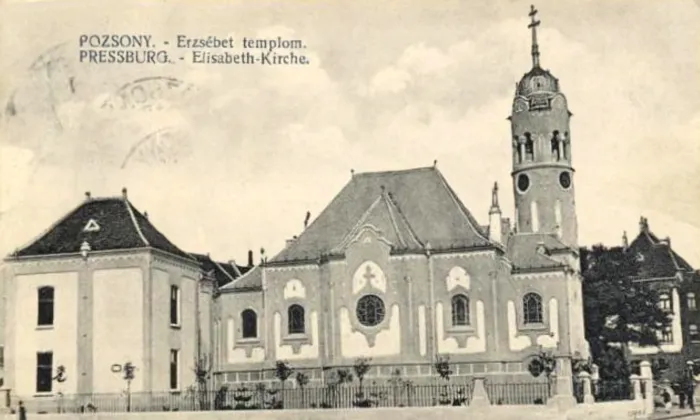
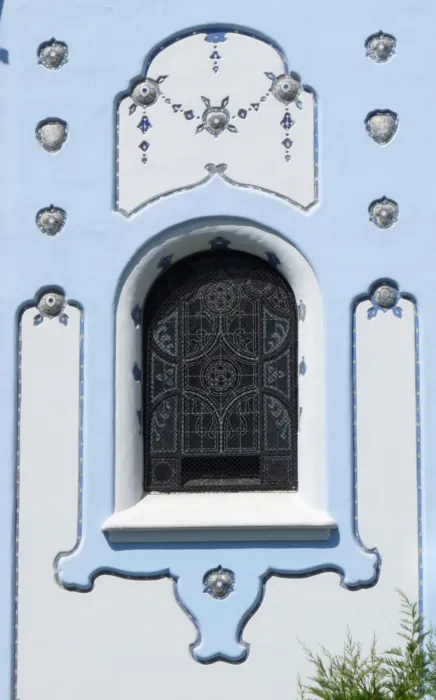
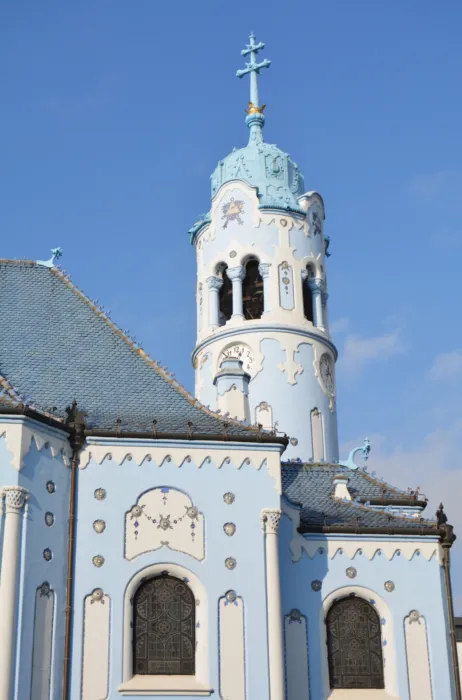
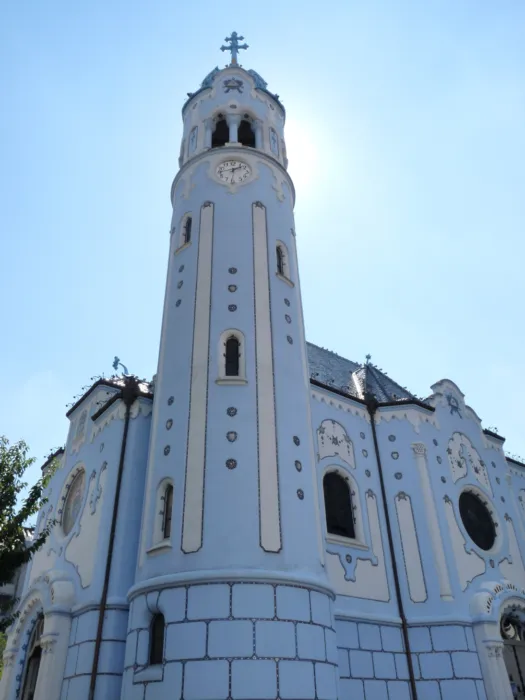
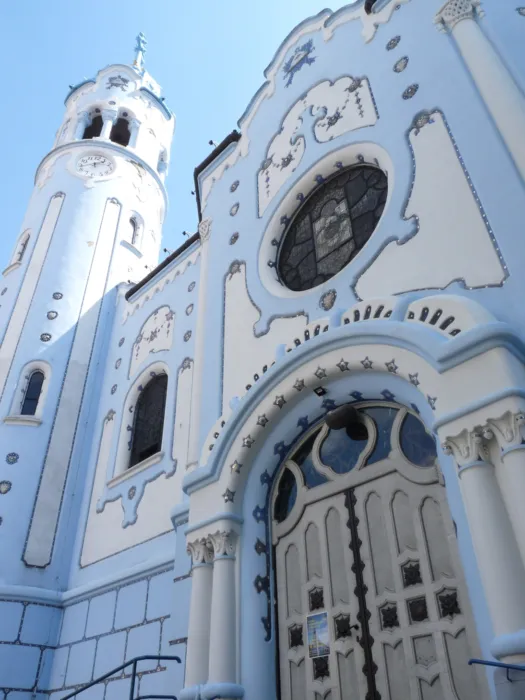
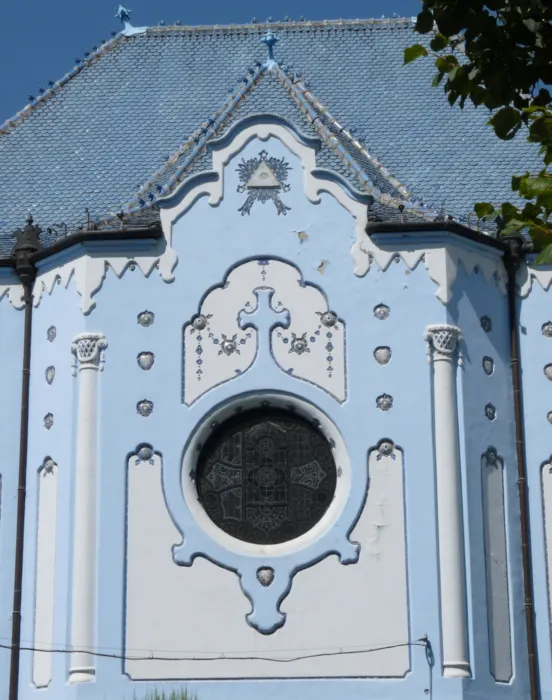
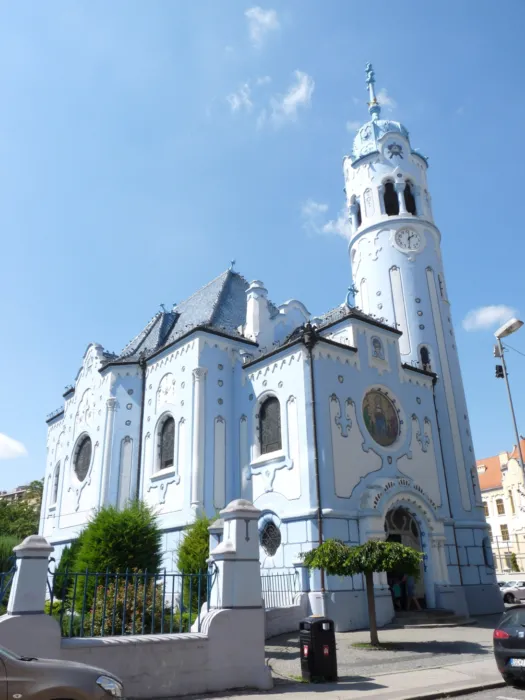
The Grössling Street Gymnasium, the parish, and last but not least the Blue Church dedicated to Saint Elizabeth are among the most beautiful examples of the attempt to create a Hungarian national style that originated from Art Nouveau. ; According to the original plans, only a small chapel would have been built next to the gymnasium, but as a result of the efforts of Mária Gabriella Szapáry, a larger church was erected. The construction of the buildings was commissioned by Ödön Lechner, Minister of Religion and Public Education, Albert Apponyi. The Grössling Gymnasium building was completed between 1906 and 1908. The foundation stone of the Saint Elizabeth Church in Árpád-házi was laid on 23 August 1909 on the occasion of the 900th anniversary of the death of Saint Elizabeth. It was consecrated on 11 October 1913, shortly before the architect's death. ; The church is 30.94 meters long, 10.90 meters wide, a single-nave building. Its tower is cylindrical, 36.80 meters high. Its main and side entrances have a lobed arch decorated with a rosette. The entire exterior is dominated by elements of folk architecture. The facade surfaces are richly decorated with fine surface sculptures and appliqués, and mosaics from the Zsolnay factory. The roof ribs are decorated with blue majolica (also from the Zsolnay factory) with a folk rooster motif. The gutter is ribbed, and its supporting irons bend out like flowers, buds and leaves. Above the main gate we see a mosaic image of Saint Elizabeth. The church was built by the Pittel and Brausewetter company, which used new materials - reinforced concrete and artificial stone. ; Ödön Lechner was very happy when the people of Bratislava commissioned him to design a church in 1909, as he had not received a state commission for several years. As early as 1902, the Minister of Culture Gyula Wlassics said in Parliament (mainly referring to Lechner's buildings) amidst great approval that "I called the head of the architectural department and told him that I did not like the Art Nouveau style" - because he did not consider it Hungarian. In 1903, the initiative of the new Minister of Culture Albert Berzeviczy to entrust the leadership of at least one master school to the master, recognized by the architectural community, in whom we still respect the initiator of the Hungarian architectural formal language, failed. ; Well, Lechner may have fallen into depression from time to time, hit rock bottom financially (his coffee house debt was later paid off by József Vágó), but at that time his artistic talent, willpower and artistic stubbornness were resurrected, with the Blue Church he created a real jewel box, as Komor Marcell called it in his writing. Today the church is the pride of Bratislava, and even a symbol of Slovakia in the Mini-Europe park in Brussels. ; The more modest financial foundations for the church dedicated to Saint Elizabeth of the Árpád House were not easy to gather either. Unlike his previous large buildings, Lechner uses less ceramics, and instead of brick strips, he designs wall strips and wall surfaces in Hungarian shapes. This made the facade walls much more lively, even compared to Lechner's previous buildings. The blue glazed tiles of the Zsolnay factory on the roof, the rhyming blue mosaic stripes and inlays on the walls gave the church the Blue sign. ; We must say here that the people of Bratislava had been busy with Lechner for three years. He also prepared the plans for the Bratislava Royal Catholic High School, built between 1906 and 1908, and the church was connected to this school. At the request of the parents, the schoolyard was left for the students' physical exercise, and the city authorities agreed and offered the neighboring plot with the stipulation that the church would also serve the residents of the area. ; Lechner changed the designated plot, demanding a corner plot, modifying the location of the church so that it would have two entrances, one for the students on the north side opposite the High School, and another on the east side for the residents. With this, Lechner completely reversed the traditional church orientation (main entrance in the west, secondary gate in the south) for the sake of better access and function. ; According to research, the original color of the church may have been gray, and the blue marker was given after the color of the blue roof tiles made in the Zsolnay factory and fired for this church, and after the color of the blue mosaic ornaments and mosaic rows on the walls. ; "The architect interrupted the wide wall surfaces with yellow, flat reliefs on the outside, dividing them into various shapes: crosses, circles, Hungarian ornaments hanging from the window sills, including blue-and-white mosaic coats of arms, roses, garlands and the symbol of the Holy Trinity, the eye in a triangle." (Emil Szyllaba: The memorial church of Queen Elizabeth named after the glorious Saint Elizabeth of the Árpád House of the Royal Catholic High School in Bratislava). The original yellow wall reliefs and the blue roof or The mosaics beautifully highlighted each other's colors, but it must be admitted that the subsequent repainting of the walls in blue, although not according to the original plan, was a hit. ; László E. Baranszki, in his 1909/10. Bulletin of the gymnasium, writes: "I must say something special about the main gate, which surprises everyone with its monumentality and yet charming simplicity. The gate frame rises from the plane of the wall as a powerful mass. The gate opening is simple, wide: almost a square closed with a semi-ellipse. The base sill becomes strongly swollen columns with strongly rounded edges here... The entire gate is as if glued to the wall. Perhaps this gate frame is a milestone in the development of monumental construction from the adobe construction of the Hungarian Great Plain." ; The mosaic above the gate depicts Saint Elizabeth of Árpádház in the "miracle of the roses" scene. Elizabeth brought food to the poor, but when the strict landlord scolds her for it, the girl suddenly denies it, saying that she only has roses in her apron. And then God turns the innocent lie into reality, and the bread in the apron turns into roses. According to the chronicler, the scene takes place in winter, perhaps at Christmas, as the two pine trees and even the golden ornaments of the ideal background may indicate. ; By the way, regarding the style of mosaic, the rediscovery of Byzantium, the development of the Neo-Byzantine style, and within it the cultivation of mosaic, began in the middle of the 19th century (e.g. the English Pre-Raphaelites), but it is also familiar in the Art Nouveau (Aladár Kriesch of Körösfői also creates several mosaics in a style close to the Byzantine style). ; The 2.6-meter-diameter picture was a gift from Kolos Vaszary, the Primate of Esztergom, to the church, and was designed by János Vaszary, whose very beautiful Art Nouveau paintings are also well-known (including the popular Golden Age, 1897-98). The mosaic is credited to Miksa Róth and he claims it as his own in his memoirs. (Miksa Róth's confessions. A glass painter about glass painting, Budapest, 1942) ; Stylistically, we see the legendary roses of Saint Elizabeth on the walls, created with a lot of imagination from various materials: blue glass mosaic, paint, aluminum sheet, plaster. The gate and to a lesser extent the windows are also framed by stylized roses. In Lechner's beautiful vision of the church, it is also a symbolic rose arbor through which the stars shine. ; As Manó Róth (Miksa Róth's workshop) shows, he had the mosaic decorations ordered by Lechner made and placed, a total of 60 smaller and larger figures, symbols and mosaic ribbons, the total length of which is 730 meters (!). ; Ödön Lechner designed and often redesigned every detail of the church's interior. In his case, applied art was on an equal footing with architecture, and he considered stylistic harmony and the artistic perfection of details to be his task, just like the greatest art nouveau artists, Horta or Gaudi. ; However, we see the glass windows renovated following the destruction of World War II. During the renovation, they tried to restore their original condition, except for the coats of arms, which were intentionally left behind. According to written records, the color of the windows and the quality of the glass elements were selected so that the sunlight falling on them would create a different effect from every angle. ; Entering its interior, two memorial plaques in Hungarian commemorate Pope Pius X and Emperor Franz Joseph I. The entrance door is less ornate, similar to Lechner's other works. The decoration of the sacristy door includes both folk motifs and soft lines. It is characterized by characteristic pale greenish-blue door leaves, delicate curved forms, vine-like ornamentation, and an aluminum handle that looks like wrought iron. The eternal flame was also designed by Lechner. It hangs from the triumphal arch of the sanctuary, its chains are decorated with a lily crown, and the lamp is made of silver and red glass. He decorated the red parts with the coat of arms of the Árpád House, lions and hearts, a double cross and the symbol of four rivers. The blue vault of the ceiling is studded with patterned roses, and above the entrance there are 12 white stars (light bulb). The backs of its benches narrow from bottom to top, and we see folk gingerbread, tulip and bird head shapes on them. The altarpiece of the main altar was painted by Gyula Tury, it depicts Saint Elizabeth distributing gifts to the poor under the Wartburg Castle. The gilded frame of the picture was designed by Lechner. The tall candlesticks made of wood, decorated with roses, were made much later, the work of József Dorosinyi. Lechner placed six paintings in the church. The arch of the nave depicts the Lamb of God, and in the nave are several images of saints from the House of Árpád, which were made by the painters Beszédes and Zsille. On the side altar of Saint Therese of Lisieux there is a wooden polychrome relief of the Seated Madonna, on which the Madonna is depicted with roses (the rose motif is prevalent in the church due to the legend of Saint Elizabeth). The side altar is the work of Alajos Rigele. Originally, this altar was occupied by a relief of Queen Elizabeth, also made by Rigele, which was moved to the parish after the First World War. Rigele's works still in the church are the statue of the Heart of Jesus and the statue of Saint Anthony of Padua. At the entrance to the choir is a relief of Péter Szapáry, who died young, made by sculptor Michael Drobil. ; The construction of the Church of Saint Elizabeth - like the other, previous Lechner church, the Church of Saint László in Kőbánya - exceeded the set deadline. Here and there, it is still unclear whether the designer or the contractor was late. In Bratislava, even the plaster froze one winter, and in the summer the workers went on strike. In Kőbánya, the interior design of the church had already been taken from Lechner, but the people of Bratislava were also very impatient. It is true that Ödön Lechner did not rush the design, but the gymnasium also validated its criteria, several design versions were made before the final one, and there were many changes to the church interior along the way. But in the end, Lechner's detailed design, attention to detail, and consistent quality work led to success, and it is still not only one of the most beautiful churches to this day, but also a successful one, as shown by the very large number of marriages held in this church. ; In the blueprints, we find a first version, where the church is covered with a dome on an oval floor plan - moreover, designed from reinforced concrete, which he later had to replace with a more traditional roof at the request of the clients and perhaps for financial reasons. It is true that many design versions were made - one of them was made on the table of the Japanese Café - and Lechner stubbornly sought the best solutions. When the Ministry also began to urge him, Lechner's legendary answer was: "Art cannot be rushed." We do not know the reaction of the ministry, but everyone in the studio was amazed at the master's audacity. ; The church was dedicated to Saint Elizabeth of the Árpád dynasty, but it was built as a symbolic mausoleum of Queen Elizabeth ("Sisit" was killed in Geneva in 1899). The white marble relief of Queen Elizabeth inside (in 1921 the Czechs had it removed and placed in the neighboring parish. The church was a high school church until 1934. On July 1, 1934, it was transformed into an independent parish.