
Statue of Saint Elizabeth of the Árpád dynasty
Statue, monument, memorial plaque
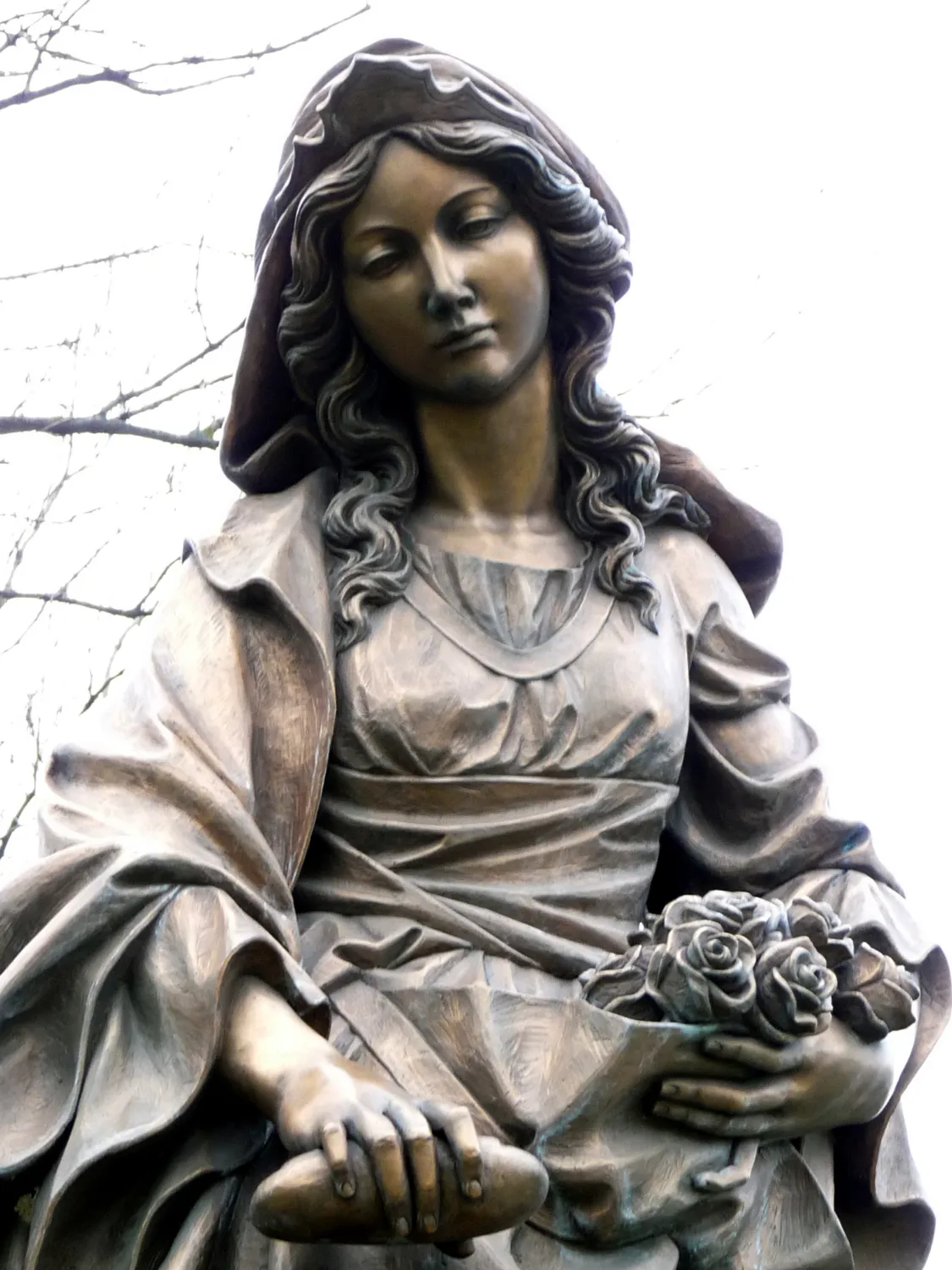
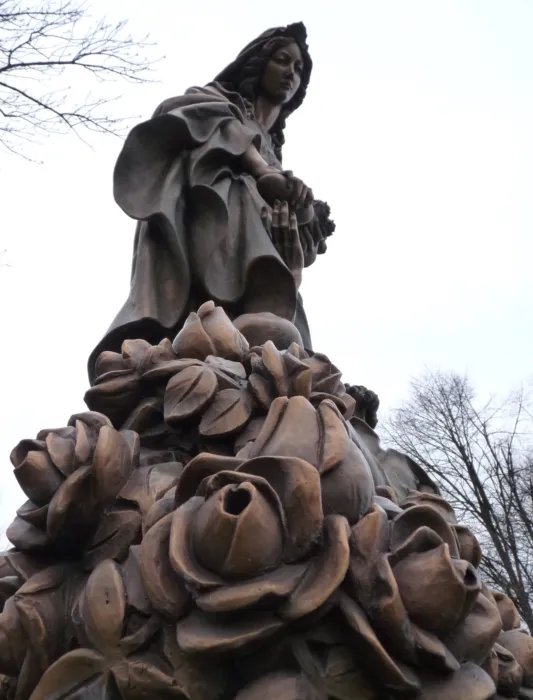
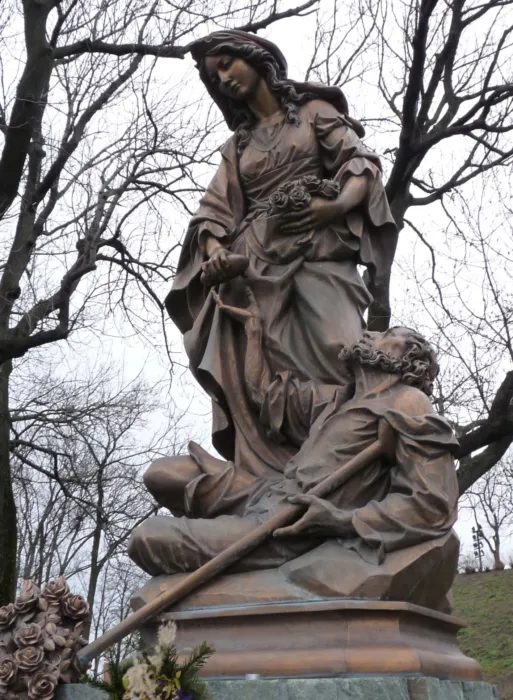
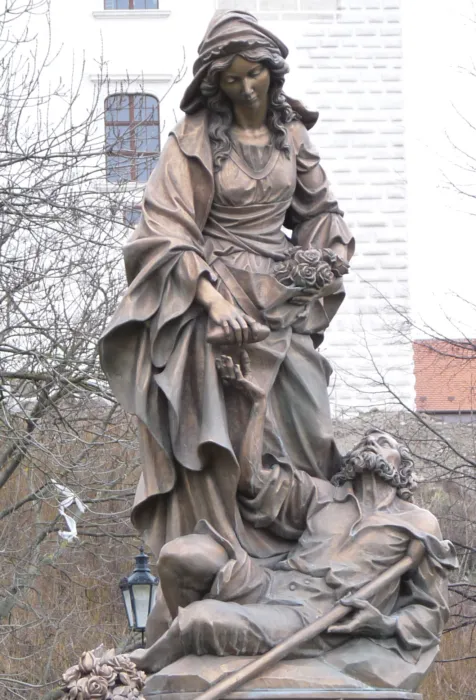
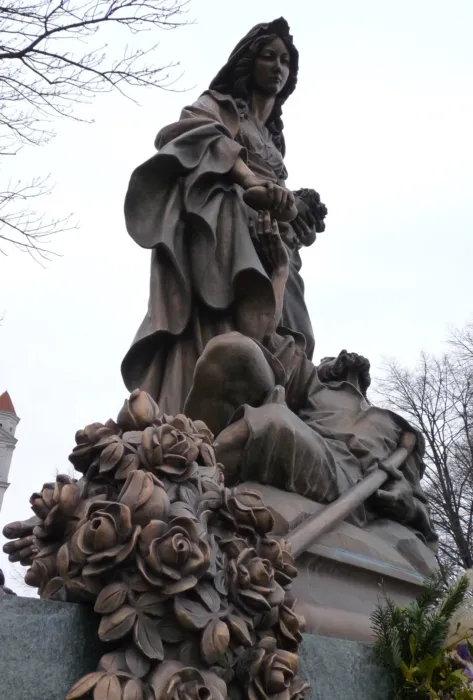
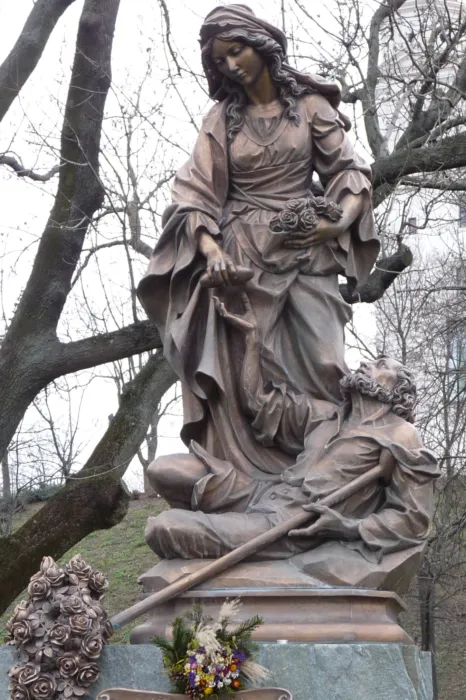
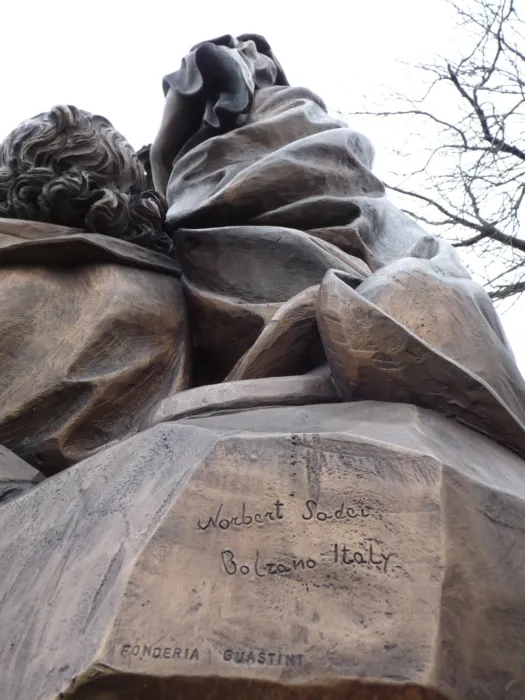
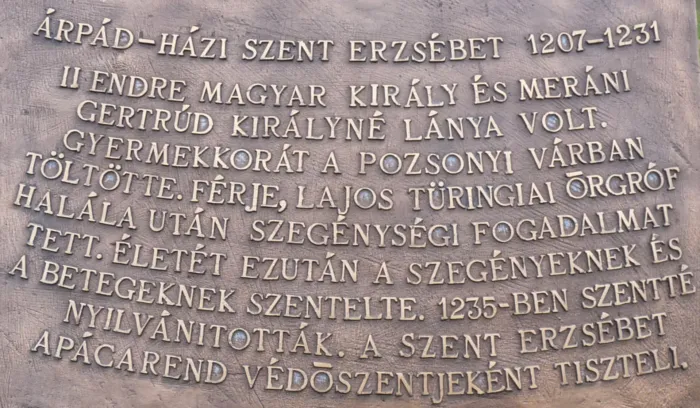
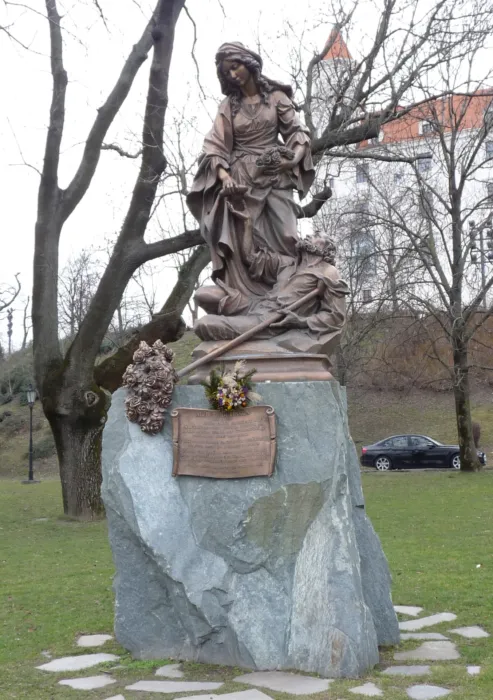
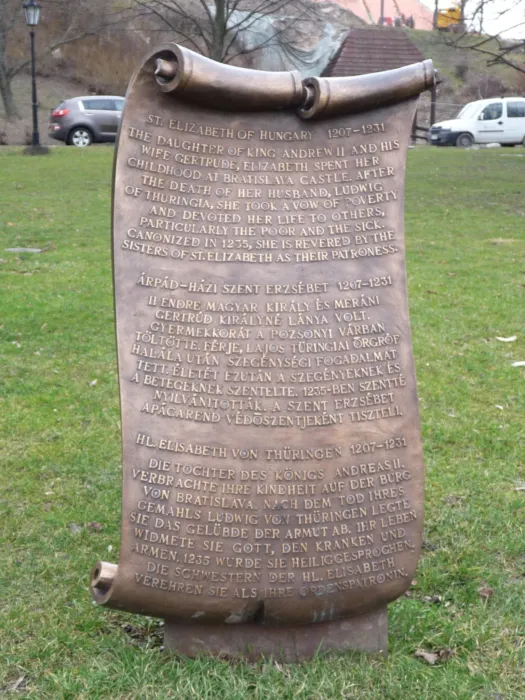
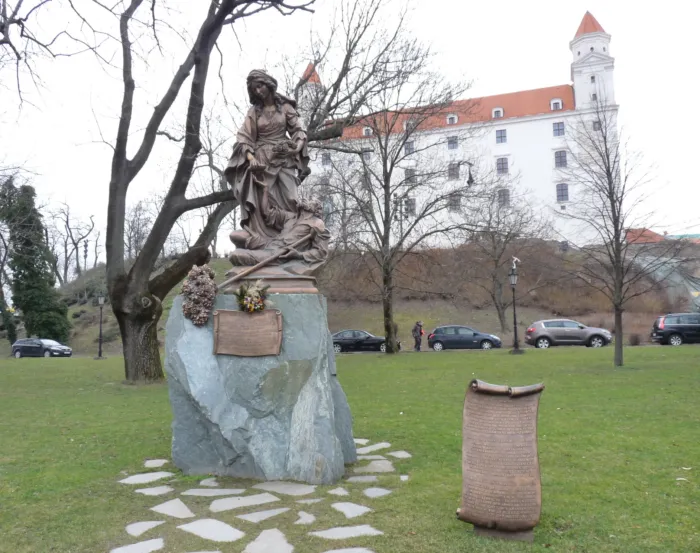
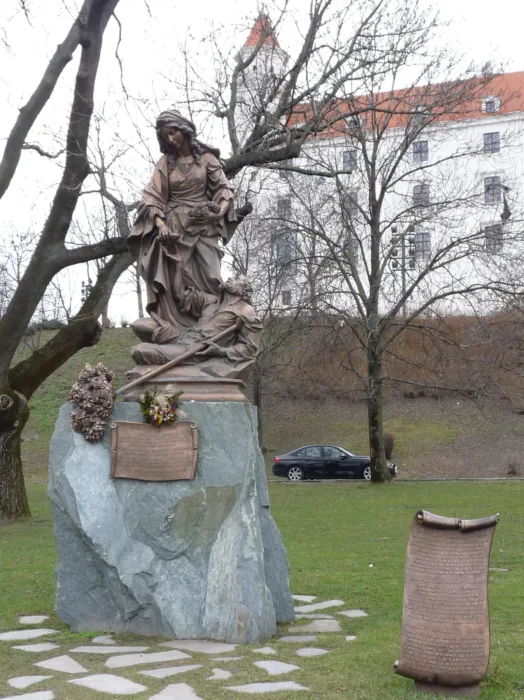
The full-length bronze statue of Saint Elizabeth of the Árpád dynasty can be seen in the courtyard of the Bratislava Castle. Saint Elizabeth holds roses in her left hand and gives bread to a lying beggar with her right hand. The statue was completed with a bronze information board, which, in addition to the English and German text (untypical for Bratislava), also provides information about the saint's life in Hungarian. The work of the Italian sculptor Norbert Sadei was unveiled in 2001. ; Saint Elizabeth of the Árpád dynasty (often called Saint Elizabeth of Thuringia in German-speaking areas) (Sárospatak, 1207 – Marburg, November 17, 1231) was the daughter of King Andrew II of Hungary and Gertrude of Merania. There are several theories about her place of birth, based on which Sárospatak, Óbuda and Bratislava come into question. Of the above, Sárospatak is the most accepted. ; Elizabeth was the third of five children. Her brother later became King of Hungary under the name of Béla IV. She was baptized in Buda, with great pomp. At the request of Margrave Hermann I of Thuringia, Elizabeth was betrothed to Hermann, the margrave's son, at the age of four, in accordance with the custom of the time. Elizabeth was sent to Eisenach, then to Wartburg. She received a good upbringing with the margrave, who loved literature and music, and his fervently religious wife. Her mother died in 1213, after which she had nightmares for a long time. Her fiancé, the sickly Hermann, died in 1216 at the age of 19, at which time - after some political turmoil - her younger brother Louis, who was Elizabeth's best friend, engaged her. The wedding took place in 1221 in Eisenach. Elizabeth lived a happy marriage with Louis, who was 7 years older than her. Their children were Hermann (March 28, 1222), Sophia (March 20, 1224) and Gertrude (September 29, 1227). In 1222, she returned to Bratislava with her husband for a “post-honeymoon trip”, only here did she learn the tragic story of her mother’s murder. ; Elizabeth began a penitential lifestyle early: she often fasted, flogged herself, and wore a penitential girdle. She often kept vigil at night. After the birth of her first child, she founded a shelter for orphaned children and helped the poor. After the birth of her second child, she founded a 28-bed hospital out of gratitude, where she herself helped care for the sick. ; In 1225, Louis went to war as a vassal on the side of Frederick II, and Elizabeth took over the governance of the province. She tried to heal the wounds caused by famines and epidemics, opened the Wartburg's food stores, and fed the poor. She herself lived a moderate life. The family members watched Elizabeth's "waste" with concern, but Louis approved everything when he returned. ; When Frederick II was crowned, he promised Pope Innocent III to launch a crusade. Louis was also affected by the fulfillment of this promise. Elizabeth herself sewed the Crusader symbol onto her husband's clothes. From then on, she wore mourning clothes. ; Louis died on September 11, 1227. She could no longer see her daughter Gertrude, who was born on September 29. In a letter, Pope Gregory IX encouraged Elizabeth with fatherly words and appointed the very strict Master Conrad as her confessor and official protector. ; Louis's younger brothers, Henry Raspe and Conrad, treated Elizabeth very harshly. The 20-year-old widow was deprived of the right to manage her property and the income from her husband's estates. ; Due to the situation, she left Wartburg unnoticed one October day with her newborn, and the next day she had her two other children brought over. She supported herself by spinning, raising her children from her remaining jewelry. Bishop Eckbert of Bamberg accepted her into Pottenstein Castle and suggested that Elizabeth remarry. Emperor Frederick II asked for her hand in marriage, but Elizabeth did not want to remarry. ; She was able to return to Wartburg for a short time, but at the suggestion of her family, she moved to Marburg. She became a member of the Third Order of Saint Francis of Assisi, and from then on she wore a simple gray robe. Although invited by Andrew II, she did not return to Hungary to raise her children. ; Elizabeth announced the day of her death 3 days in advance. Several miraculous events occurred near her grave. Pope Gregory IX canonized her in 1235. In 1236, construction began on the Elizabeth Church over her grave in Marburg, which was completed in 1283. In Hungary, Béla IV, Elizabeth's brother, had the first church built in her honor in Kápolna. ; Elizabeth is usually depicted with roses in her apron and basket. This originates from the legend that after her husband's death, Elizabeth continued to care for the poor. On one occasion, she brought bread to her caretakers when she met her brother-in-law, Henry. When asked what she was carrying in her basket, Elizabeth, fearing that she might be forbidden from doing charity, replied: roses. When she showed it, instead of bread, there were fragrant roses in her basket. God did not want the holy woman to lie. ; Her feast day was added to the Roman calendar in 1670 on the day of her burial, November 19. During the 1969 calendar reform, her feast day was moved back to November 17, the day of her death, but in Hungary it remained on the original day. ; The veneration of Elizabeth spread very quickly throughout Europe from the 13th century. Saint Elizabeth hospitals, churches, chapels and monasteries were founded one after another.