
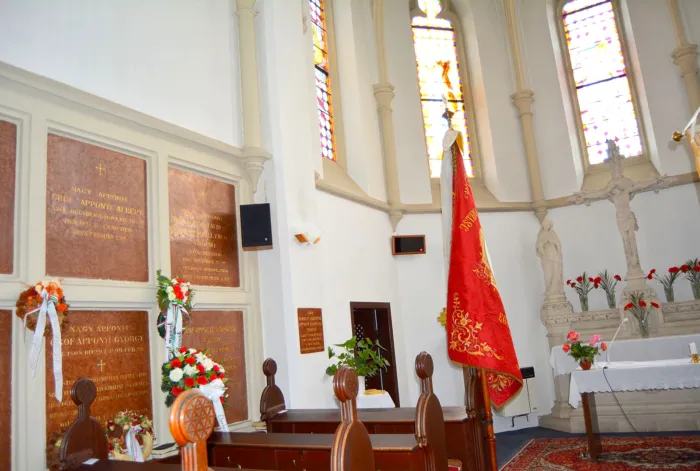
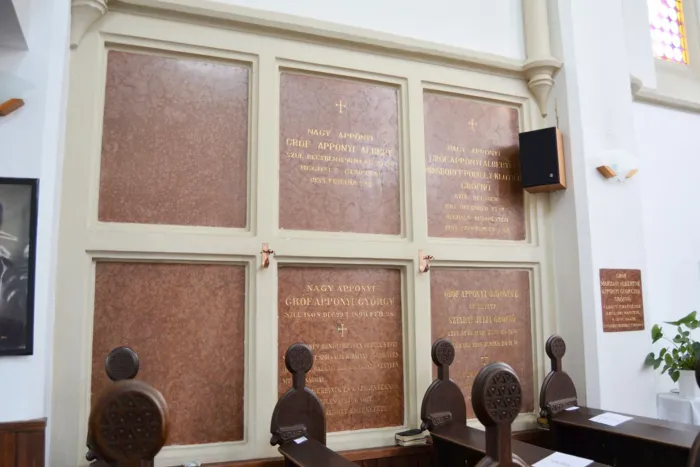
The resting place of György Apponyi
Cemeteries, tombstones, grave sites
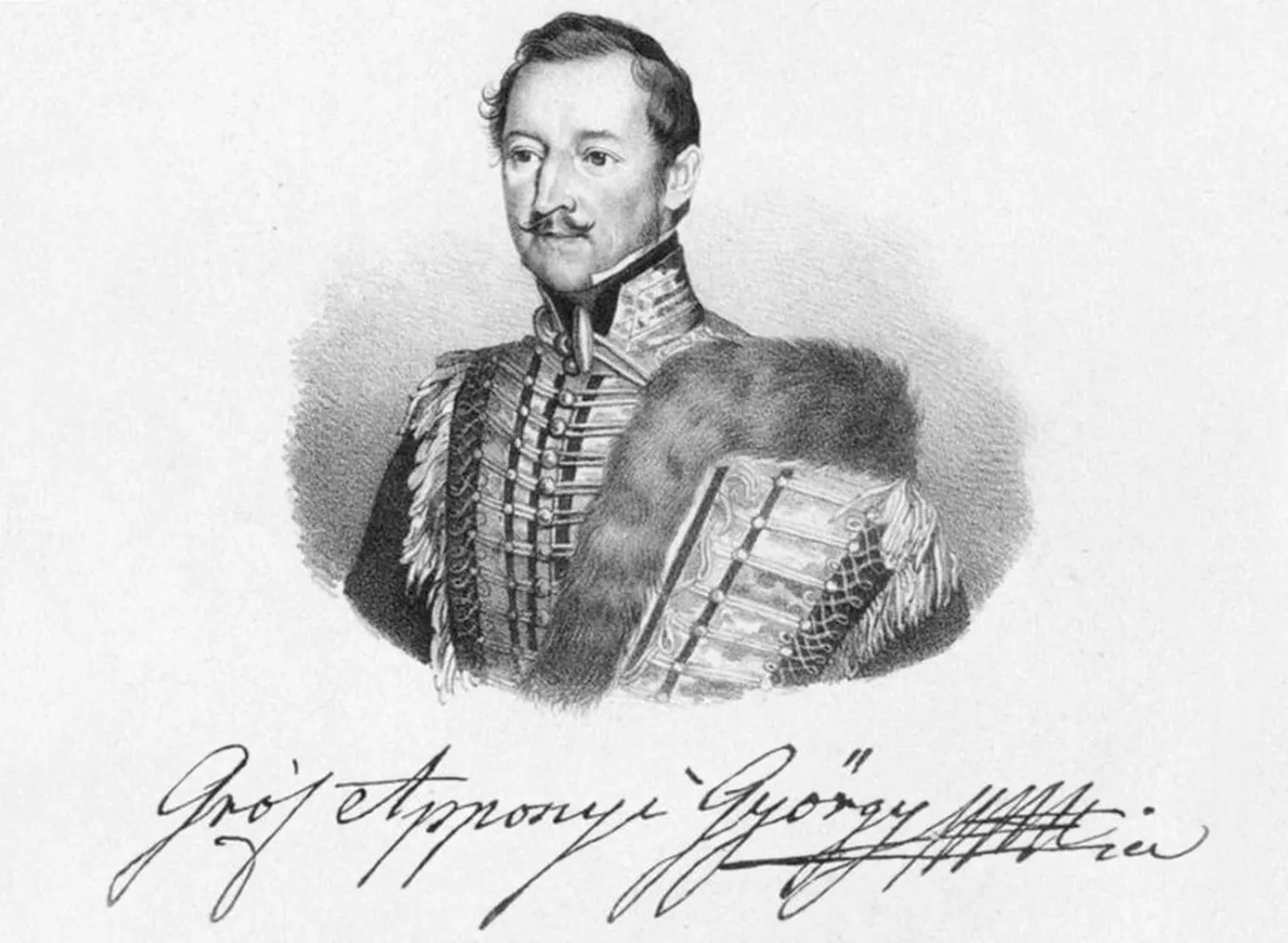
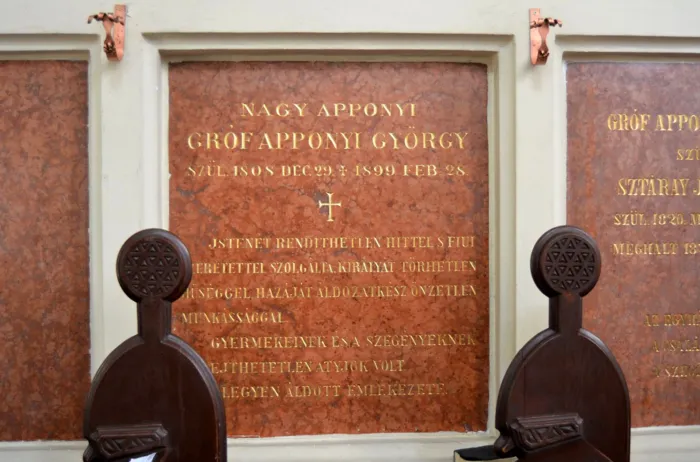
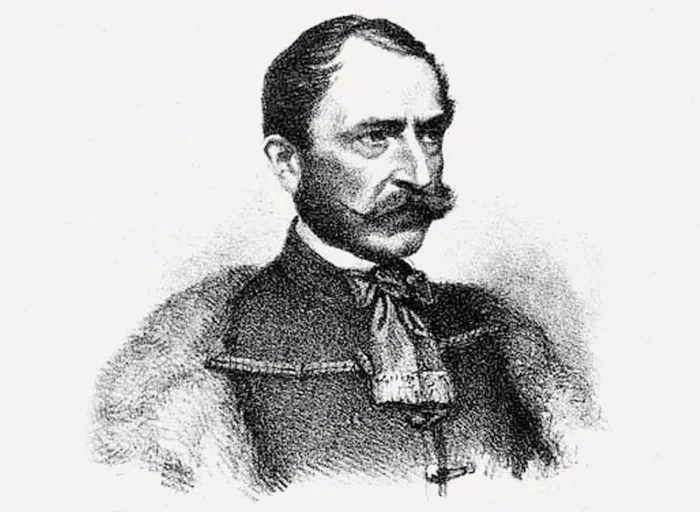
1. Count György Apponyi of Nagyappony, member of the Apponyi family of Appony, lawyer and politician, born on 29 December 1808 in Bratislava. György Apponyi died on 28 February 1899 in Eberhard (Bratislava County). His father was Count György Apponyi of Nagyappony and his mother was Countess Anna Zichy of Zichy and Vasonkőei. He married his wife, Countess Júlia Sztáray of Nagymihály (1820–1871) on 23 April 1840 in Bratislava, with whom he had two children, Georgina and Albert (1846–1933), who as a politician and statesman was also a member of the Hungarian Academy of Sciences. ; ; 2. György Apponyi was elected as a member of the board of directors by the Hungarian Academy of Sciences 170 years ago, on December 19, 1858. His election took place after the adoption of the statutes of the Hungarian Academy of Sciences in 1858. We would like to mention here that the statutes adopted in 1858 first used the term “member of the board of directors” instead of “director member”. György Apponyi played a role in the management of the Hungarian Academy of Sciences, in the work of the governing body and the Board of Directors for a decade. It is worth mentioning that he made a significant donation (a total of 4,200 forints) to the Hungarian Academy of Sciences in 1860 and 1861. ; ; 3. György Apponyi studied law at the Law Academy in Bratislava between 1823 and 1826. After completing his studies, he first became a draftsman in the Hungarian Chancellery in Vienna between 1826 and 1840, and then a secretary shortly afterwards. He was a judge of the royal court between 1840 and 1844. He was first vice-chancellor between 1844 and 1846, and then second-chancellor between 1846 and 1847. He served as the first chancellor (chief chancellor) of the Hungarian Chancellery between March 1847 and 1848. He also received the title of internal privy councilor from the monarch. He first participated in Hungarian public life in the bicameral parliament of 1839–1840 as a conservative member of the Upper Table (Főrendi Tábla). He soon became a defining figure in the so-called progressive party, which strongly supported the ideas and policies of the Viennese court. ; ; 4. As a committed opponent of bourgeois, liberal reform efforts, he built up the administrative system. In the counties, he tried to sideline the supporters of the liberal camp by appointing administrators to the heads of the counties instead of the lords. He became the leader of the Conservative Party founded in 1846. In order to reduce the dissatisfaction of the liberal opposition, he urged the fulfillment of some important opposition demands. At the 1847–1848 Diet, he was the proposer of - among others - the abolition of ancestry (aviticitas), the introduction of hereditary emancipation, and the reform of customs and credit affairs. ; ; 5. In March 1848, he resigned from his position as court chancellor. Months later, in February 1849, he assumed the presidency of the “aulic” group formed in Vienna from the nobles and acting against the revolution. After the surrender of the Világos, he did not accept state office and withdrew from political life. In February 1852, he asked the monarch in an inscription to restore the territorial unity of the country. He also requested permission for Hungarian to be the language of state administration and public administration in Hungary. After the issuance of the October Diploma (Oktoberdiplom), he was appointed as a regional judge in November 1860. He held this outstandingly important public law function for almost four years, until 1863. The monarch dismissed György Apponyi from his function as regional judge in April 1863. It is worth mentioning that as a regional judge, at the suggestion of Ferenc Deák, he invited Boldizsár Horvát (1822-1898), later Minister of Justice, who held this portfolio in the government of Gyula Andrássy between 1867 and 1871, and an honorary member of the Hungarian Academy of Sciences, to the Regional Judges Conference (Judexkurialkonferenz) in Sopron. Boldizsár Horvát took an active role in the work of the regional judge conference. ; ; 6. As a royal commissioner, he opened the parliament on April 2, 1861. Opening the parliament was a task of great responsibility. In Vienna, they wanted the parliament to hold its sessions in Buda, in the great hall of the governor's council building. However, the members of the parliament, citing Article IV of 1848, wanted to meet in Pest. György Apponyi consulted with Ferenc Deák, with whom he agreed to submit a memorandum to Franz Joseph, requesting that the parliament be opened in Buda, but that the sessions be held in Pest. However, the memorandum was returned from Vienna. György Apponyi decided not to follow the instructions from Vienna. He declared that the parliament could hold its sessions in Pest after opening in Buda. After the reading of the monarch's Throne Speech (Thronrede), the House of Representatives began its sessions in the State Hall of the National Museum, and the House of the Order in the Great Hall of the Lloyd Building. After the opening of the parliament, György Apponyi traveled to Vienna, expecting his pardon. However, the monarch did not pardon him. ; ; 7. At the end of 1862, Franz Joseph called on György Apponyi to prepare a plan for the Compromise (Ausgleich) (the so-called “equalization”, which is the same as the “compromise” plan). Apponyi accepted the assignment. He undertook this with the stipulation that György Mailáth, the treasurer, Baron Pál Sennyey and József Ürményi could also participate in the preparatory work. In the plan, György Apponyi emphasized that Hungary, the Kingdom of Hungary (Regnum Hungariae) could not be absorbed into Austria, could not become part of it. He also emphasized the principle of legal continuity. He also considered it indispensable that a separate Hungarian ministry (government) be appointed with the consent of the legally convened parliament. Seeing that these ideas were not implemented, he stated: “My proposals always have the misfortune of being rejected prematurely or accepted after a while.” ; ; 8. György Apponyi later became a member of the 1865–1868 National Assembly, where he served on several important committees. In cooperation with the so-called old-conservative nobles, he advocated the restoration of the pre-1848 constitution. After the Compromise, until 1868, György Apponyi was the leader of the old-conservative group within the Deák Party. After that, he only appeared in the House of the Order – of which he had been a hereditary member since 1868 – and took part in its work. He spent the last years of his life in Éberhárd (German: Eberhard, or Eberhardt), an estate in the county of Bratislava. He was laid to rest in the family tomb. ; ; Gábor Hamza was a university professor and a full member of the Hungarian Academy of Sciences.