
The Yellow Castle
Building, structure
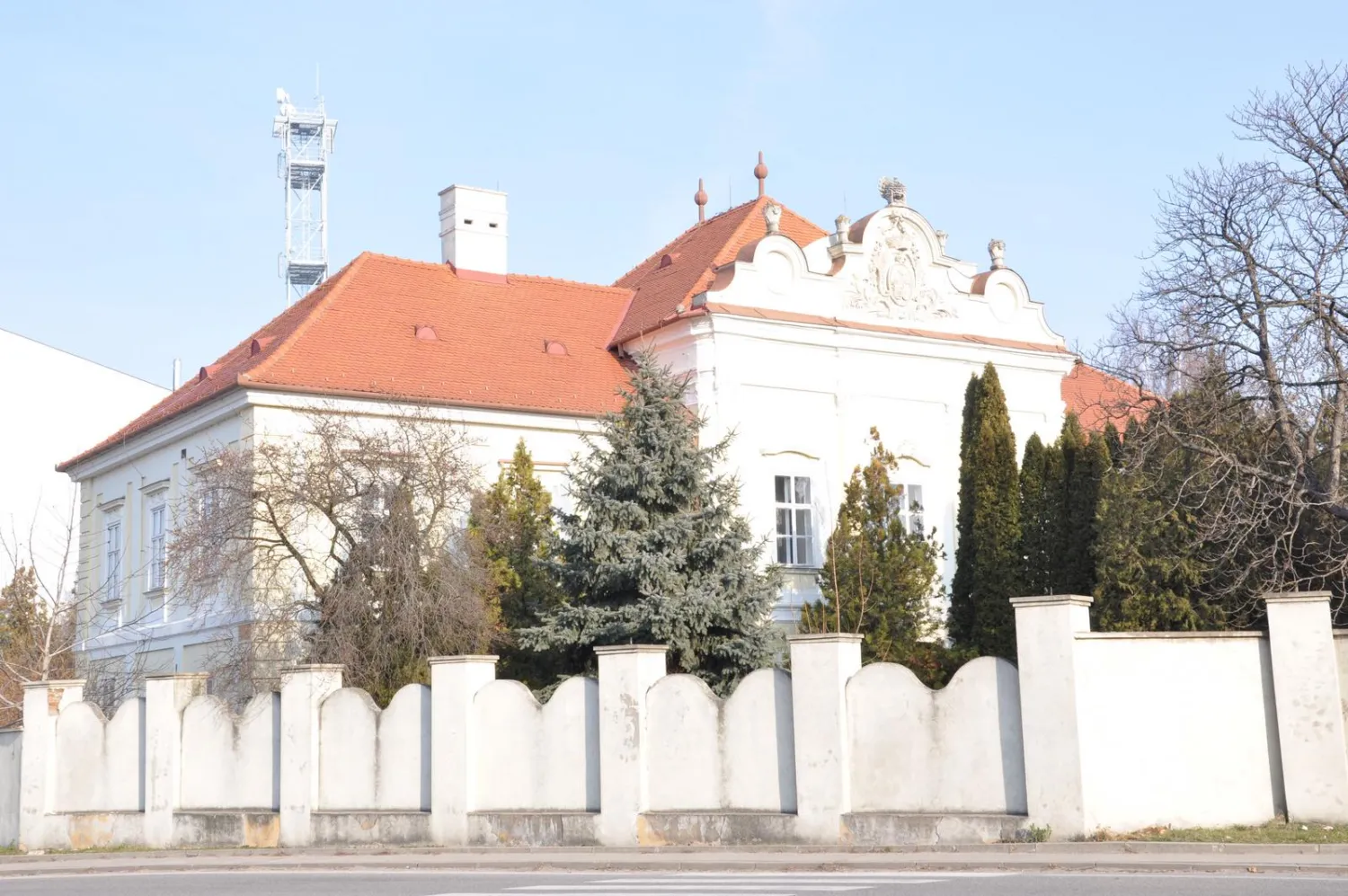
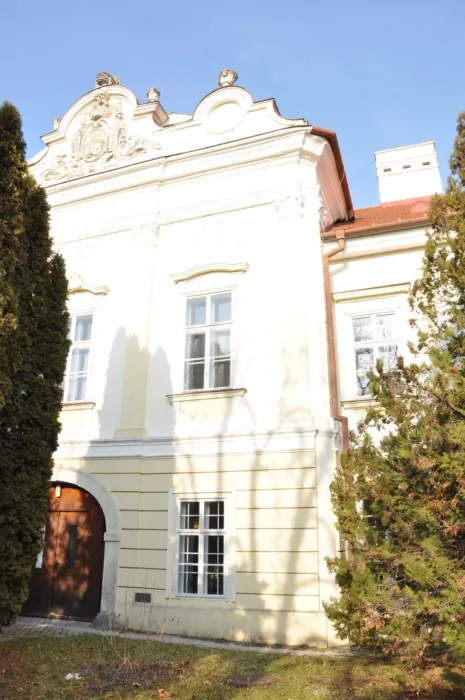
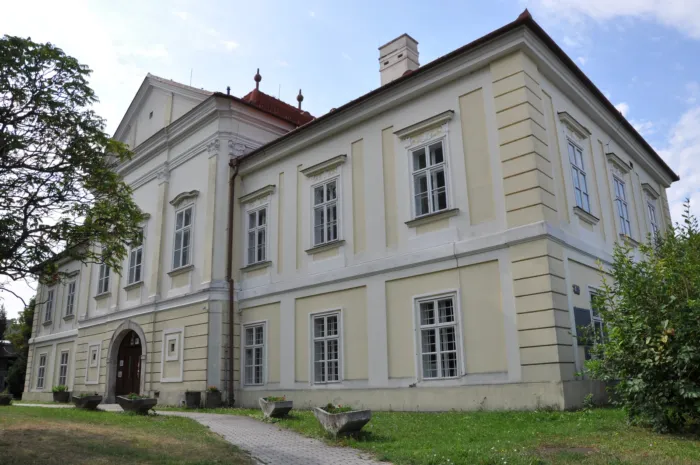
The second oldest building in Dunaszerdahely was built by Márton Padányi Biró, Bishop of Veszprém, for his cousin, István Padányi Biró. ; It was built in 1753/54 on the Pókatelké estate commissioned by the Bishop of Veszprém. Until 1805, the castle was known as the Biró manor house. From them, József Benedek Kondé acquired it for the Kondé family, who transformed it to their own taste at the very beginning of the 19th century (that is when the Kondé coat of arms was placed on the gable of the building, with the huge stone turkey statue above it). ; According to his description, “the two-story, three-axis central projection of the building, divided by wall pillars, was closed by a Baroque-style gable. In addition to the semicircular portal, the facade is also divided by straight-closing windows, wall band frames, straight and curved eyebrow cornices, as well as dividing and closing cornices.” ; From then on, the Yellow Castle was known as the Kondé Castle for about sixty years. By 1858, the Kondé family sold the Pókátelk estate: the castle was bought by Miklós Wahlberg, a university professor from Vienna, who leased it out. The famous building was inherited by his daughter, Nándorné Habermann, from Wahlberg, who on September 12, 1910, sold the castle to the Dukesz and Herzog company from Galgóc, who bought it for economic purposes. ; The Yellow Castle was the seat of the Hungarian military administration from 1938 until 1944, then experienced German and Russian military occupation in 1945, and later the building was owned by the Czechoslovak military authorities (it was also used as accommodation). ; From 1947 it was a state property, used by various institutions, the castle itself then became the property of the Land Institute (geodesy) from 1953, but also the office of several smaller offices, until 1972, when the Csallóközi Museum moved its headquarters there from the former Bacsák White Castle on Fő Street. Its first director was Béla Marczell. In 1977 the main building was renovated, which still houses the museum's permanent exhibition halls.