
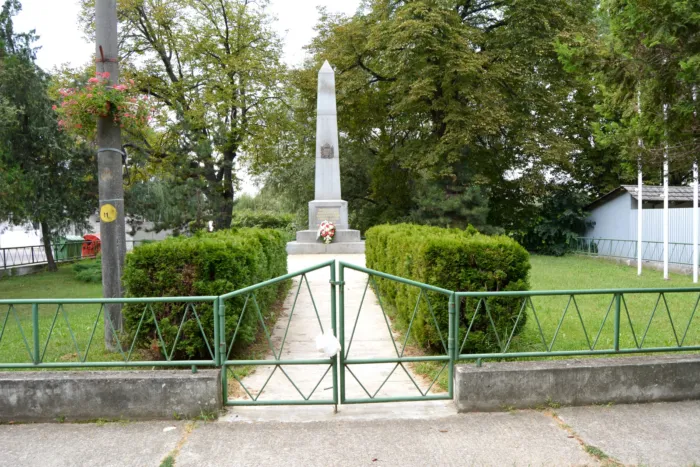
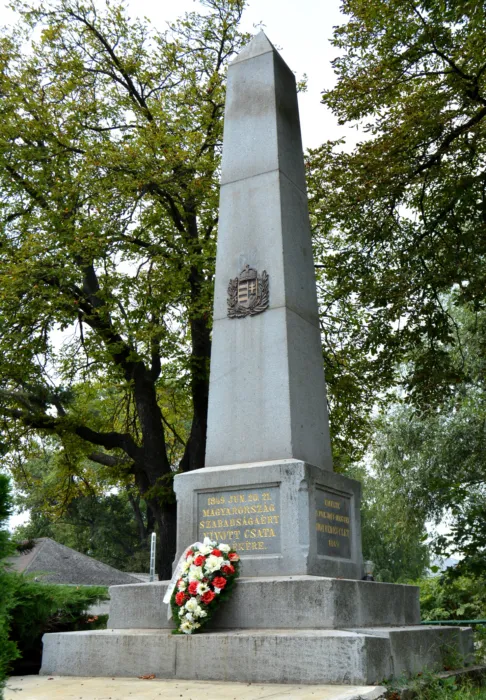
Monument to the Battle of Pered
Statue, monument, memorial plaque
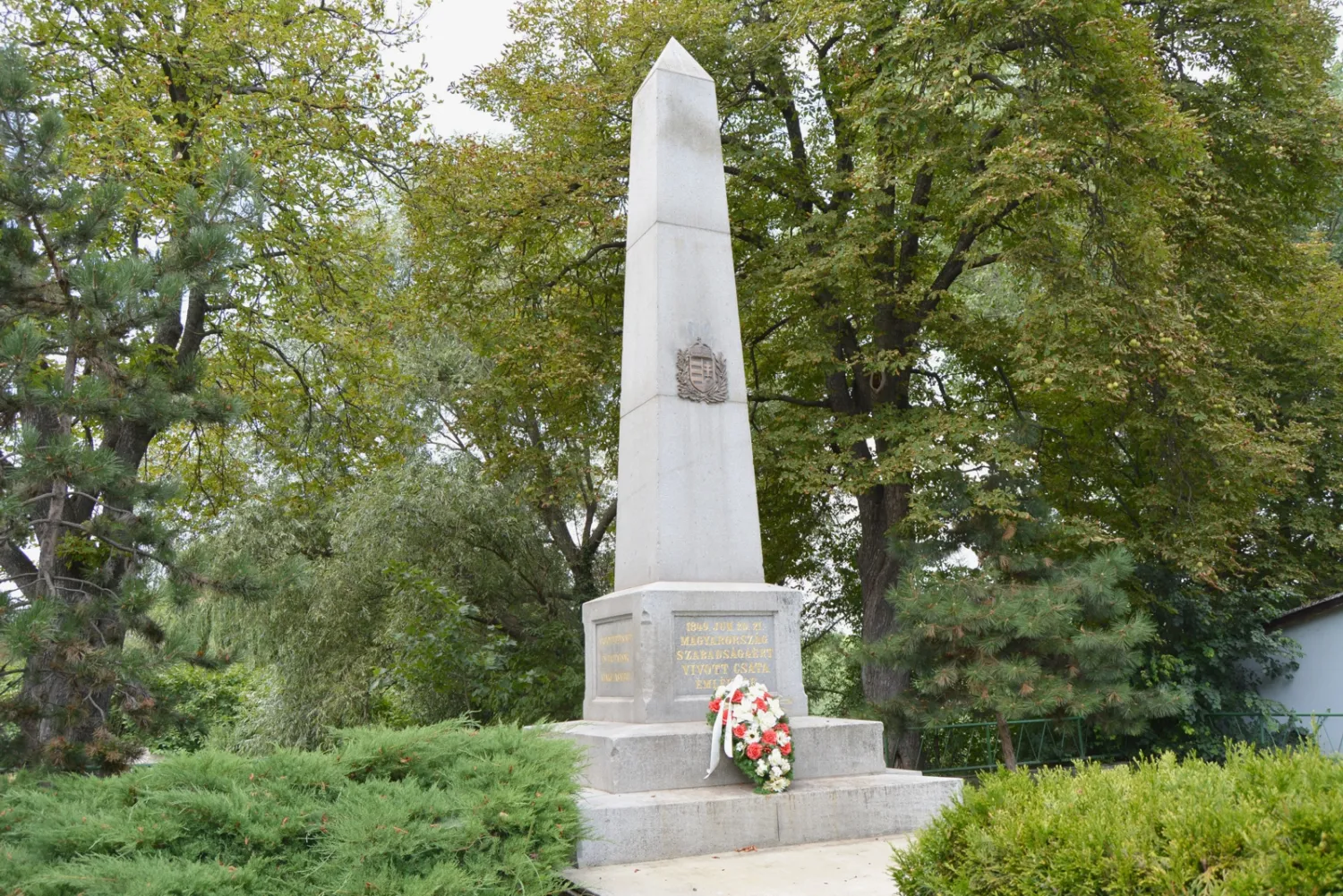
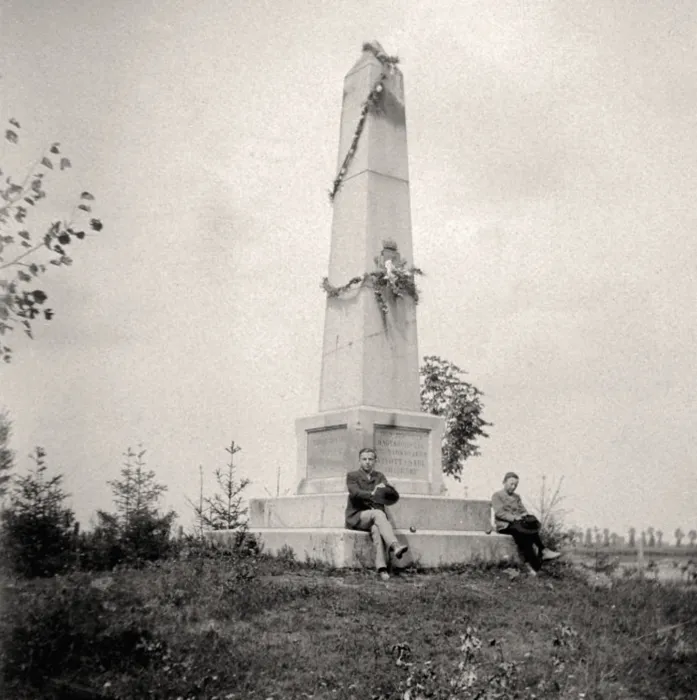
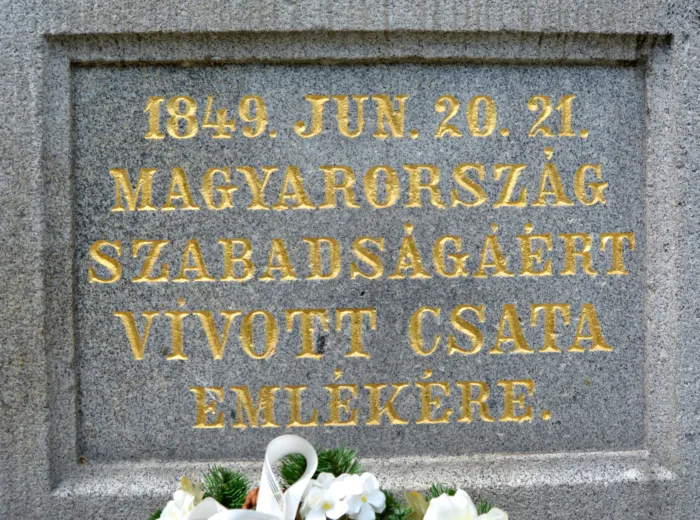
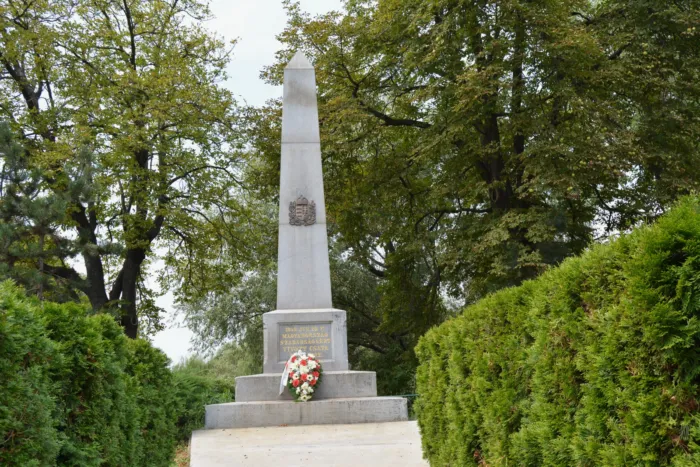
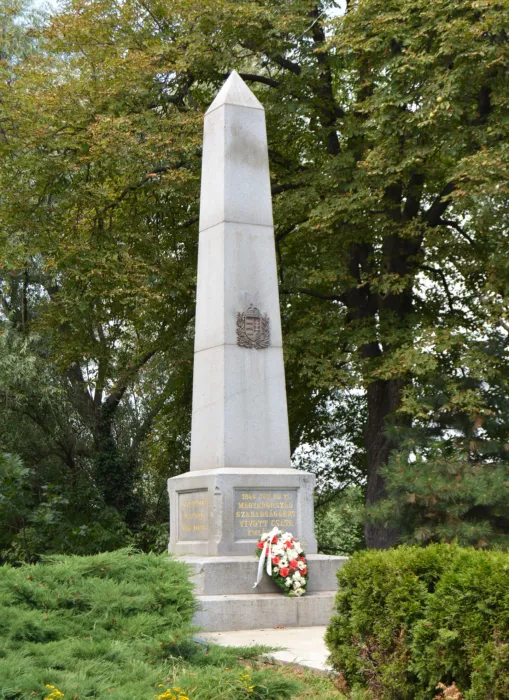
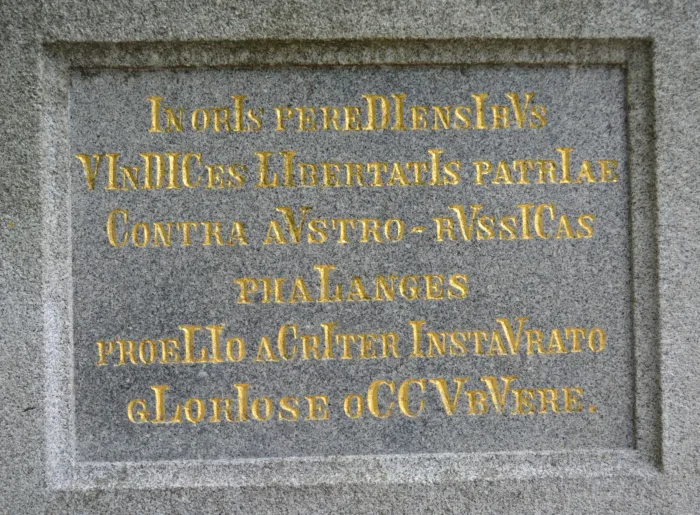
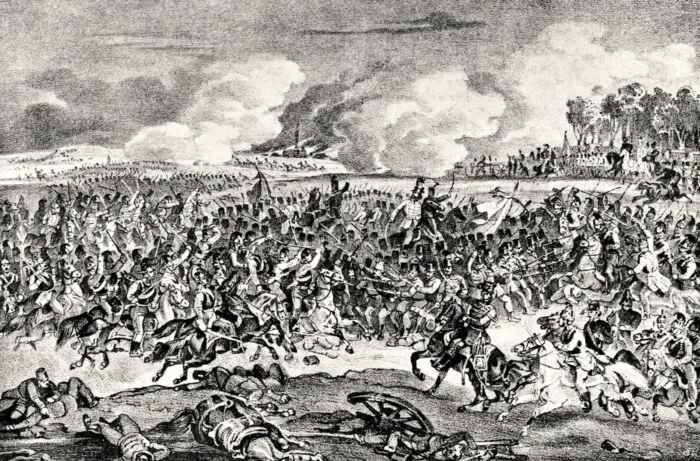
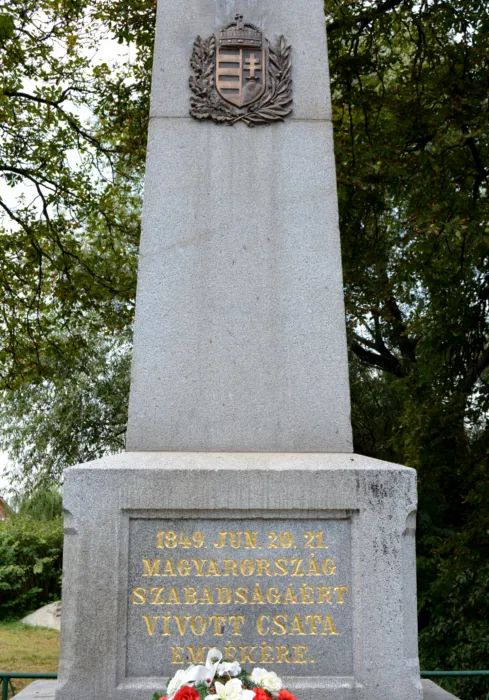
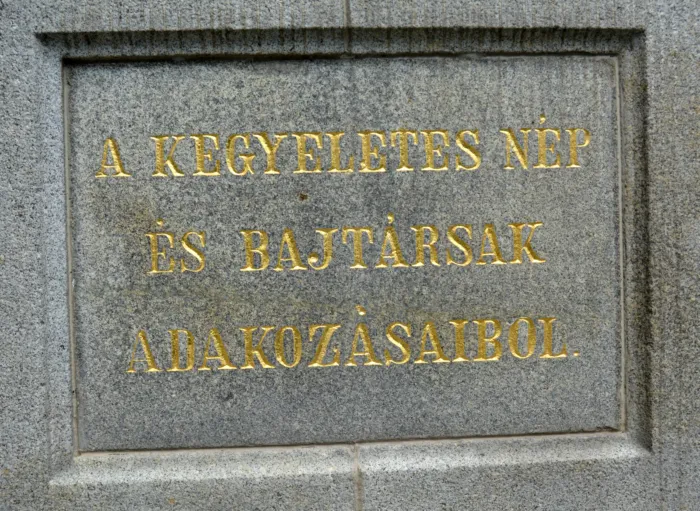
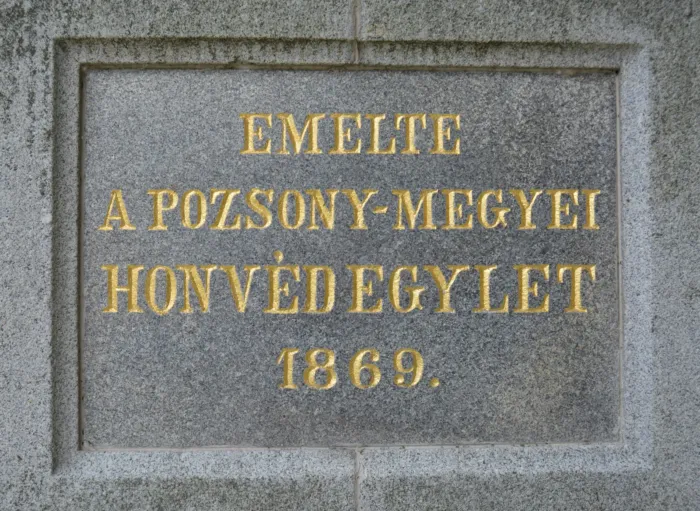
The monument is located opposite the cemetery. On August 2, 1867, Alajos Ürge, the clerk of Pered (himself a former 48th regimental soldier), sent a letter to the Bratislava County Honorary Association, proposing the erection of a monument in honor of the fallen soldiers in the Battle of Pered. The general assembly of the Honorary Association agreed with the proposal and began a large-scale collection. The organizational work was undertaken by Dr. Antal Beck, a lawyer, former 48th regimental captain, and president of the Honorary Association, and together with Alajos Ürge, they worked on the erection of the memorial column. The 1,500 forints collected were used to create the memorial column by Antal Brandl, a sculptor from Nitra. The monument was inaugurated two years after the collection began, in 1869. The obelisk commemorates the approximately 3,000 heroic soldiers who died in the Battle of Pered. ; ; After the Russian intervention in Hungary became public knowledge at the end of May 1849, General Artúr Görgei believed that he had to defeat the imperial main forces before the arrival of the tsarist forces. The clash between the two armies took place along the Váh River on June 20 and 21, 1849, but the two-day Battle of Pered did not end with the victory of the Hungarian weapons. ; The Hungarian main army stood on a front line nearly 250 km wide from the mining towns along the Váh line through Csallóköz to Komárom, and south of it along the Rába all the way to Marcaltő. On the Hungarian right wing, two detachments controlled the mining towns and the Nitra region, south of there were troops of the I. Corps in the Mocsonok, Ürmény and Komjáti regions, the III. Corps was stationed in the Érsekújvár region, the II. Corps guarded the terrain section south of this to Komárom, and in Csallóköz there was a division of the Komárom castle guard, while on the Hungarian left wing, along the Rába line, the VII. Corps and the Kmety Division were lined up. ; The Central Camp Staff Office, led by Colonel József Bayer, Chief of Staff, developed the war plan according to which the I., II. and III. Corps of the Felduna Army on the left bank of the Danube were to be attacked. Corps was to break through the line of the Imperial Army along the Váh and advance towards Nagyszombat and Bratislava to defeat the Imperial Army there before the Russian intervention troops arrived. Meanwhile, the parts of the Hungarian Army on the right bank of the Danube would have held their positions on the Rába line and tied up enemy forces in the Csallóköz to facilitate the attack of the right wing corps. ; According to Colonel Bayer's idea, the I., II. and III. Corps were to attempt the breakthrough separately between Komárom and Galgóc, instead of attacking in one place, which would have been more advisable given the numerical situation, since the Hungarian Army, which numbered 53,000, was opposed by the Imperial Army of Field Marshal Julius Jacob von Haynau, reinforced by the Russian Panyutin Division, which consisted of 82,000 soldiers. However, the war plan conceived above the map did not take into account the marshy nature of the Váh region and the extremely difficult access to the settlements there, as well as – due to the inadequacy of Hungarian reconnaissance – the grouping of enemy forces. ; Since Görgei simultaneously held the position of commander-in-chief and directed the Ministry of War, he was unable to lead his troops until June 20, which were controlled in his absence by the Central Camp Staff Office operating in Tata, but due to the great distance, he could not fully perform his task, and in addition, General György Klapka found it difficult to follow the orders of a colonel, so distortions were almost daily. After the capture of Buda, significant personnel changes took place in the corps command of the Hungarian main army, and the new commanders, who had previously performed excellently as division or brigade commanders, were not always able to rise to their new positions. ; According to the war plan, the II. Corps was to cross the Váh at Gúta, then the Kis-Duna branch at Puszta-Aszód, and the Váh at Farkasd and Negyed. The III. Corps could then follow and they could head towards Galánta together. On the left flank, the VIII. Corps division stationed at Csallóköz was to tie up the enemy forces there, while the I. Corps was to tie up the imperial forces between Sempte and Szered and prevent them from pushing their forces south. In accordance with the above, Colonel Lajos Asbóth ordered the troops of the II. Corps to attack on June 16, thus managing to capture Zsigárd, Királyrév and Negyed, but then was forced to retreat to their starting positions due to the enemy's superior strength. ; Despite everything, he managed to build a bridge over the Váh near Negyed and was able to hold it, while the III. Corps led by General Károly Knezić remained idle. Meanwhile, the I. Corps led by General József Nagysándor launched an attack on the imperial entrenchment camp at Sempte on the left bank of the Váh, but it failed miserably, while the division in Csallóköz advanced to Patas, where it stopped. ; After Görgei learned of this, he decided to renew the attack on June 20. At that time, another division of the VIII. Corps from Komárom was also sent to Csallóköz. The II. Corps behaved bravely on this day as well, as it captured Királyrév and Zsigárd, and then, thanks to the bravery of the 48. Home Guard Battalion of Major Samu Rakovszky from Nagyrákó, Kelemenfalvi and Nagyselmec, it stormed Pered. The III. The I Corps intervened late in the fight, so the Hungarian advance stopped at the Pered and Alsószeli lines. The I Corps launched another unsuccessful attack against Sempte, then retreated to its starting positions. Klapka advanced at Csallóköz, but was stopped near Nyárasd and was forced to retreat to cover the bridges at Puszta-Aszód and Gúta. ; Görgeit was so annoyed by the failure that he immediately replaced Knezić and appointed Colonel Károly Count Leiningen-Westerburg in his place. He was not even satisfied with Colonel Asbóth, who had shown good results, and he also removed him from command of his corps and instead appointed Colonel József Kászonyi of Nagykászony as the commander of the corps. By this time it had become certain that the imperial troops would launch an attack the next day, so Görgei ordered Klapka to hold the Puszta-Aszód bridge at all costs, and Nagysándor to carry out a forced river crossing near Szered, while the task of the II. and III. corps was to repel the enemy attacks. General Ernő Poeltenberg's VII. corps was also ordered: it had to prevent the imperial troops on the right bank of the Danube from sending reinforcements to Csallóköz. Accordingly, on June 20, it carried out a forced reconnaissance between Moson and Hédervár, but this did not help the Hungarian troops' success either. ; Haynau had already begun regrouping his forces to the right bank of the Danube on June 19, but in order to conceal his intentions, he considered it important to repel the Hungarian attack along the Váh, so he ordered his II. and IV. corps against Görgei, respectively. the combined Russian infantry division of Lieutenant General Fyodor Sergeyevich Panyutin, consisting of 12,000 soldiers. On June 21, the Imperial II Corps was ordered to tie up the Hungarian forces in Csallóköz and to support the Imperial IV Corps in their fight. The Imperials near Szered destroyed the bridge between Sempte and Szered, and then moved to support the main forces. The Panyutin division advanced on the left wing of the Imperial IV Corps, and the corps' task was to prevent the Hungarian retreat, so it occupied Királyrév, through which the Hungarians could have reached the Puszta-Azód bridge. The Hungarian right wing was in the process of attacking when Görgei received this news. The II Corps retook the settlement, but in the meantime the Imperials and the Russians captured Pered and the III Corps was forced to surrender Zsigárd. Nagysándor was still idle at this time, not realizing that he could cross the Vág without hindrance. After Zsigárd's surrender, Görgei ordered a retreat, the III. Corps crossed at Negyed, the I. Corps crossed at Puszta-Aszód and Gúta. ; One of the events of the battle of June 21, an orderly of the Feldunai army corps, Lieutenant Ferenc Karsa of Szentkirályszabadjai, recalled the following. “(…) Görgey entrusted the capture of Királyrév [Kempelen and Kismagyari] to Captain Kempelen [Károly]; and he himself took command of the two corps, and first of all, to stop the enemy's advance in the intoxication of victory: he gathered the hussars, assigned the 3rd, 9th and Schwarzenberg battalions to them, and launched a cavalry charge supported by bayonets. – The cavalry attack [correctly: attack] failed; the 9th [azló] battalion was surrounded by the musketeers. After a hair-raising fight, a battle with rifles and brains, the 9th battalion was forced to give in, but one company of its men could not escape; that company could not break through the ring formed by the musketeers, and a fight was renewed, such as can only be imagined in the life-and-death struggle of animals; not only weapons, but also tooth and nail, were used both defensively and offensively. becomes a tool, – in vain the ten times as many musketeers trample the handful of Hungarian heroes, they kill them, only a few manage to escape by swimming to a ferry. The captain of the [6th] company, Boldi Czikó [Captain Boldizsár Czikó], is beaten to the ground by the beard until he dies, after which his body is brutally mutilated.” ; General Klapka, who operated at Csallóköz, reported in his memoirs that “on the first day our troops not only held the battlefield, but also won in space. But on the second day, when Panyutin’s Russian brigade [correctly: division] on the enemy side also pushed into the battle line, the battle took an unfavorable turn, and Görgey was forced, constantly fighting most heroically, to retreat across the Váh and Váh-Danube. The bridge, over which the greater part of the two corps that fought on the two days of the battle retreated, was at the same time defended by me against the repeated attacks of the enemy corps operating at Csallóköz.” ; How did the enemy see the Battle of Pered? Baron Leontyn Pavlovich Nikolay, adjutant of the corps of Field Marshal Count Ivan Fyodorovich Paskevich-Erivansky, wrote the following: “Görgey, having learned that the Austrian main forces were moving across the Danube, and that General Panyutin would have to follow them, and that the Austrian division [correctly: corps] of General [Baron Ludwig von] Wohlgemuth was the only one left on the Vah at Pered, decided to take advantage of the opportunity and destroy this division. Therefore, with his army, the number of which, according to information, was between twenty-five and thirty thousand men, he crossed the Vah, attacked Wohlgemuth, drove him out of some of his positions, and forced the Austrians to retreat. Wohlgemuth’s situation, not having more than eight thousand men, would have become hopeless if, fortunately, General Panyutin, who was nearby, had and, standing on this side of the Danube, he does not hear the artillery and does not rush to help. The Austrians, encouraged by the arrival of our forces, launched an attack, took back their positions, and Görgey was forced to retreat, apparently suffering quite significant losses. Despite the fact that General Panyutyin was only a reserve for the Austrians, he still had to take direct part in the battle (…) All news testifies to the fact that our soldiers performed exemplary.” ; Due to the superiority of the imperial army, the breakthrough on the Váh failed, the bloody losses of the Hungarian army amounted to nearly three thousand people and, which was decisive for the continuation of the summer campaign: the possibility of the military initiative began to slip out of the hands of the Hungarian army.