
The Lechner villa in Losonc
Building, structure
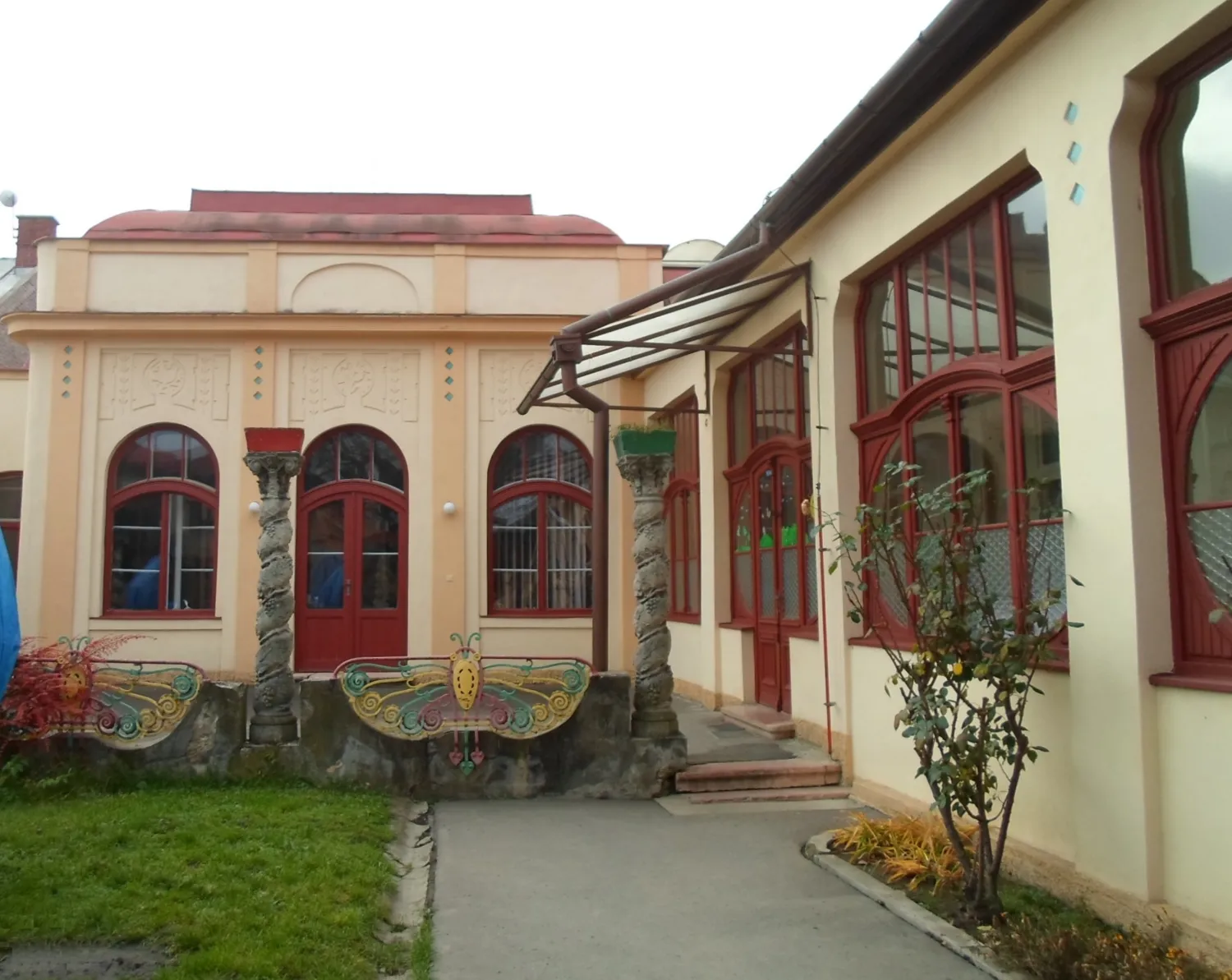
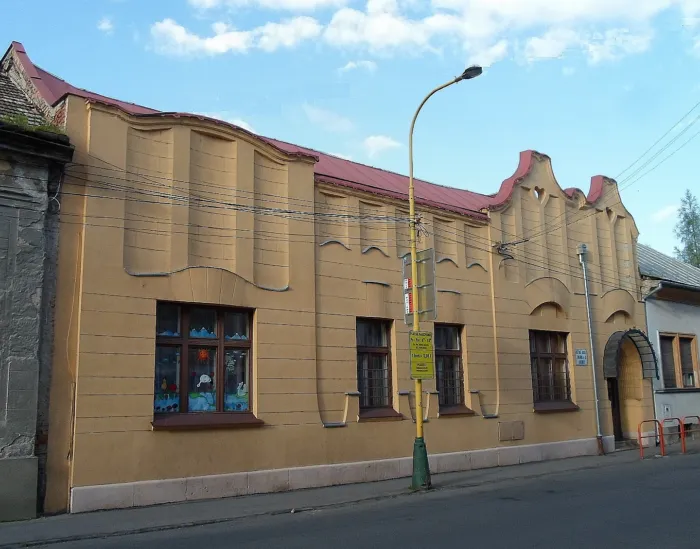
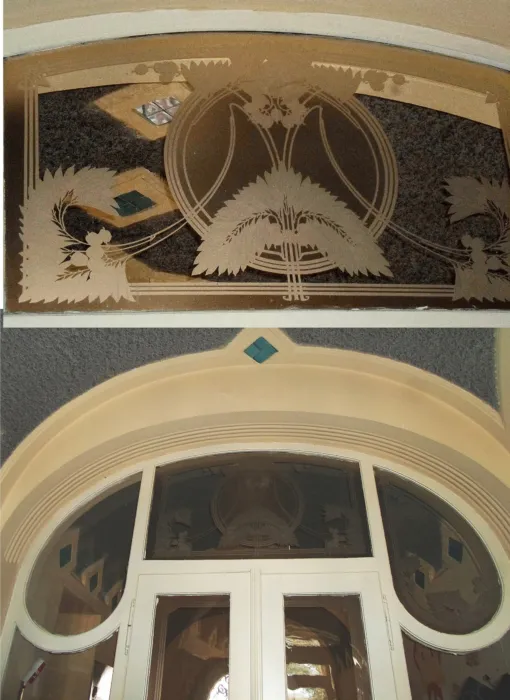
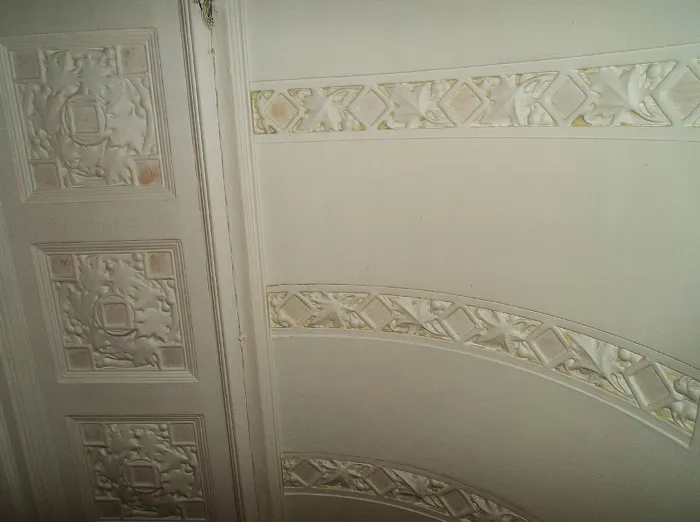
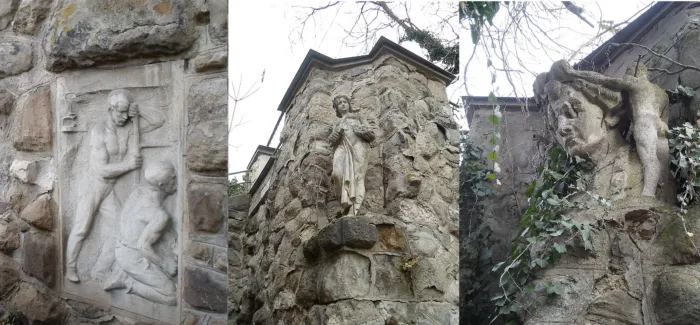
Ödön Lechner, the most prominent representative of Hungarian Art Nouveau architecture (1845-1914), designed not only the Blue Church in Bratislava, but also the house at number 13 Jókai Street in Losonc. The building currently used as a nursery was built in 1910 as the family villa of György Rakottyai (1858-1914), an enamel manufacturer. ; The concave and convex wall surfaces of the long street facade, the curved, heart-shaped gable, the inlaid portal, the floral, vine-like wrought-iron lattice door attract the attention of passers-by and remind us of the building's heyday. The characteristic Lechner plaster decorations - blue tiles - partially disappeared during the reconstruction after nationalization, but some of the remaining decorative elements on the facade sparkle in the sunlight. Between the foyer and the corridor, there are particularly beautiful etched glass windows above the door frame with “lechner” lines, reminiscent of the blue church in Bratislava. The spectacular vault decorated with blue-green tile inlays has been preserved in the foyer, the stucco-decorated arch above the corridor, and the black-and-white ornamental flooring in the corridors. The rooms have particularly beautiful lace-like stucco-decorated ceilings. Stepping out of the long corridor of the courtyard section of the L-shaped building, we find ourselves in a special space, which even in its current, changed form is an eye-catching visual experience. This courtyard hides a rich storehouse of elements of Art Nouveau architectural and decorative art. The courtyard end of the house ends with a kind of “apse”. Two huge trees are the natural decoration of the inner courtyard. Behind the tree at the back, a surprising, castle-like structure is hidden. A row of artificial stone columns leads to the “bastion” built of natural stone. The capitals of the columns are decorated with characteristic Art Nouveau masks. The walls of the unique building feature reliefs and allegorical sculptures. It is characteristic that the manufacturer, who came from a family of craftsmen, had his “castle” decorated with reliefs depicting workers and work scenes.