
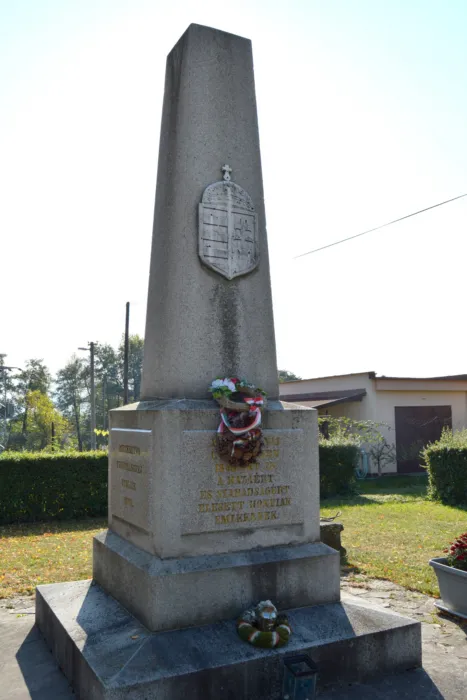
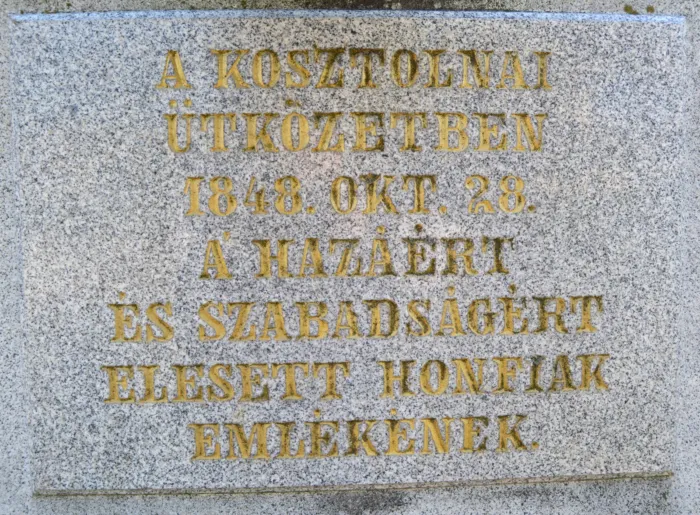
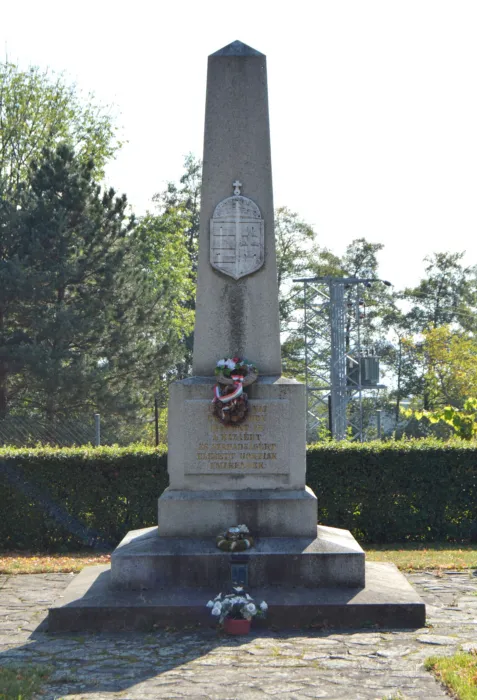
Monument to the Battle of Kostolna (Vágegyháza)
Statue, monument, memorial plaque
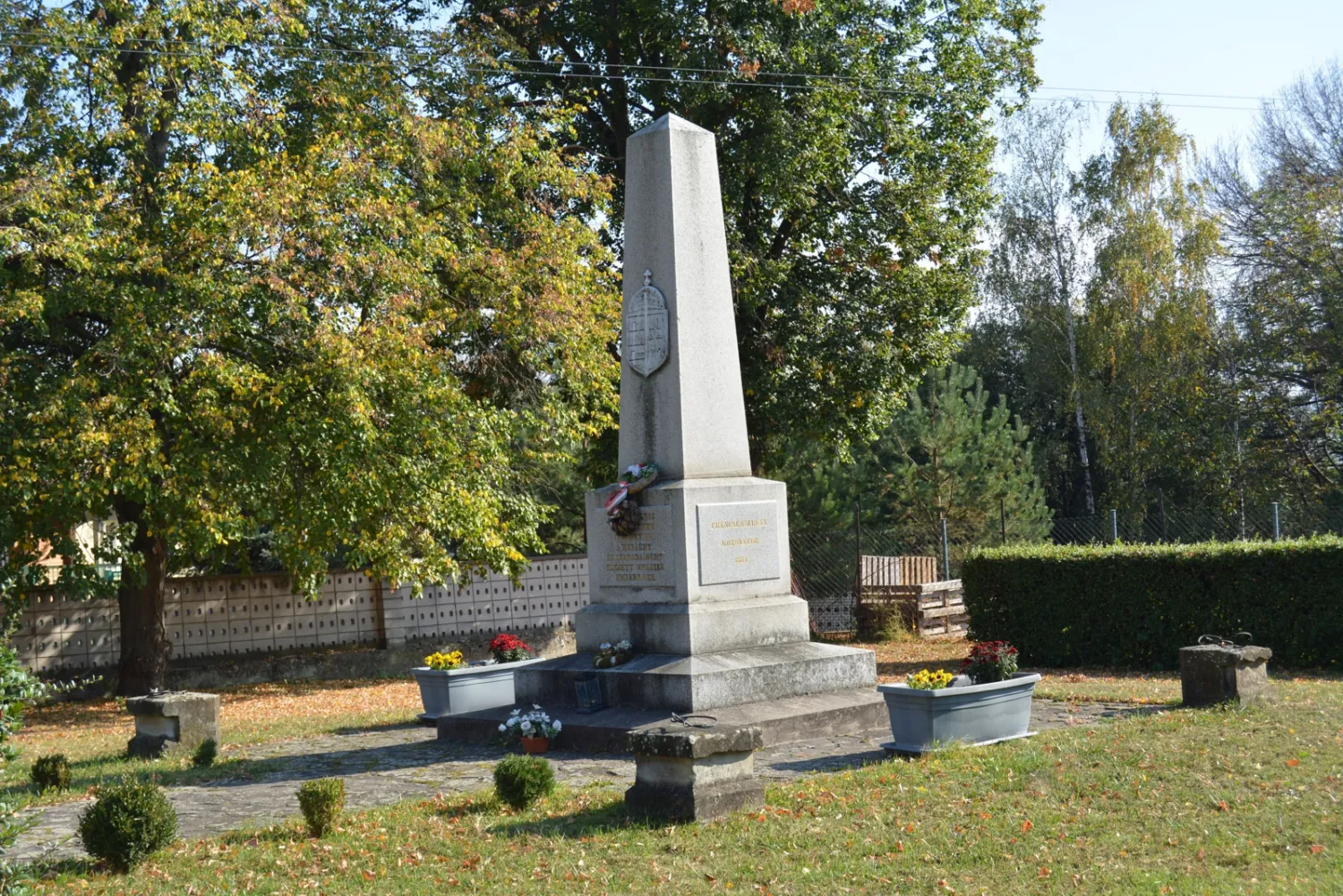
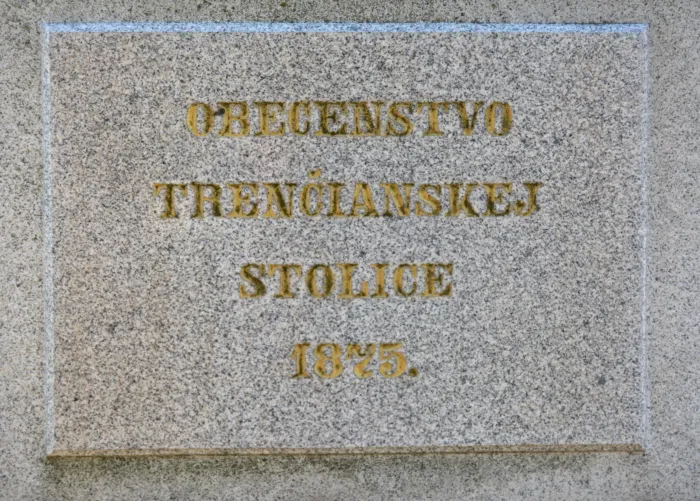
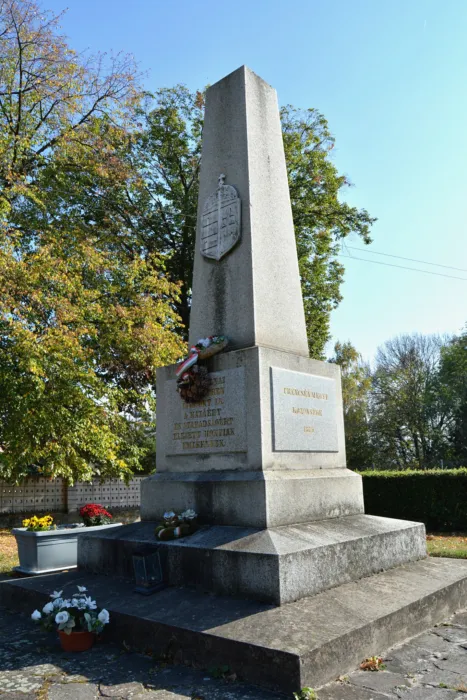
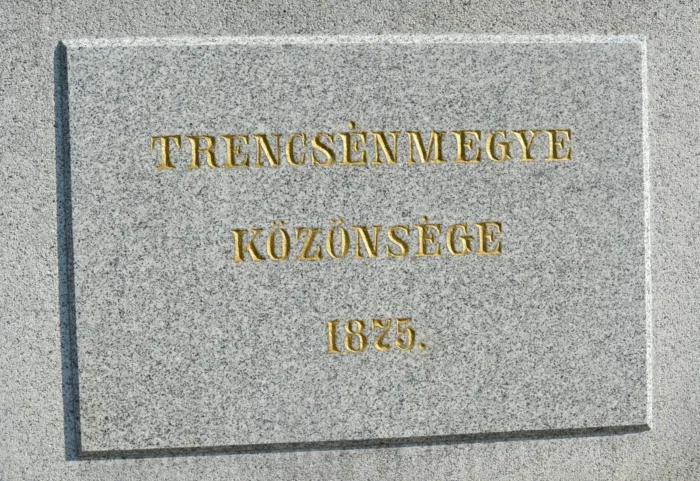
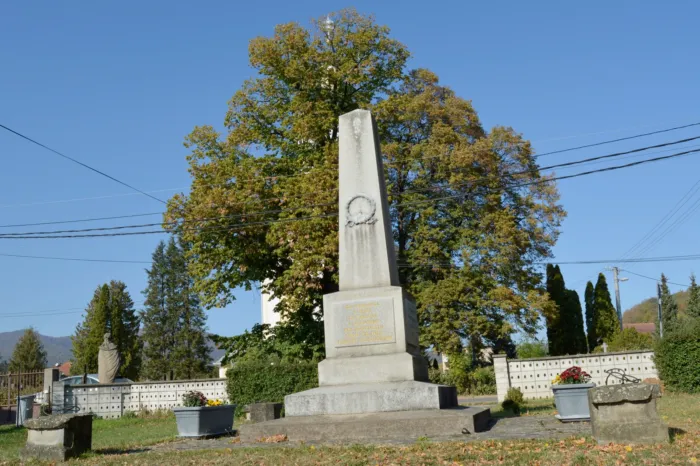
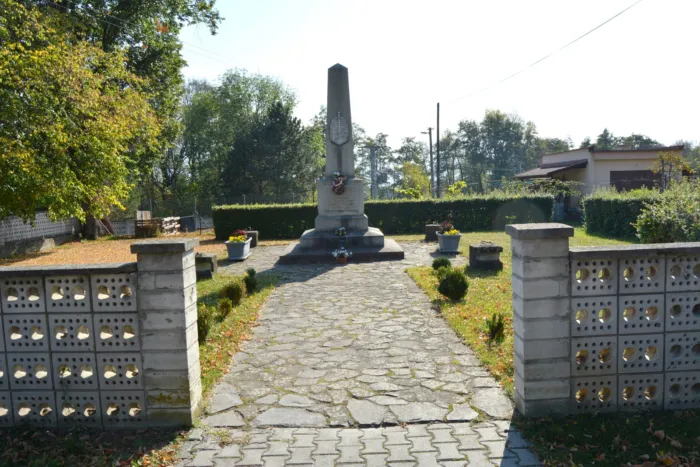
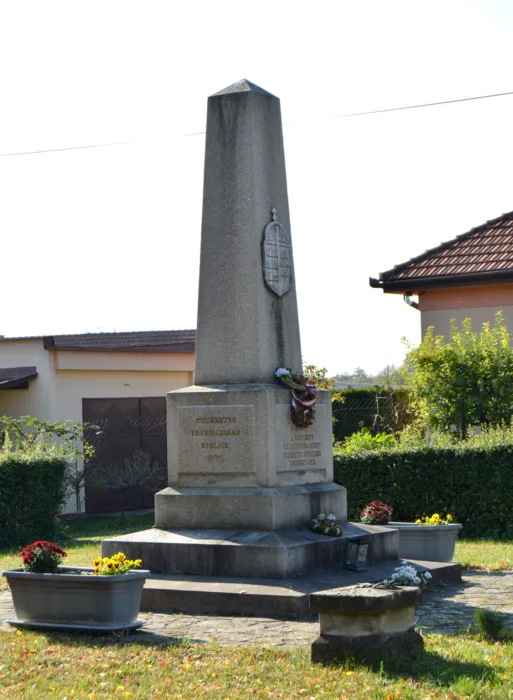
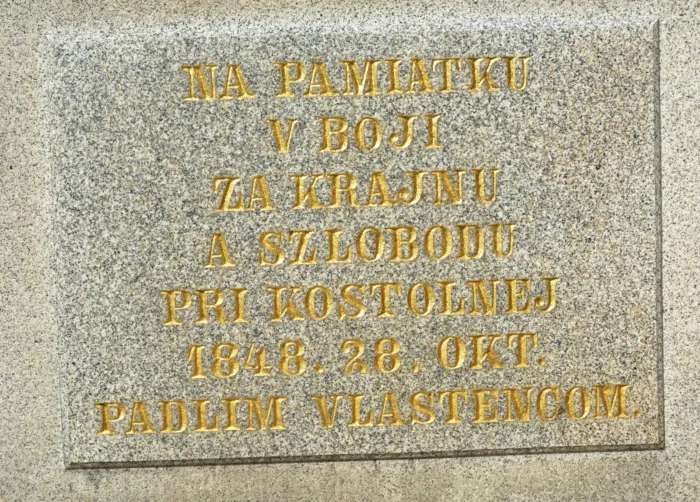
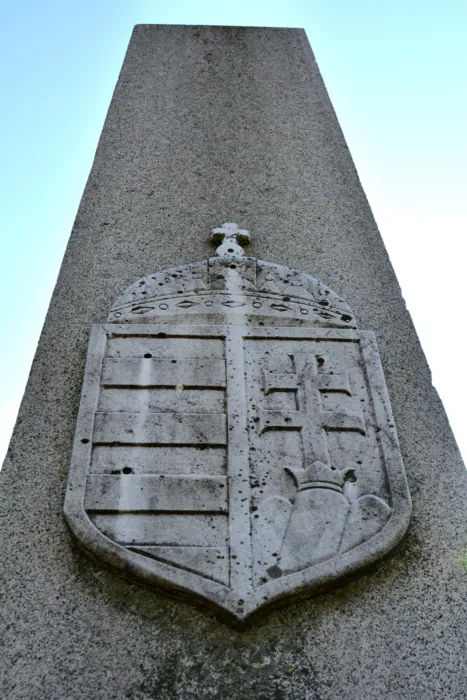
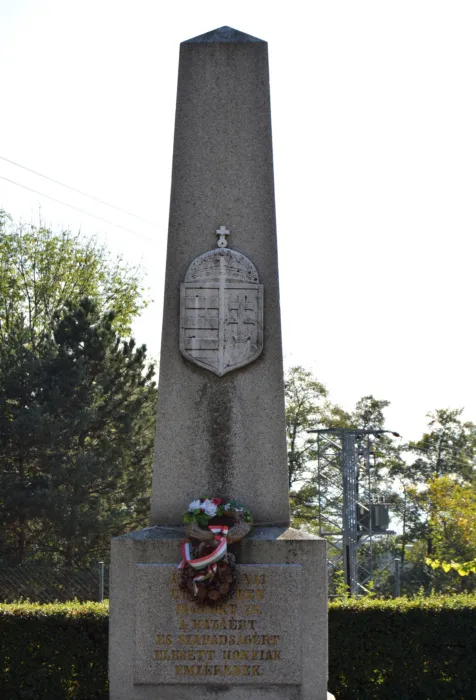
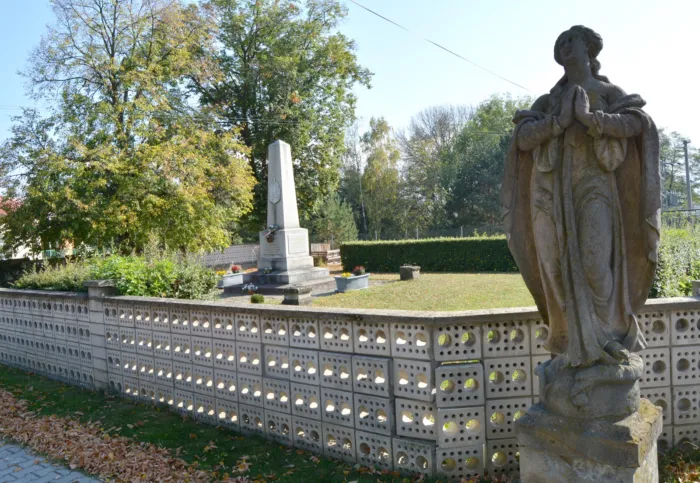
Opposite the Catholic church in Kosztolna stands the memorial stone of the fallen soldiers in the Battle of Kosztolna fought on October 28, 1849. This was erected by grateful posterity as a sign of respect in memory of those who were ready to fight for the freedom of their beloved homeland, to fight until their last breath. ; The soldiers' camp was on the Kosztolna hills, there was a fierce battle, in which Guido Pongrácz, the enthusiastic leader of the people's insurgents, was also wounded, - from there the defeated army of Major Kálmán Ordódy marched to Komárom, with sad memories, but imbued with that patriotic feeling, to continue its work in the service of the homeland. ; The speech made here touchingly describes this place: ; ; Next to Kosztolna. ; ; “I see Kosztolna and my soul is overwhelmed by the mound, ; In which the ornament of patriotism rests buried. ; How much hope, desire, enthusiasm forgotten in the early grave, ; One, freedom, did not descend under the mounds ; It was not a dream image, why our fathers fought: ; Alive above the graves of the heroes of the free nation! ” ; ; (József Cserei, 1888. II/1.) ; ; Report of the Royal Army Lieutenant General Balthazar Simunich to Field Marshal Windisch-Grätz on the clash between him and the army of the Patriotic War Major Ordódy at Kosztolna. ; At ten o'clock a report came from the outposts that the enemy, stationed on the heights west of Ribári, was planning an attack. The staff section there immediately marched 4 companies of the Nugent Regiment, 1/2 Battery No. 33 and a wing of cavalry towards the Istěbnik tavern for closer reconnaissance. They found that the enemy was completely calm and did not plan an attack. The heights were occupied by about 4-500 peasants and riflemen, and the Kostolna castle was occupied by six 3-pounder guns and 4 companies of Prussian infantry, but across the road they had prepared a wooden barricade approximately 400 paces long all the way to the side of the heights. ; The attack took place as follows: the Nugent Home Guard Battalion marched towards the heights through Istebnik at 1 o'clock in the afternoon to embrace the enemy's left flank, while the Vilmos Home Guard Battalion followed in stages, and on the road the 3rd Haynau Battalion, the 3rd Hohenegg Battalion, the cavalry division and two batteries followed. ; The Nugent Battalion was the first to enter the battle and when it had already gained a significant advantage, the right army also advanced, which was barely within firing range when it came under fire from the enemy artillery. The shots were mostly high and only wounded a few people. On the other hand, the Nugent Battalion had more wounded, since the enemy, mostly armed with carbines, allowed the strikers to come very close to them. The Nugent Battalion occupied most of the heights by storm. As a result of this, and the well-aimed, targeted fire of our artillery, the insurgents abandoned Kosztolna: some of them fled wildly across the Váh, in which fifty drowned, and some of them ran into the mountains. However, the cannons retreated along the road with the regular troops. The insurgents, numbering about 4,000 (according to the statement of a captured sergeant of the recruiting command of the Sándor Infantry), dispersed with the exception of a small part. The latter remained with the regular troops. When we reached the village with the vanguard, a fire broke out. It was probably lit by the enemy himself in order to hinder our pursuit. The grenades could not have caused the fire, since the first house closest to the mountain under fire, as well as the last house behind the village, were on fire. The batteries and the powder wagons had to be moved through the village with great difficulty and speed, as some of the houses along the road were already on fire. The battle began at 2 o'clock, and by 4 o'clock Kosztolna was behind us, and we had scattered the enemy. ; The enemy's strength was as follows: 4 companies of the Prussian infantry, 150 men per company, the recruiting command of the Sándor infantry, 21 men under Lieutenant Mikovényi, ; 4,000 irregular insurgents, armed with national guard carbines, peasant scythes, etc., under the command of the former first lieutenant of the Bakony infantry, Ordódy, four 3-pounder cannons from Lipótvár, which were served by the garrison artillery there, and 2 battle serpents. ; His wounded cannot be judged, as he took almost all of them with him. We captured a sergeant, 5 privates and about 200 insurgents, who were, however, released again. We found several rifles, many scythes, etc. ; According to the loss statement attached to the report submitted to Windisch-Grätz on October 29, the loss of the imperialists was 2 dead, 17 wounded and 5 missing. According to the report, the Hungarian insurgents scattered at the first cannon shot, 50 of them, according to other data 300, drowned in the Váh.