
The facade murals of the "Little Provost's House"
Building, structure
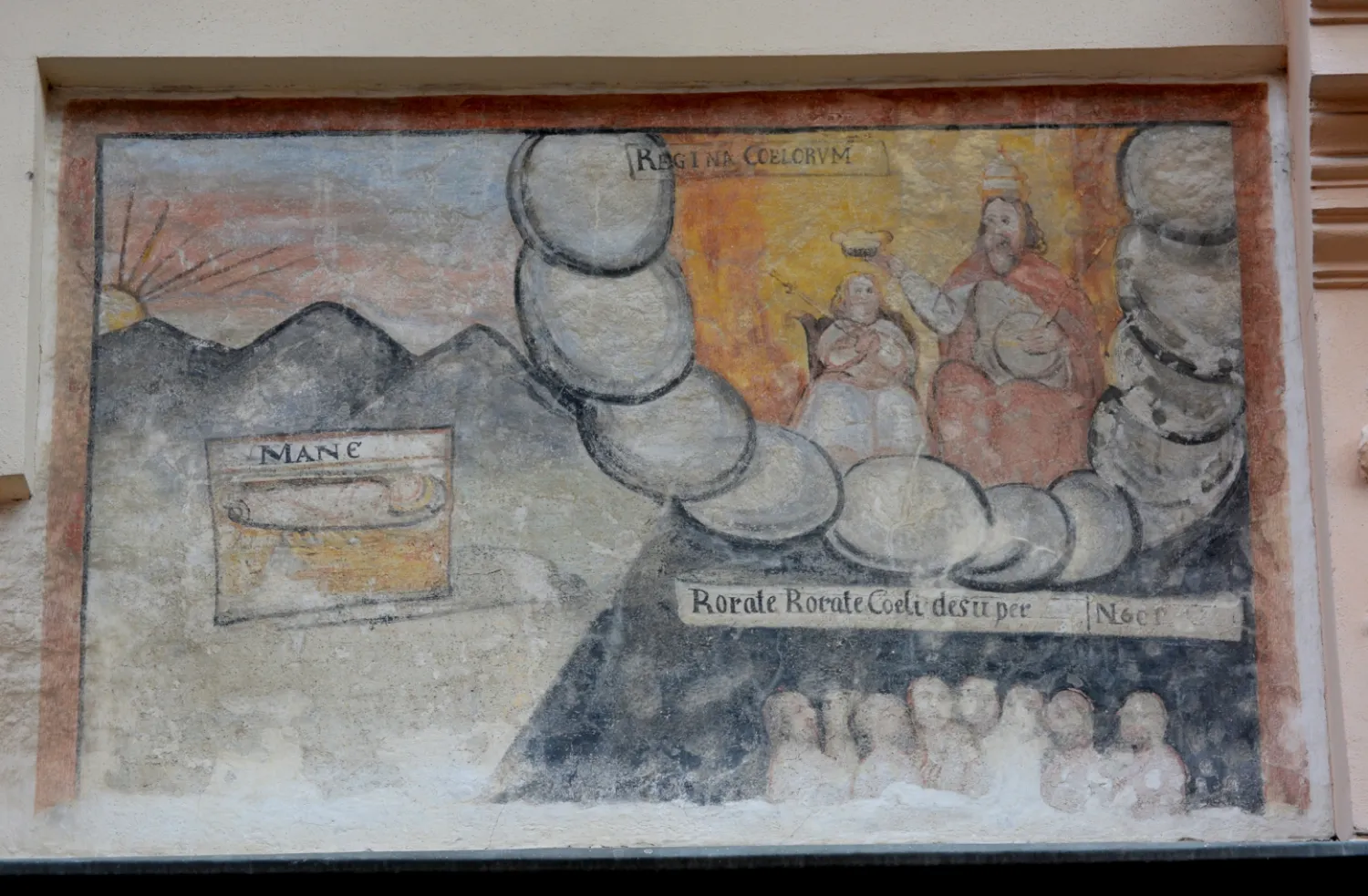
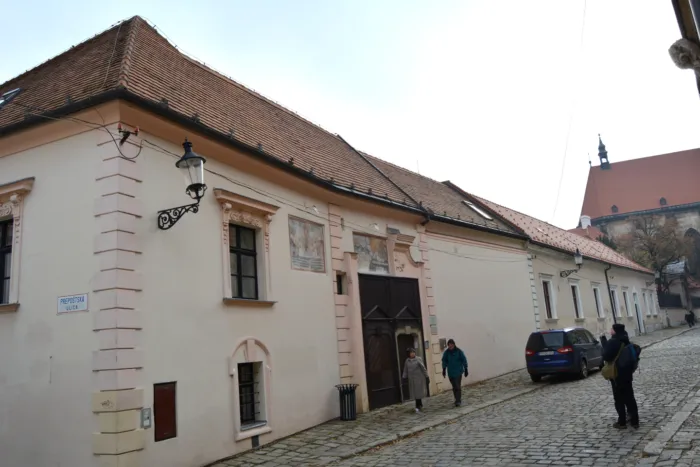
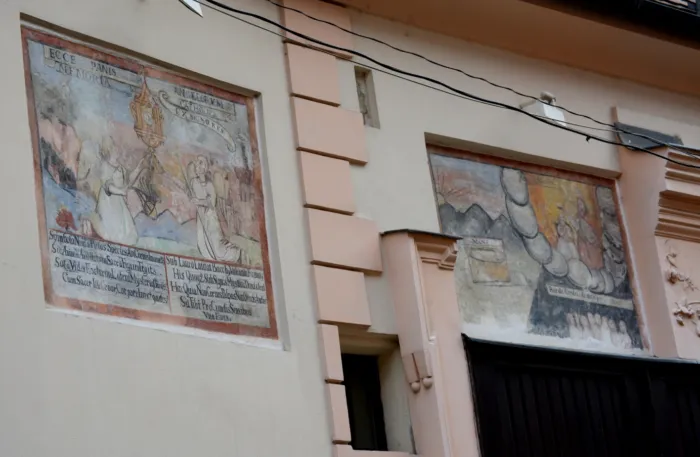
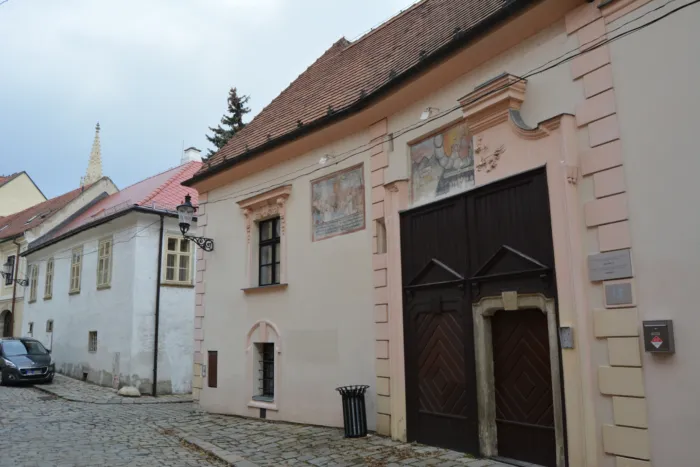
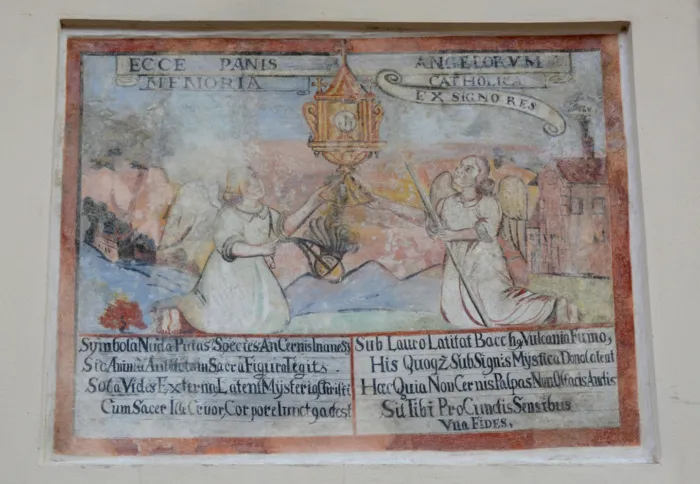
In his memoir "A Walk on Káptalan Street in Bratislava", Árpád Tőzsér writes the following about the "small Prefect's House" on Káptalan Street: ; "However, the nearby house number 15, the so-called Kis Prépostlak, with its Romanesque forms and freshly renovated exterior wall paintings, can be admired freely. But all this is already part of my personal history. ; In the sixties, I lived for a long time in the nearby Vödric Street (now only the site of the street remains, its houses were demolished during the construction of the New Bridge, and the synagogue that was once right next to the cathedral was also blown up): at that time, I walked along Káptalan Street almost every day and often stopped in front of the Kis Prépostlak, which historians say is the oldest house in the city. I knew that György Pray found the codex that later took his name in the chapter archives, that is, somewhere here (in 1770), and in it the text of the Funeral Oration, which has since been known to all Hungarians almost as a poem, as the great elegy of the nation. And since, according to old writings, the Kis The Prefect's House was also built in the early 1200s, and our priceless linguistic monument was also brought to Bratislava at that time (from the church in the nearby village of Deák, where the codex served as a missal), I was convinced that the certain Pray archive could only be in this house number 15. And I was very disappointed when I learned that the famous codex had indeed not been in the Little Prefect's House, but in the cathedral (more precisely, of course, in the archive located there) for more than five hundred years. But my knowledge could no longer change my reflexes: the "crooked, weathered masonry of the Little Prefect's House and the semicircular Romanesque pediment decoration running along both the street facade and the courtyard walls" (Tivadar Ortvay) of the Funeral Oration and its era have always reminded me of me ever since." ; ; Today, two pictures can be seen on the street facade of the house, both It is related to a church song (hymn). ; In the picture, where the text "Ecce panis angelorum" (Behold the bread of angels) is read at the top, two kneeling angels are raising the chalice with the host in it. At the feet of the angel on the left, the outlines of the Bratislava Castle (or a building reminiscent of it) can be made out. In the background, a mountain range (Little Carpathians?) is visible, and on the right, two buildings (houses of Bratislava?) are visible. ; At the bottom of the picture, lines from a version of the hymn beginning Ecce panis angelorum can be read. ; ; On the other wall painting, at the top, the inscription "Regina coelerum" (Queen of Heaven) can be read. ; I can interpret the picture a little uncertainly. The seated figure in red - with a triple crown above his head - is perhaps the Father, and the woman sitting next to him is Mary. ; (It is also possible that we are seeing a communion here, the The high priest gives a wafer to the person who joins him.) ; On the left, in a rectangular field, the word "MANE" (manna?) can be seen. ; On the lower right, on the ribbon above the army of believers, the words "Rorate Rorate coeli de super" can be read. These are the words of the opening hymn of the Advent morning masses. ; ; In my opinion, the two pictures could have been made at the beginning of the 18th century or in the 17th century.