
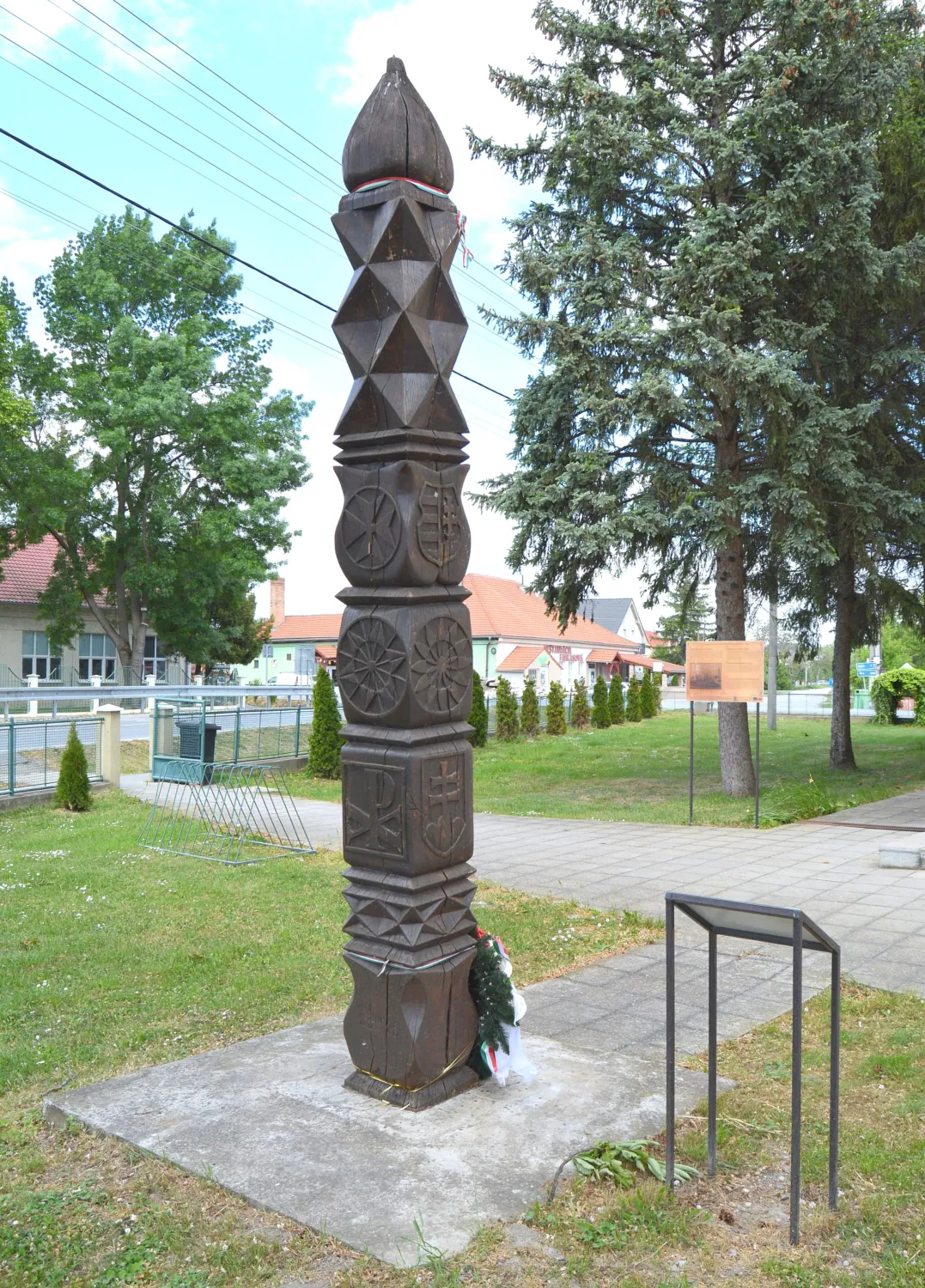
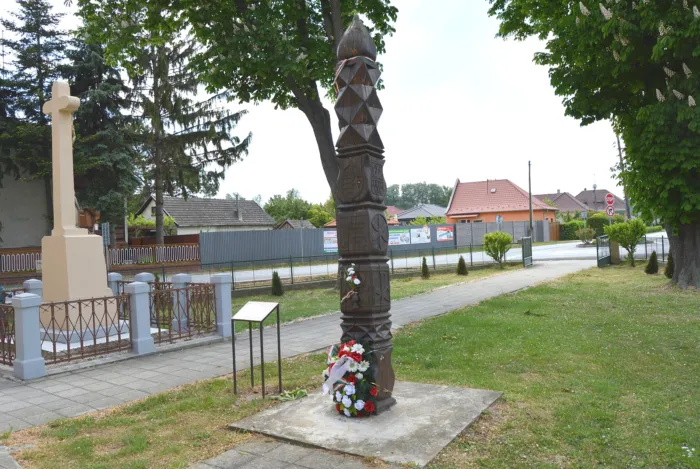
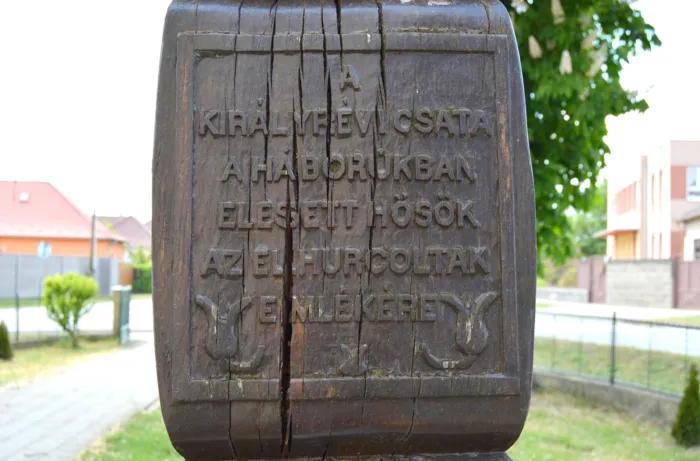
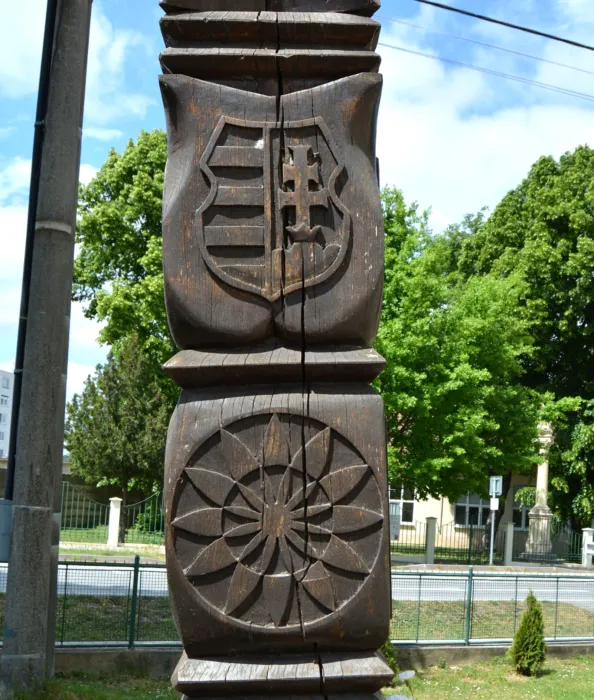
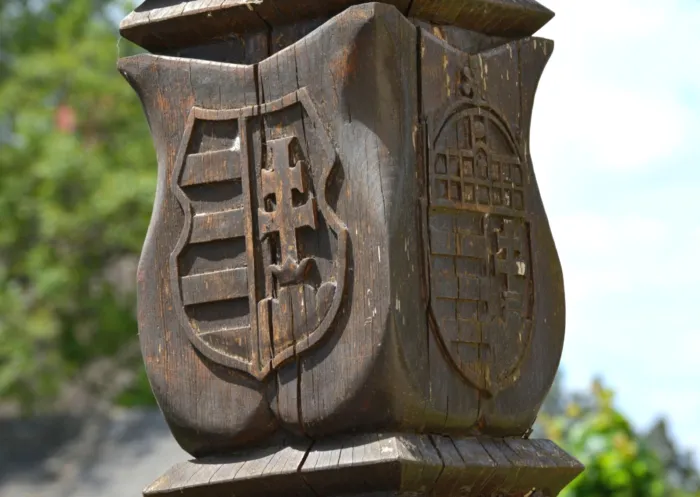
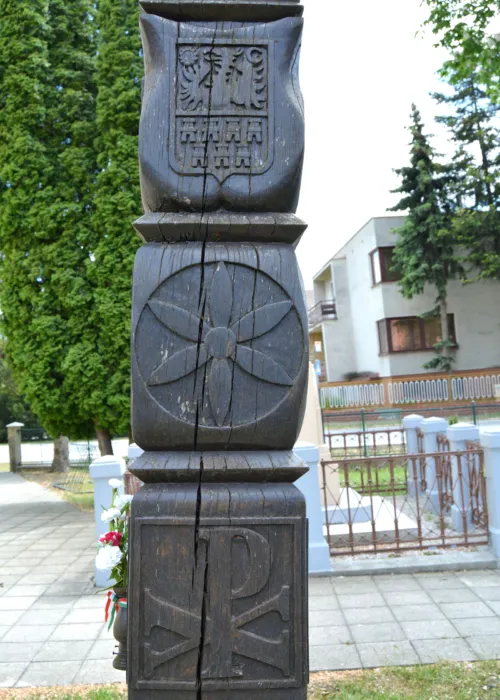
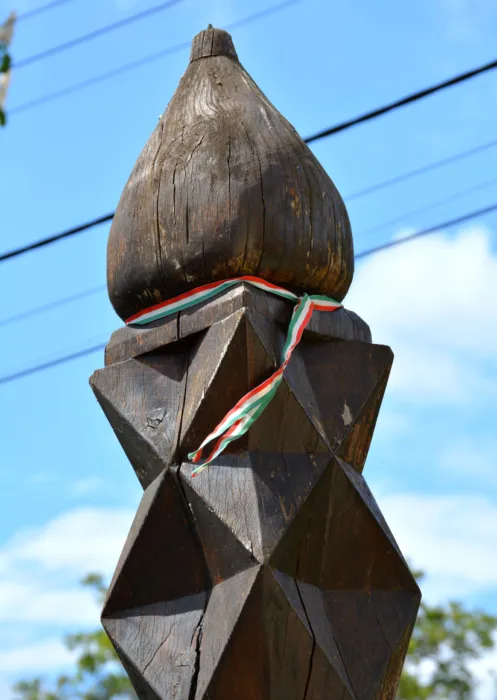
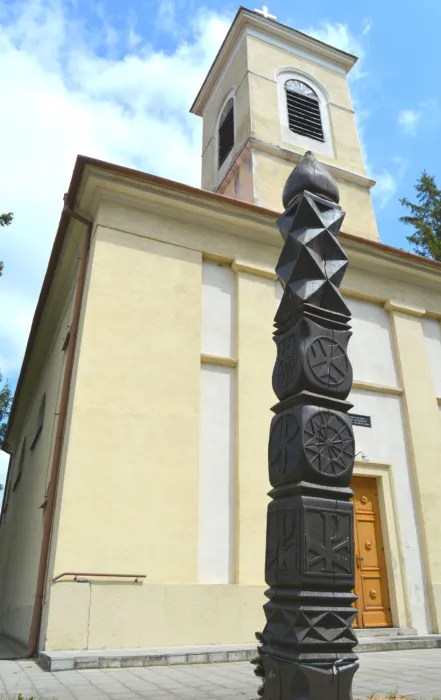
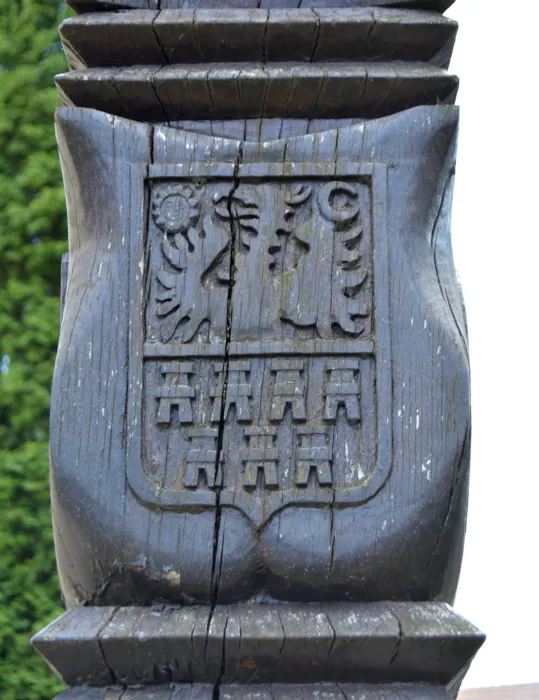
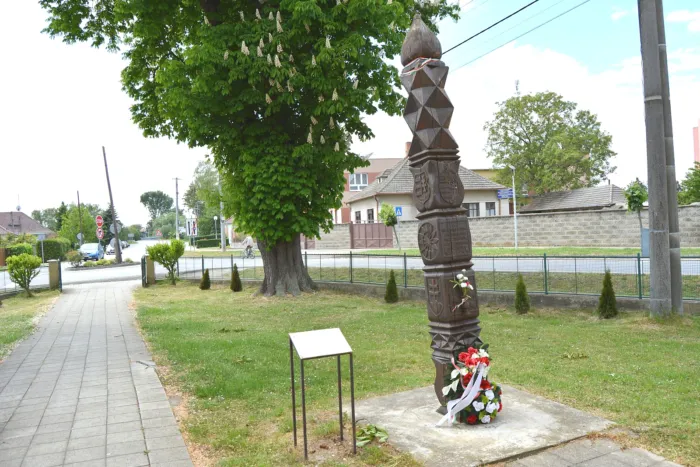
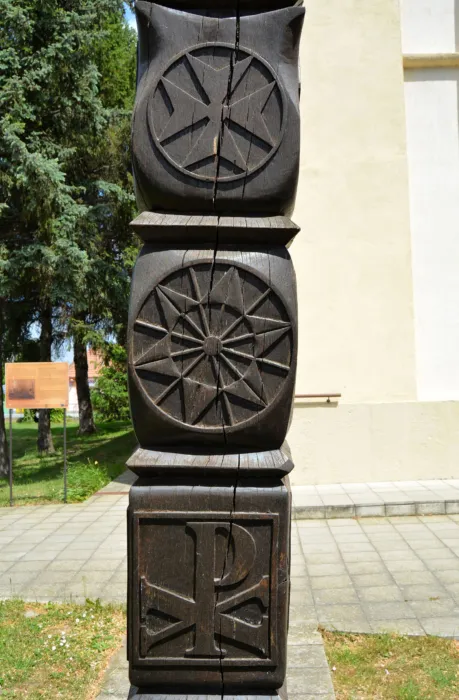
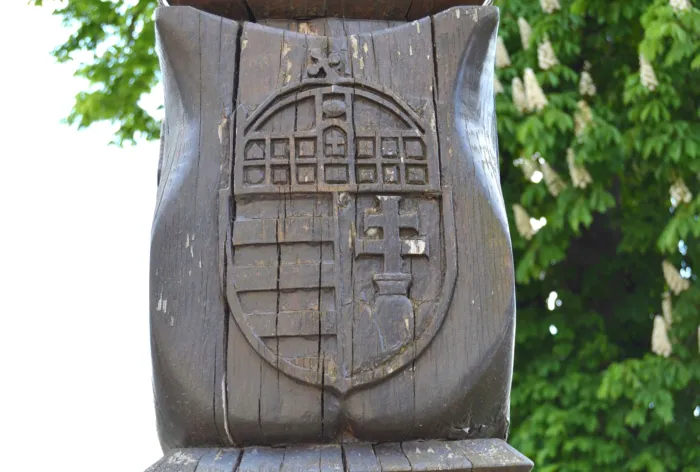
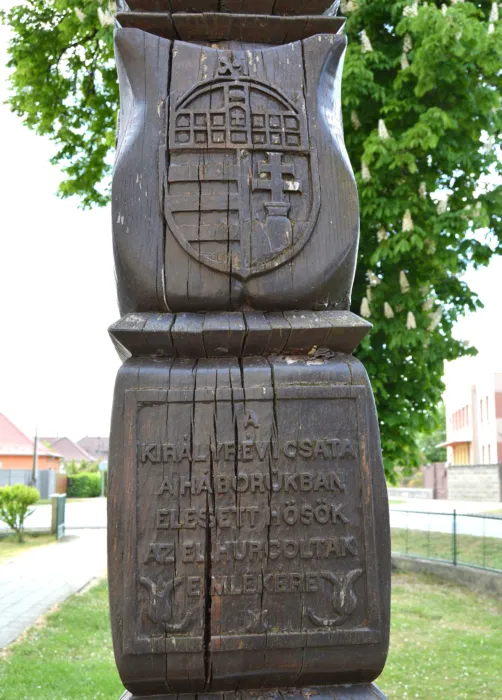
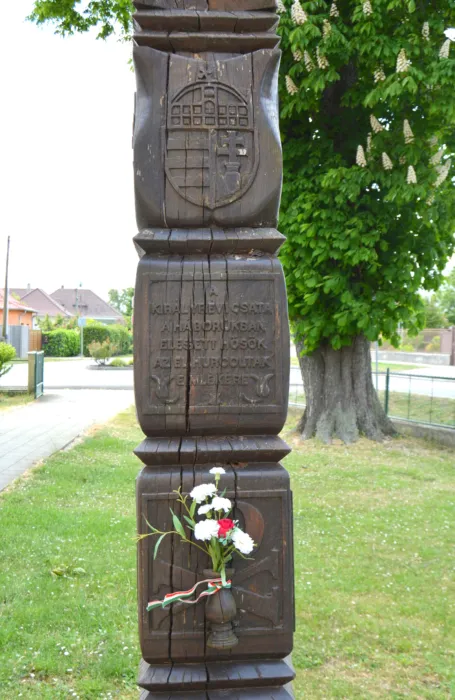
The headstone of the Battle of King's Row
Statue, monument, memorial plaque
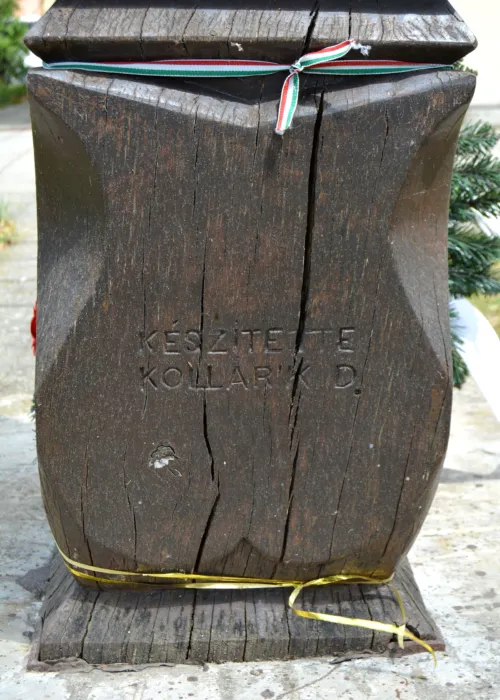
The Battle of Királyrév is closely connected to the history of the Second Battle of Pered on June 21, 1849. This village was of strategic importance for the Hungarian army at the time, as the retreat route of the Hungarian army towards Seregakol led through this village. An equally important factor was that the Austrians wanted to encircle the Hungarian left wing from here and push the two corps into the Váh from this direction. On June 21, 1849, during the Second Battle of Pered, when his units were being deployed, General Görgei ordered the 56th, 63rd and Don Miguel battalions with 4 cannons to Királyrév as the extreme edge of the Hungarian left wing, and then some units of the 48th battalion, which he later ordered back to Pered. Endre Mihálka, an officer with the 48th Home Guard Battalion, remembers the first invasion as follows: ; ; "When we reached Királyrév, the people in the village, especially the women, were wailing and crying with their heads clasped in their hands, that now they would end up with their village. Their fears were not unfounded, the poor people sensed the danger that was coming upon them that day. The men everywhere in the village were preparing water in tubs and buckets for the fire that was to come, they were preparing for the danger everywhere, although not a single rifle shot was fired." ; On June 21, in the morning hours, Lieutenant General Wohlgemuth, commander of the IV. Austrian Corps, Herzinger, commander of the General Theissig was sent to the Hungarian left wing with the brigade, who, due to his superior strength, first drove the Hungarian units out of Alsószeli and then set out to capture Királyrév. This was achieved after 10 am, thanks to the weak resistance of the small Hungarian unit in the village. Since the village was of exceptional importance to the Hungarian armies, General Görgei, who was in Pered, immediately gave orders to recapture the village after the enemy captured Királyrév. He immediately sent his adjutant, Captain Károly Kempelen, to Királyrév to stop the 16th Hussar Regiment and the 114th Home Guard Battalion, as well as two cannons and their personnel, retreating from the village. After this, he gave the following order to Major Samu Rakovszky, the commander of the 48th Home Guard Battalion, who was also the division commander at the time, to recapture the village: ; "The recapture of Királyrév is a matter of life and death, it will be recaptured even if half of the division dies there!" ; Major Rakovszky then turned to his battalion with these words: ; "You have heard the commander-in-chief's order, so follow me to win or die!" ; Major Rakovszky formed 2 assault columns from the detachment, at the head of which he placed the 48th Home Guard Battalion, which had been divided into two. Major Rakovszky broke into the Main Street with his battalion's 3rd company and 2 more battalions, and from the west, in a side street, the 3rd company commanded by Captain Tamás Mikecz and the "Don Miguels" attacked the enemy. However, the first attack was unsuccessful. The Imperial Grenadiers defended themselves tenaciously, and several of the units assigned to support the 48th Honvéd Battalion retreated to the cornfield next to the village, seeking protection from the heavy fire. The Honvéds, who were reorganizing on the edge of the village, were subjected to heavy musket fire by the Imperial artillery cannons stationed at the church, but despite this, they attempted three more attacks. On all three occasions, they penetrated deep into the village, all the way to the church, but each time they were driven back with heavy losses. At that time, General Görgei arrived with his staff in Királyrév. He gathered the Hungarian soldiers at the cornfield and ordered them to attack. He sent the following message to the 48th Hungarian Soldiers' Battalion on the edge of the village, which Endre Mihálka remembers as follows: ; "We continued to hold our position, firing at the enemy from the houses, when suddenly the order came from Görgei through his courier that even if we lost everything, we should not leave the village there, because then the left wing would be broken, he even threatened that if we left Királyrév there, he would shoot the officers and non-commissioned officers in the head, and the Home Guards would be decimated." ; Major Rakovszky's assault column, supported by the reorganized battalions, again advanced to the church, and the slow displacement of the enemy began. The Austrians put up the strongest resistance at the junction of Fő utca and the side street where Captain Mikecz had advanced. Major Rakovszky's men could not penetrate the too wide street junction, because the Austrian grenadiers were firing heavily from the strongly walled courtyard of a corner house next to the church. At that time Major Rakovszky sent his adjutant, Lieutenant Péter Krasznay, to Captain Mikecz with an order to get behind the grenadiers from the gardens. The adjutant was wounded by rifle fire while running in front of the grenadiers, but nevertheless he gave the order. The defenders soon broke into the fortified courtyard. The combat mission was carried out by the 1st company under the command of Captain László Böszörményi. One of the company's carpenters, Private Postár, originally from Szabolcs, broke a gap in the top of the wall and was the first to throw himself over it. Here, intercepting 3 Austrian grenadiers, the others also entered the courtyard of the house. The defender was wounded from behind by an Austrian grenadier, but he continued to valiantly wield his long-handled carpenter's axe and managed to defend himself until Lieutenant Krasznay and the his commander did not free him. During this time, Captain Mikecz's unit blocked the Austrians' escape route from the garden, and then the Hungarians who broke into the courtyard showed no mercy to anyone during the fight. Mihálka. described this event in his diary as follows: ; "The enemy, mostly German grenadiers, marched into the houses around the church, and especially into the house and workshop of a blacksmith, where they fought to the death with us, whom we surrounded and pinned down and killed with our bayonets. In the blacksmith's workshop, they even took refuge in the forge, under the bellows and in the chimney, who laid down their weapons and surrendered." ; After this combat action, the united assault column of the Hungarians advanced more easily. The resistance of the Austrian brigade was broken, and, breaking into several parts, they only defended themselves in isolation. Most of the enemy fled from Királyrév. The imperial grenadiers, who were trapped in groups between the houses, were scattered by Major Rakovszky's soldiers with a bayonet attack. Mihálka. Endre wrote about this: ; ,,In this area, they entered the houses, chambers, stables, etc. They pulled their weapons into buildings, from where they fired heavily at us, but they paid the price, because they did not give their weapons even when called upon, we stormed the buildings into which they had retreated one by one, a terrifying bayonet battle began, the defenders took bitter revenge on them, many of whom had had their brothers, relatives, or good friends killed or wounded here, they were dragged out into the courtyard and beaten to death with rifle butts, 56 and some of them were stabbed with bayonets by one defender in front and another in the back, which the major saw and forbade further killing ... '' ; The defenders' fury was difficult to contain, because they suffered particularly heavy losses. In particular, a soldier named Zondi of the 6th company killed the grenadiers, in revenge for the death of his brother. A common knight also shot an Austrian grenadier major. The commanders put an end to the senseless killing and sent about 113 prisoners of war /including a Russian infantryman/ who had been captured in the battle to Aszódpuszta. ; After the capture of Királyrév, General Görgei judged the situation in Pereden to be such that there was a possibility for the Hungarian army to advance, so Major Rakovszky set off with his battalion towards Alsószeli in pursuit of the retreating Austrian grenadiers. On the right wing of the Hungarian army fighting in Pereden, the III. Corps also received orders to advance, but Colonel LeiningenWesterburg informed General Görgei that his right flank had been outflanked by the imperial troops, so he was forced to retreat towards Farkasd. It was not possible to initiate another attack with the extremely tired Hungarian army, so the commander-in-chief ordered Major Rakovszky back and ordered a retreat. This was also necessary because the two Hungarian corps were too far apart, and thus the risk of a counterattack was too great. Since the capture of Királyrév cleared the retreat route for the Hungarian armies, General Görgei ordered a full retreat in Pereden. ; In the Battle of Királyrév, alongside the heroic 48th battalion, the Pozsony-Vadasz squadron also fought selflessly, and according to military officer Endre Mihálka, many soldiers of this unit were also wounded or killed. ; Despite the incessant enemy shelling, the Hungarian units fighting at Királyrév retreated in a disciplined manner along the Feketevíz embankment to Seregakol. They arrived at their camp in Csallóköz at 11 a.m., but were still armed until dawn, because the imperial troops were shelling heavily from the other side of the river. ; The outcome of the Battle of Királyrév was favorable for the two-day Battle of Pered, because by driving the enemy forces out of the village, Major Samu Rakovszky freed up one of the retreat routes for the Hungarian armies. This most likely saved the Hungarian army from catastrophic losses. ; We do not know the exact losses of the 48th Hungarian Army Battalion in the Battle of Királyrév, so we can only speculate, based on the fact that in a June 11 order of battle the battalion had 645 men, and according to a June 24 register, the unit only consisted of 450 men. This difference amounts to 195 men. The exact losses of the other military units are also not known. ; Major Samu Rakovszky performed his task excellently and defeated the Austrians in the battle. For this act, he was awarded the Military Merit Medal of the 3rd Class. Also, for their heroic behavior in the Battle of Királyrév, Captain Nedbal, commander of the 1st Battalion of the "Donmiguelek" (39th Infantry Regiment), and Captain Károly Kempelen, who participated in the battle as General Görgei's commanding officer, were awarded this medal. ; ; The area on the left bank of the Feketevíz River between Királyrév and Alsóhatár, which the locals call Vérkő, is still known today. Many soldiers fell here in the rearguard battles of the Hungarian army. A small memorial stone was erected at this place in 1890. The population of Királyrév always remembered the soldiers who fell in the battle with respect, but due to historical events, it was only in 1995 that the village government was able to erect a memorial. At that time, the village government erected a headstone for the soldiers who fell in the Battle of Királyrév. The headstone was carved by village resident Dezső Kollárik.