
Memorial plaque to the Hungarian Jews transported to Auschwitz via Košice
Statue, monument, memorial plaque
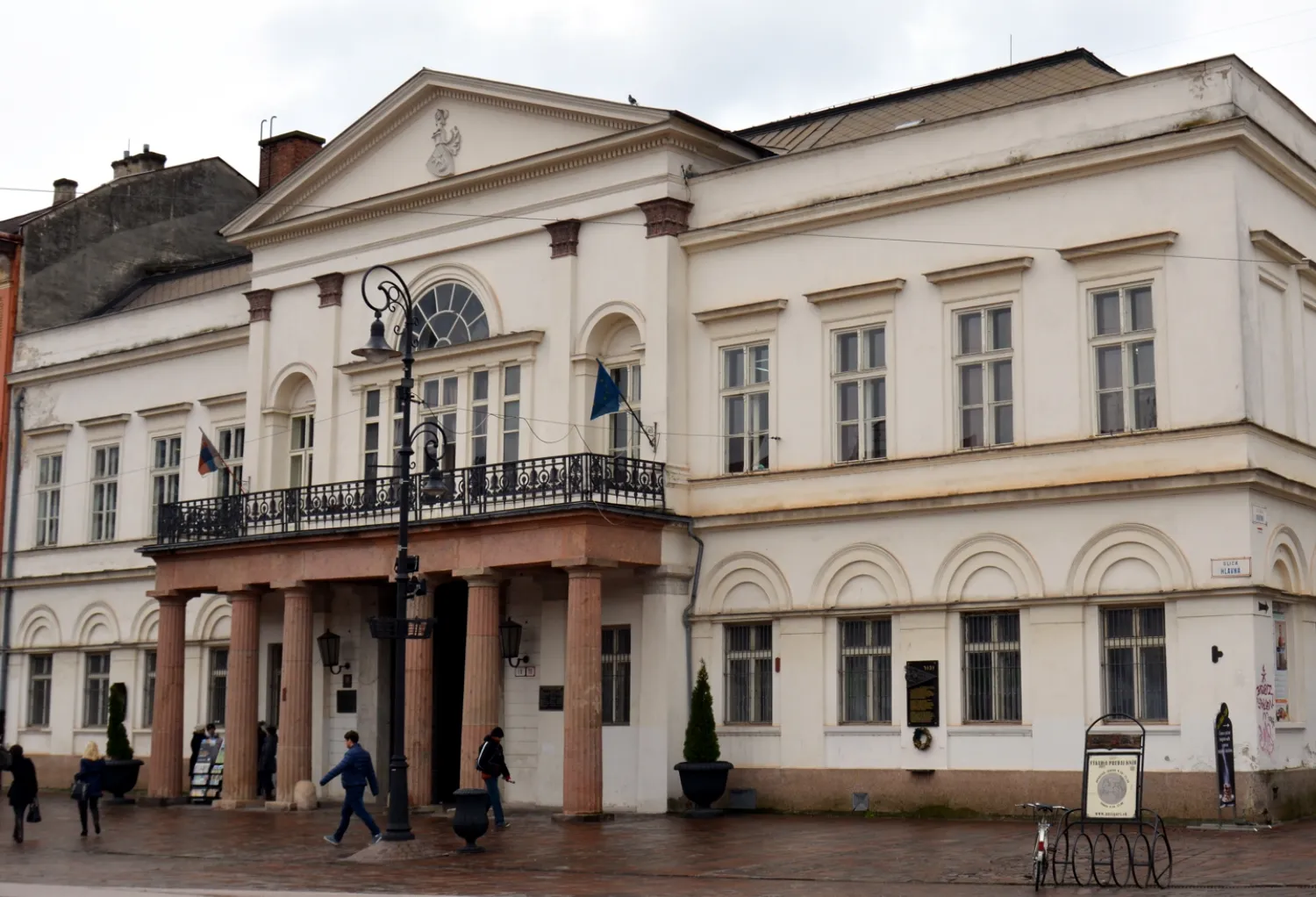
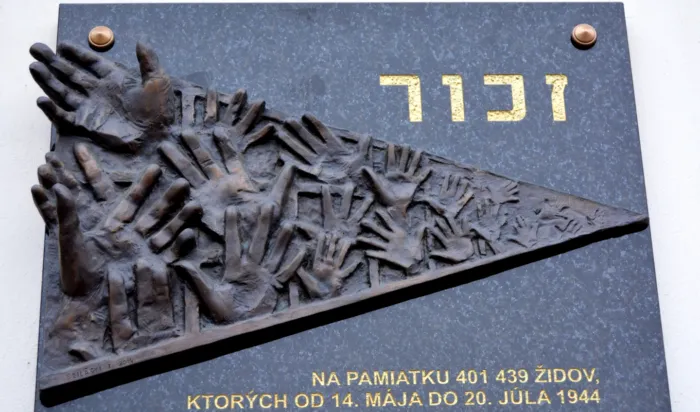
On May 21, 2014, at 4 p.m., a memorial plaque was unveiled at the Košice State Scientific Library (ÁTK) building, commemorating the Hungarians transported to Auschwitz through Košice. ; Originally, it would have been unveiled at the railway station building, but an agreement could not be reached with the railway company. As Associate Professor Tamás Lang put it, due to the incomprehension and even outright refusal of the Regional Directorate of the Railway Company of the Slovak Republic, this could not happen. The beautiful old railway station was senselessly destroyed, which was a witness to this horror. Thus, the plaque was finally placed at the Forgách Palace building (Fő u. 10), which is now the home of the ÁTK. This building has nothing to do with these tragic events, but it is located in the heart of the city, so it is a better location than the original one. However, many people found it offensive and even scandalous that the Jewish Community of Košice (KZSH) was not represented. They did not like the fact that the Forum Institute in Somorja was organizing the event. ; The speaker at the ceremony was supposed to be Dr. Richard Raši, the mayor of Košice, but he traditionally avoids occasions when he speaks in Hungarian. His deputy, Renáta Lenartová, spoke briefly to the approximately one hundred people, and then Dr. György Haraszti, head of the department at the National Rabbinical Training School – Jewish University (OR-ZSE) in Budapest, gave a speech. Seventy years ago, people were deported to Auschwitz-Birkenau in Upper Silesia as families “for work”. The elderly and the children were also taken. Those who saw this, or knew about the testimony of Walter Rosenberg and Alfred Wetzler, had no illusions that they would not be able to return home here. A train consisted of 70-80 wagons. The gendarmerie handed them over to the Germans, and then the Slovak railway workers escorted them on. He recalled the decrees and events. Sunday, April 14, 1944, fell on Passover Day, when the deportations began. This was also the tragedy of the speaker's grandparents. Several Hungarian organizations actively participated in the deportation, which was carried out uniquely quickly. It only took 56 days. Then he praised the merits of Miklós Gaskó and István Vrancsik, delicatessen merchants. These events should never be turned into the past. They must be remembered in this city with a long history, for Hungarians, Slovaks, Germans, Jews and Roma alike. ; He was followed by Egon Gál, engineer-philosopher, former director of the Institute of Judaic Studies at Comenius University in Bratislava. Sándor Márai was asked where he felt most at home. In the cemetery - was the answer - because his close relatives are buried there. They say that everything bad is good for something. In this case, this is not true. One of the most cultured nations in the world has succumbed to a primitive ideology. We were able to learn about the dark sides of human nature. He drew attention to the fact that in every society there are extremist individuals, there is hatred, but it is divided. The danger becomes real when it targets a limited group of people. This becomes a scapegoat, that is, the object of hatred. That is why remembrance is important, because only armed with knowledge of the past can we prevent horrors from recurring. After all, human nature does not change, so we cannot be sure that something like this will not happen again. ; The memorial plaque is not at the station, but the population of the city witnessed this tragic series of events, so it was placed in a worthy place. It announces in three languages: ; “In memory of the 401,431 Hungarian Jews who were transported to the Auschwitz-Birkenau death camp in 137 trains via Košice between May 14 and July 20, 1944. Thanks to Dr. Miklós Gaskó and István Vrancsik, who risked their lives to record this fact for posterity.” The first train departed from Nyíregyháza, the last from Rákoscsaba. ; The memorial plaque is made of granite and bronze. It was created by Tibor Szilágyi, a sculptor born in Ársekújvár. Its realization is thanks to the Jewish communities of Debrecen, Dunaszerdahely, Ársekújvár, Győr, and Bratislava, the Hungarian Jewish Heritage Public Foundation, the family members and friends of Miklós Gaskó, as well as the efforts of Associate Professor Tamás Lang and, last but not least, the library director Ján Gašpar. It's sad that KZSH didn't participate in this...