
The Gömör blind man in the Podbanistye cave and its surroundings (Balogvölgy)
Our natural heritage
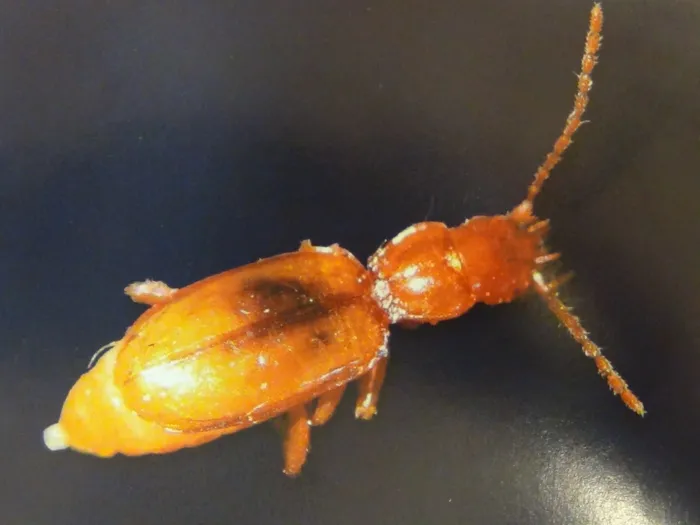
Duvalius goemoeriensis, or the Gömör blind beetle, is particularly significant for us. It was described from the Derencsényi Karst, around Ispánmező, in 1922 by Elemér Bokor, who had visited the karst three years earlier, in 1919, and had noticed this extraordinary species of beetle at that time. Research conducted since then has revealed that its distribution is limited exclusively to the Derencsényi Karst and its immediate surroundings. It has been found in many caves of the karst, the furthest being the Burda Cave, located 8 kilometers to the north. However, its main place of occurrence is the Podbanistye Cave. Here, the Gömör blind beetles look for their food on the wet cave clay and under the stones. A simple visitor would not even notice them. Valdimír Papáč managed to catch it with his lens. (In the publication of Lajos Gaál.) ; ; Elemér Bokor was the first to compile a list of arthropods in Hungarian caves. He discovered and described many new cave insect species for the first time, for example, he discovered a previously unknown blind beetle that lives exclusively in Hungary, in the Bükk Mountains, and named the Hungarian endemic species after his fellow cave explorer, Antal Gebhardt (Duvalius gebhardti, Bokor, 1926).