
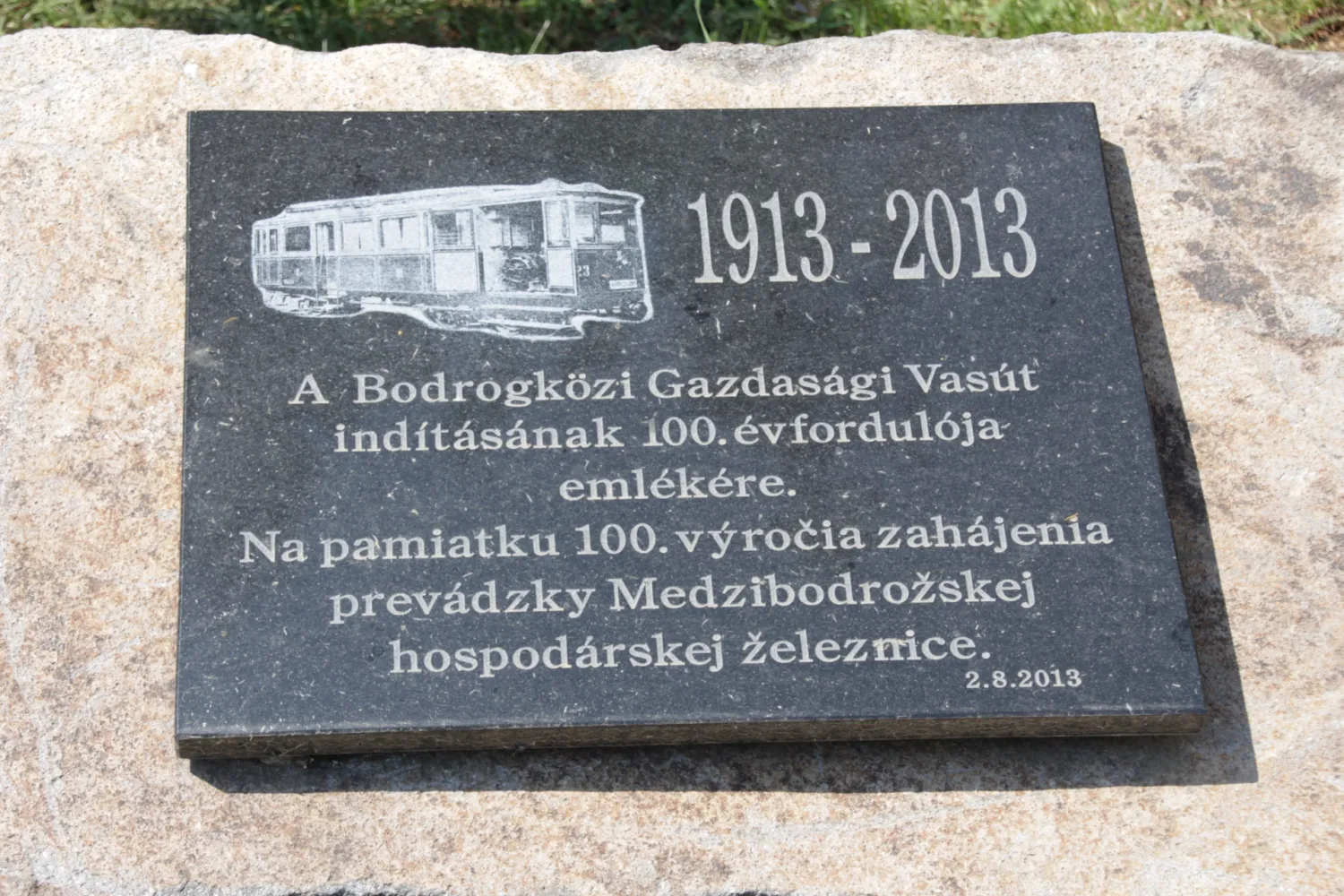
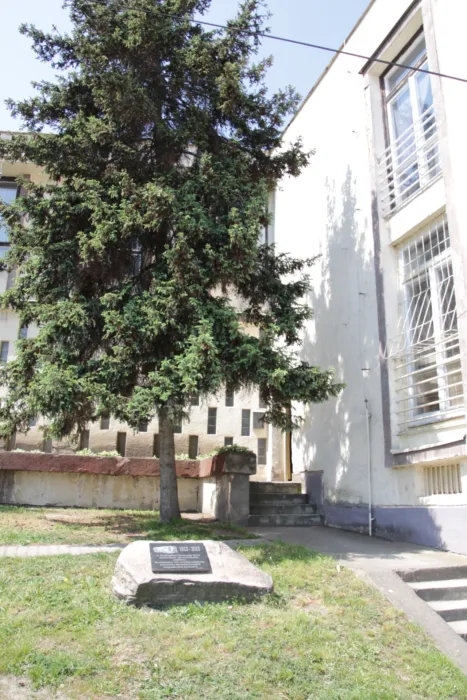
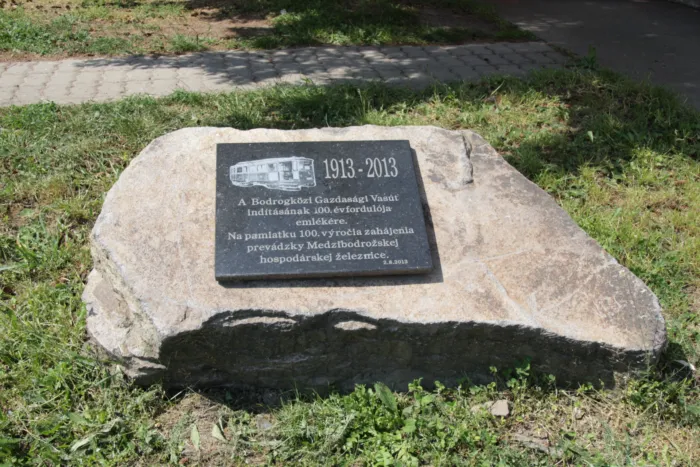
Commemorative plaque for the 100th anniversary of the Bodrogközi Economic Railway
Statue, monument, plaque
The 100th anniversary of the launch of the Bodrogközi Economic Railway was commemorated with a lecture and the unveiling of a commemorative plaque on August 2, 2013 in Királyhelmec from 3 p.m. At the event, retired MÁV chief engineer Péter Parragh gave a lecture entitled “The History of the Bodrogközi Economic Railway” at the Mailáth József Regional Museum. ; ; The Cigánd-Királyhelmec track built by the Bodrogközi Economic Railway was opened in 1913, which was soon extended to Sárospatak, then carried from the Sárospatak branch to Kenézlő on a wing line. In 1920, Királyhelmec was annexed with the Treaty of Trianon, and the terminus of the line became Zemplénagárd. Another adverse consequence of the peace treaty was that Hegyköz (the Sátoraljaújhely area) found itself in a very difficult situation. Thus, plans were made here too to expand the light railway network. First, in 1924, the section between Sátoraljaújhely and Pálháza was built, and by the end of the year the line extended from Pálháza to Füzérkomlós. The two lines were connected in 1927, creating the longest continuous light railway network in Hungary. The most important step in this was the construction of the Balsa Tisza Bridge in 1930, as a result of which a direct railway connection was established between Kenézlő and Balsa. In Balsa, the line was connected to the Nyírvidéki Light Railway network. In 1938, Királyhelmec was returned to Hungary, and the track was rebuilt. This was again liquidated in 1944, as the end of the war approached. At the end of 1944, the Germans blew up the Balsa bridge, and the direct railway connection ceased. The bridge was never rebuilt; only its ruins remain today; until recently, the connection was provided by ferry. In 1949, the lines were nationalized, and trains were reversed on the interrupted sections of the line (Kenézlő and Zemplénagárd) with a loop track. In 1964, steam traction ceased, and Mk48 and Mk45 locomotives operated instead. By then, the railway had already played a prominent role in the lives of the people living here. Both passenger and freight traffic was significant, and the railway also provided numerous job opportunities. The fate of the light railway was marked by the 1968 transport policy concept. On December 31, 1976, the line between Elágazás-Zemplénagárd was closed. On November 29, 1980, the remaining line network was also dismantled. A few days later, the work of removing the tracks began. The entire railway network was dismantled, but the Pálháza State Forest Railway, which had previously connected to the Hegyközi Light Railway owned by MÁV, was only ordered to cease operations, and then was renovated starting in 1989 in the service of tourism. Interestingly, in 1996, this forest railway was extended from the Pálháza industrial estate to Pálháza, on the embankment of the Hegyközi Light Railway. This section was never owned by the forest railway, so in practice a short section of the Hegyközi Light Railway was rebuilt. Thus, currently, the section of the light railway between the Pálháza-Pálháza industrial estate is in use, but only for tourism purposes, as part of the forest railway. In addition, some other structures (Bodrog Bridge) and remnants of tracks remind us of the former light railway.