
Monument to the Battle of Blumenau (Lamač) on Zerge Hill
Statue, monument, memorial plaque
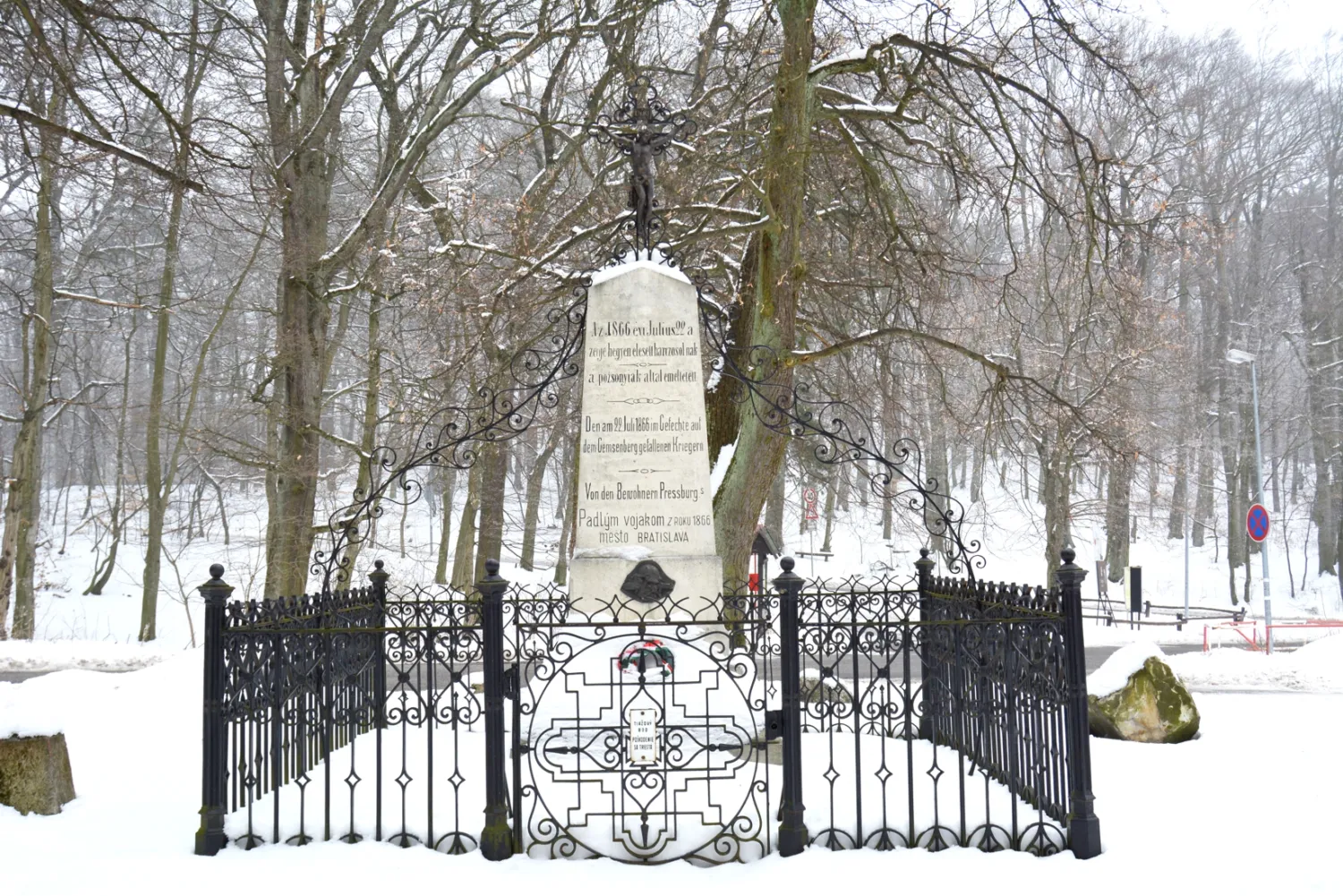
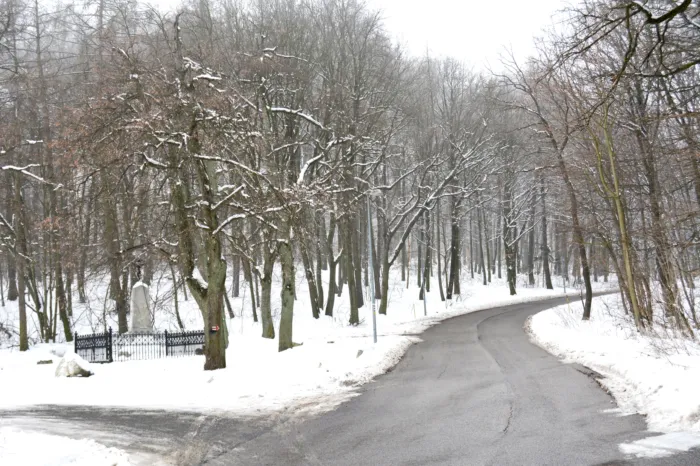
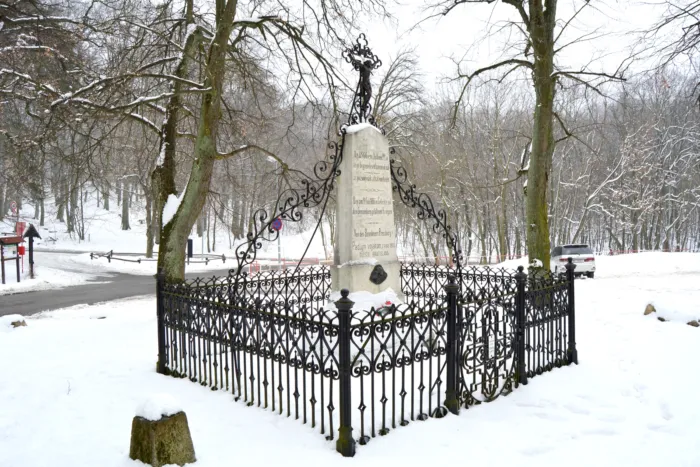
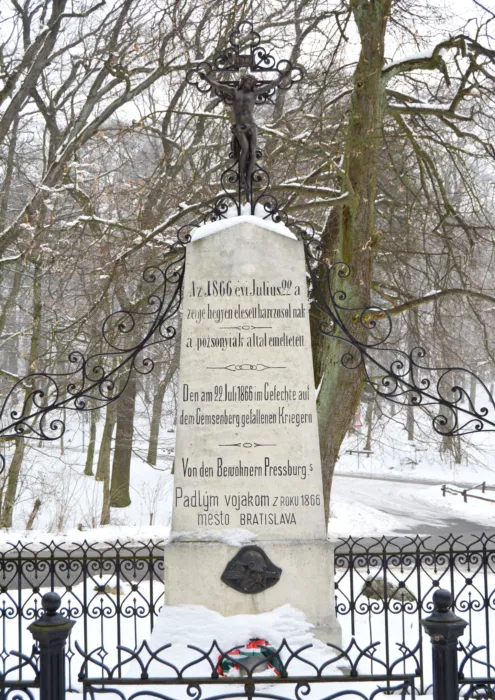
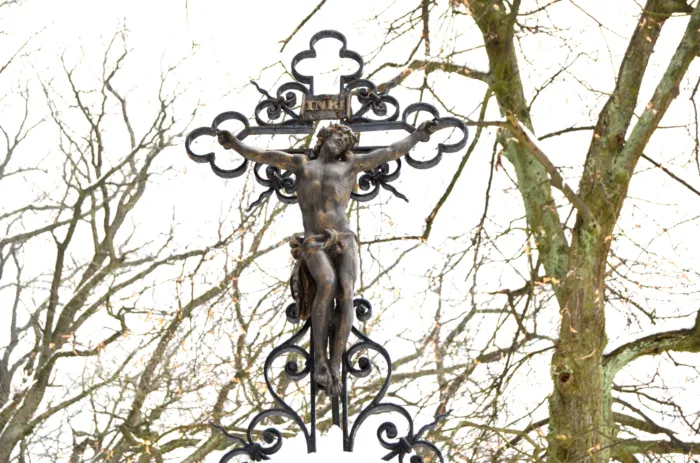
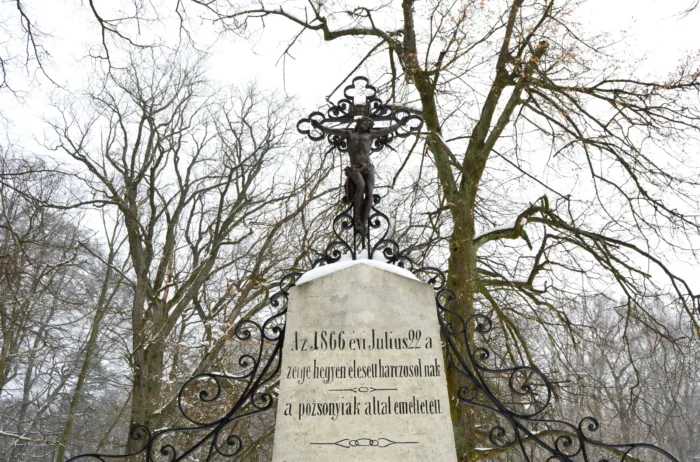
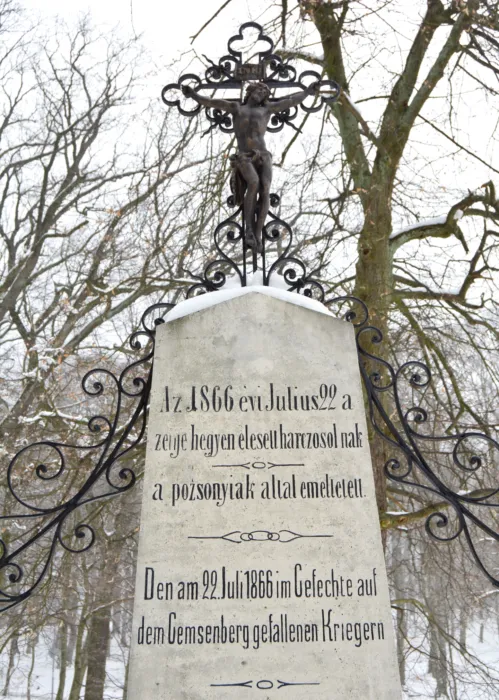
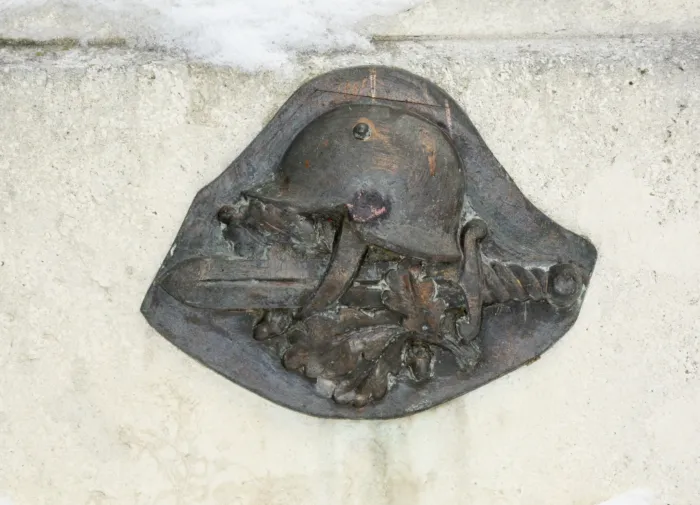
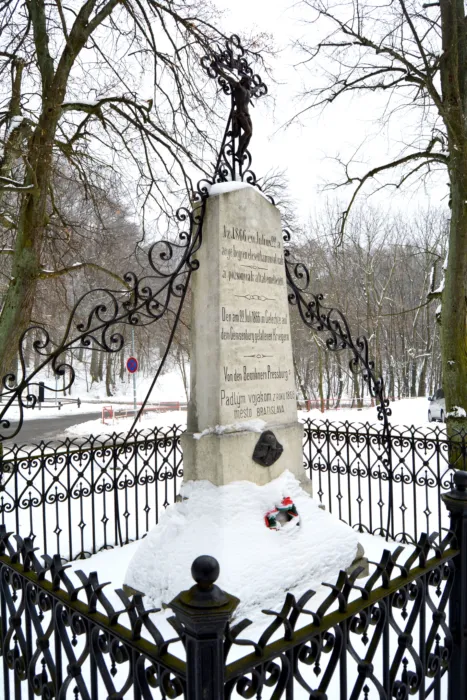
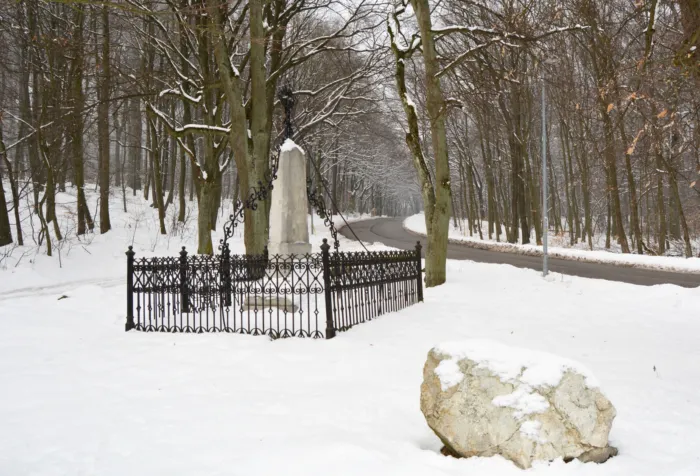
"The Straw Hut is a memorable place where many of our soldiers fell in 1866 during the Austro-Prussian War. There are several gravestones here and a beautiful monument that the people of Bratislava erected in memory of those who fell here. This place witnesses a pious memorial service every year." ; The monument was erected on November 4, 1866 to the heroic dead. The monument rests on a square-based artificial stone-concrete pedestal, nearly two and a half meters high. Its top is decorated with a wrought iron Jesus cross as a peak, which is not yet visible in the photo of a postcard dated 1898. It is not known when it was placed on the monument. There is a trilingual inscription on the facade of the monument. It was originally written in Hungarian and German, the Slovak inscription was carved into the lower part of the column sometime in 1918. ; "Erected by the people of Bratislava on July 22, 1866, to the fallen warriors on Zerge Hill." ; Below the inscriptions, a wrought-iron relief can be seen, in a composition of a stylized military helmet, sword and olive branch. ; The prelude to the Austro-Prussian War was the plan to unify the German states. The Germans had been preoccupied with the idea of creating a greater German empire since the Napoleonic Wars. Two principles clashed: one was based on the Prussians as the center, the other would have liked to see the Habsburgs at the head of the united empire. Otto von Bismarck, the Prussian prime minister, commonly known as the Iron Chancellor, fought against this primarily. From a diplomatic point of view, he did everything he could to prevent the Austrian emperor from becoming the ruler of the Greater German Empire. He wanted the countries and principalities of the German-speaking area to be unified under the leadership of Berlin, under the leadership of Emperor William. ; The Austro-Prussian War that broke out in 1866 was a war for the establishment of a Greater German Empire. In addition to the Prussians, the Italians also entered the war. The Italians also expected unification from this war. The legion of Hungarian emigration in Italy also took part in the fighting. The war took place in Bohemia, near Königgrätz, now known as Hradec Králové. Most of the battles were in Bohemia and Italian territories. Two fronts were formed. The Austrians were victorious in the Italian territories, while the Prussians were victorious on the Czech front. On the Italian front, Archduke Albert of Habsburg-Teschen won a victory over the Italian troops. The Czech troops were led by Field Marshal Ludwig von Benedek (originally Hungarian, Benedek Lajos). Benedek proved to be a weak commander, and was defeated by the Prussians in the first battle. After the battles in Bohemia, the Prussians set out against the coronation city. They advanced from Malacka and Stomfa, as well as from Szakolca. The geographical location of Bratislava made it important for the Prussians to capture the city, as it was a strategically important place due to its proximity to Vienna. The equipment of the Prussians surpassed that of the Austrian armies. This superiority was evident despite the fact that the Habsburg Emperor had deployed six hundred thousand soldiers, while the Prussians had only half a million. The Prussian leadership was also better prepared, and the differences in equipment were also evident. The last battle of the war took place in Blumenau near Bratislava, i.e. in the area of today's Lamacs. The Austrian and Prussian armies fought their last battle between Blumenau and Pozsonyhidegkút, today's Dúbravka, the last clashes were on the Zergehegy, which was still called Gämsenberg at the time. The last soldiers also fell here. According to some data, a few hundred, according to other data, up to eight hundred soldiers may have died a heroic death. ; The Battle of Blumenau near Bratislava was led by General Eduard von Fransecky and General Julius von Bosse on the Prussian side, and General Friedrich Mondel on the Austrian side. The outcome of the battle can be described as a stalemate. The battle took place on August 3, by which time the decisive battle had already taken place in Bohemia and Franz Joseph concluded an armistice agreement with the Prussians, which came into effect at noon on August 3. The Prussians allegedly knew about the armistice agreement in the morning, but nevertheless launched an attack against the imperialists. Although the Austrians suffered a decisive defeat, this defeat was not devastating. ; The peace treaty was concluded in Prague on August 23, 1866. Since Bismarck did not aim to destroy Emperor Franz Joseph, a fair treaty was concluded. The compromise is due to this war. The emperor realized that he was weak alone, without the Hungarians, so in 1867 the agreement was signed, after which Hungary embarked on the path of development. The period after the compromise can be called a true golden age in Hungarian history. ; The Austro-Prussian War was the first in which the railways were also used. They were used to transport the military and military equipment. ; The monument was erected on November 4, 1866 to the heroic dead. The monument rests on a square-based artificial stone-concrete pedestal, nearly two and a half meters high. Its top is decorated with a wrought iron Jesus cross as a peak, which is not yet visible in the photo of a postcard dated 1898. It is not known when it was placed on the monument. There is a trilingual inscription on the facade of the monument. It was originally written in Hungarian and German, the Slovak inscription was carved into the lower part of the column sometime in 1918. ; "Erected by the people of Bratislava on July 22, 1866, to the fallen warriors on Zerge Hill." ; Below the inscriptions, a wrought iron relief can be seen, in a composition of a stylized military helmet, sword and olive branch.