
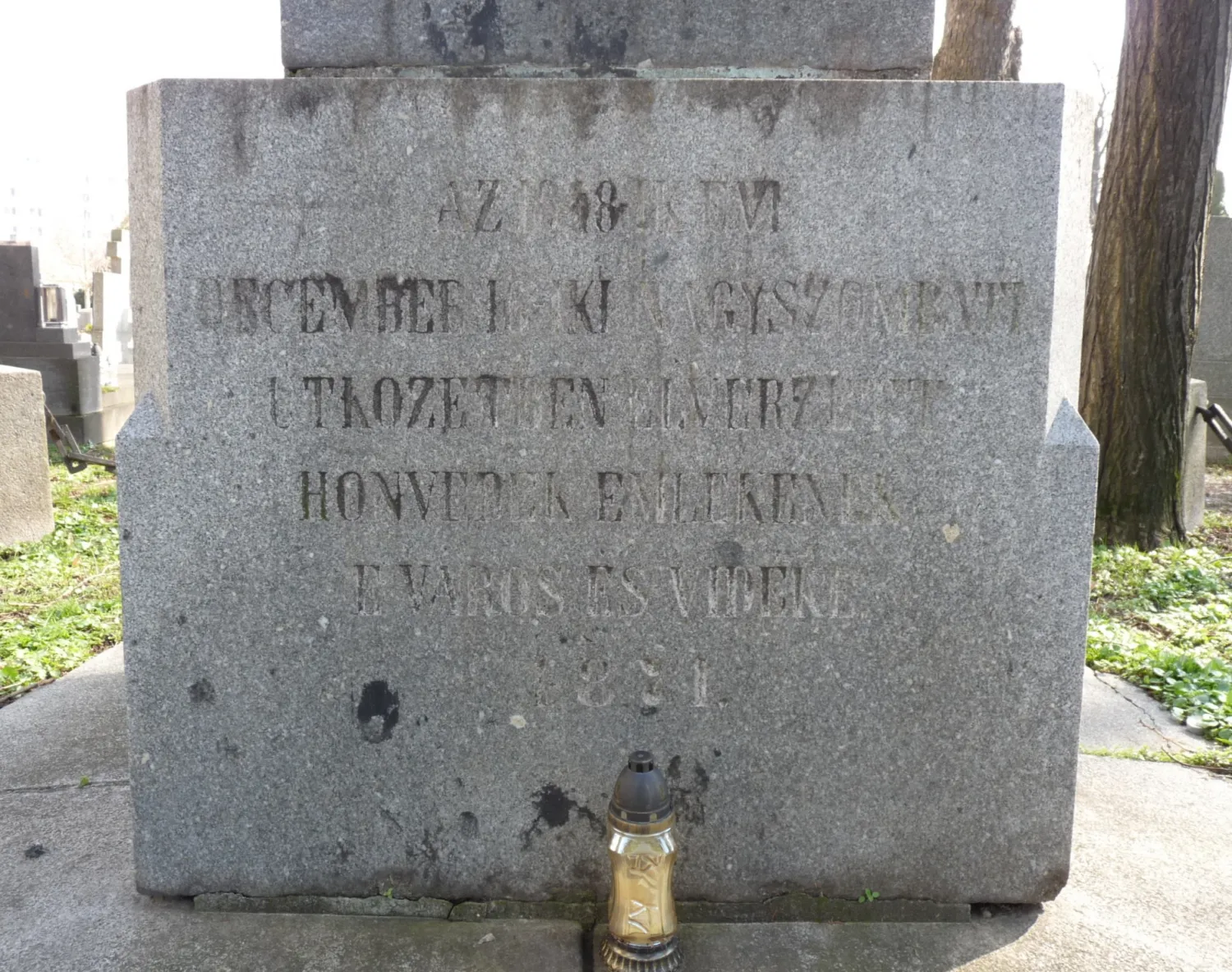
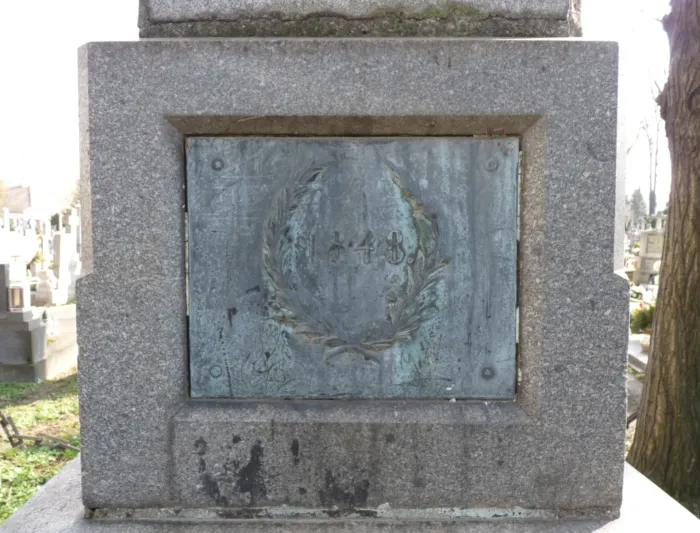
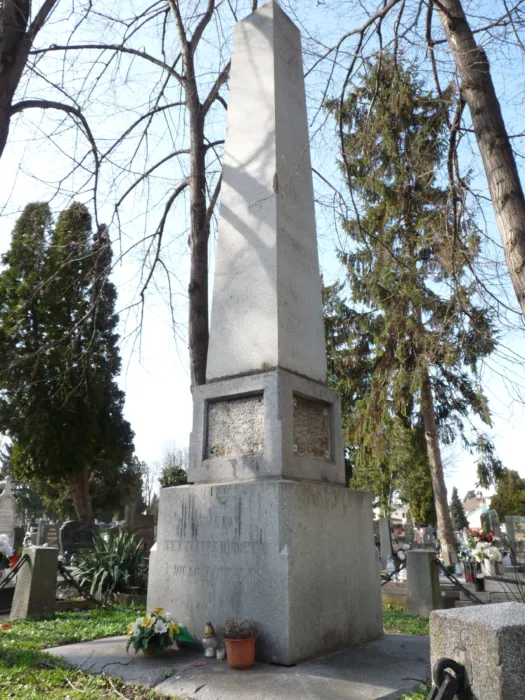
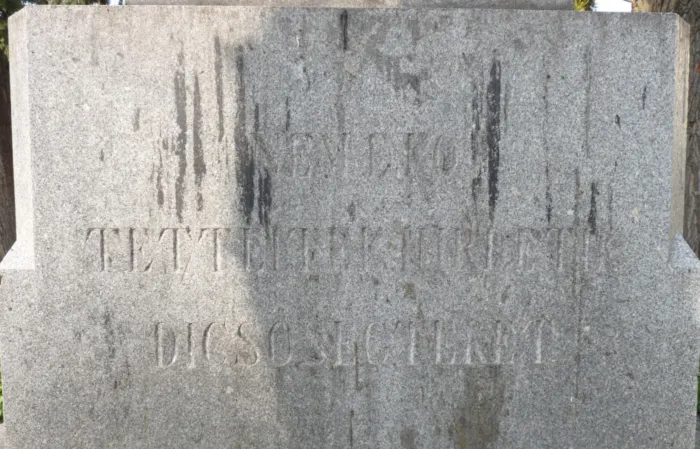
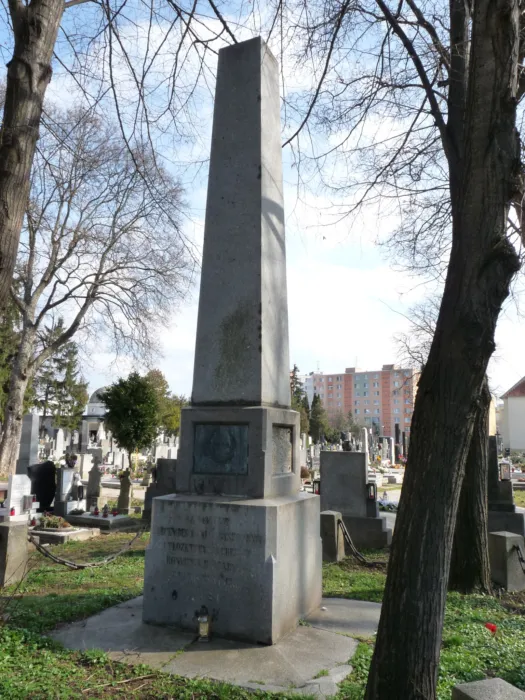
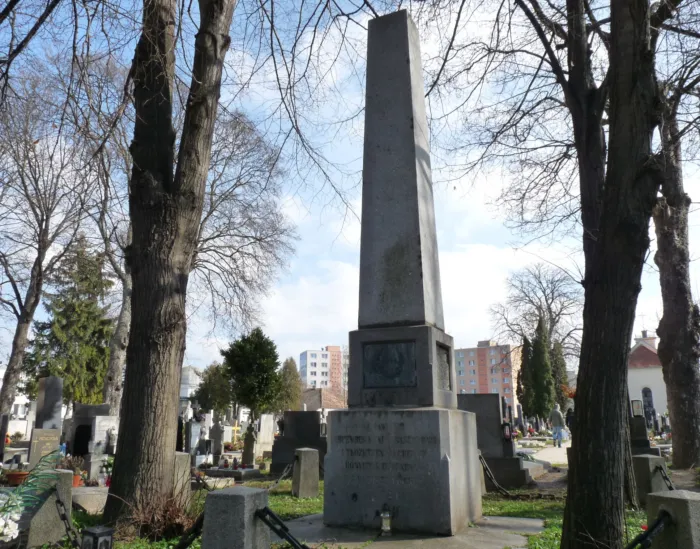
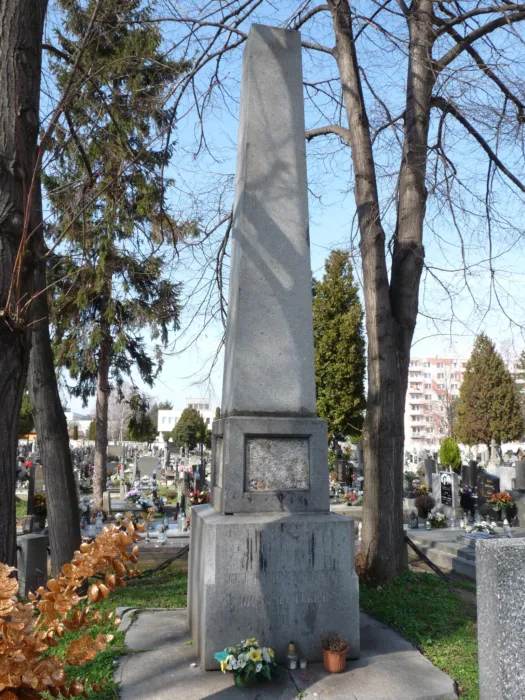
1848 War Memorial
Statue, monument, memorial plaque
The city of Nagyszombat became the scene of a battle during the 1848/49 War of Independence, the details of which are as follows: ; On December 13, 1848, Field Marshal Alfred Windisch-Grätz published his proclamation, in which he announced that the outposts of his army had crossed the Hungarian border, departing from Vienna, in order to begin their activities in Hungary in order to restore the so-called legal order. ; In the framework of this campaign, on December 14, 1848, Lieutenant General Balthasar Simunich entered the territory of Hungary and launched an attack on the defense formations defending the Nádasi Gorge in the Little Carpathians. Lieutenant General Simunich divided his team, which consisted of 6 and 4/6 battalions, 4 cavalry companies and artillery serving 18 guns, into 2 brigades. Their commanders were Joseph Lobkowitz and Anton Sossay. were generals. This force represented about 25 thousand people. ; The commander of the defense formation defending the Nádasi Strait was Major Kálmán Ordódy. Under his command were 1-1 battalion of the 48th and 34th regiments of the sorcerer and an artillery serving 10 guns. The balance of power favored the imperialists due to the significant numerical superiority. Lieutenant General Simunich divided his division into 3 columns and launched the attack at 7 a.m. on December 14. ; Previously, Major Ordódy had been given relatively free command over his troops by the Hungarian command, so seeing the imperial superiority, he withdrew from the Nádasi Strait. One battalion of the brigade marched to the Lipótvár fortress, and the rest headed towards Nagyszombat. On the evening of December 14, upon hearing the news of the surrender of the Nádasi Strait, Lieutenant General Artúr Görgei sent Colonel Richárd Guyon and Lieutenant Colonel Henrik Pusztelnik with 330 men after Major Ordódy. ; Since some of the troops that had surrendered the Nádasi Strait had already retreated towards Lipótvár, Colonel Richárd Guyon set off for Nagyszombat, where he wanted to offer resistance to the imperial forces to the best of his ability. ; On December 16, 1848, at 4:30 p.m., General Sossay began the siege of Nagyszombat, as a result of which he almost completely surrounded the city with his superior force. On the imperial side, 15,000 soldiers surrounded the 1,700 Hungarians who were in the city. ; Colonel Guyon realized this when the Hungarian army troops sent to him on the Bratislava-Nagyszombat railway came under heavy fire. ; By 7 p.m., bloody street fighting had developed in the city, and only two options remained: a breakout or surrender. ; Leading his troops, Colonel Guyon successfully broke out of the siege ring under cover of night in the direction of Szered and Cífer-Bratislava. ; However, the 3rd battalion of the 48th Archduke Ernő Infantry Regiment, deployed as a rearguard, which covered the breakout operations, lost its flag-guarding company. The remaining four companies successfully broke out, but two of them were later captured. ; The Hungarian army suffered significant losses during the heroic resistance. The Hungarians were forced to record 98 dead and wounded. The Austrians captured 8 officers and 790 men. In this battle, the Austrians lost a total of 40 men. ; In the Battle of Nagyszombat, the Hungarian army fought heroically against a significant superior force and set an excellent example of self-sacrifice. ; In addition to the unnamed heroes of the battle, the activities of Colonel Guyon, Lieutenant Colonel Pustelnik and Major Mack were exemplary. ; On December 17, 1848, Lieutenant General Simunich, who entered the city, summoned the members of the city council and the representative body to him at 7 pm and told them that if his demands were not met, then: "I will capture them all and send them to Olmütz". ; The battle made a deep impression on the public opinion of the country. Sándor Petőfi, who was in Debrecen at the time, glorified the deeds of the soldiers in his poem entitled The Battle of Nagyszombat. ; ; The city's population did not forget the soldiers who fell in the battle. On January 9, 1870, a committee was formed to erect a memorial statue of the soldiers who fell in the battle. The chairman of the memorial committee was Károly Reischl. ; The treasurer of the committee, Ferenc Pláner, issued 20-krajc lottery tickets, the net proceeds of which were used to erect the statue. ; The drawing of the prizes took place on February 23. On May 1, 1870, the city's art lovers performed a comedy in Hungarian and a comedy in German in the city theater. The net proceeds were also donated to erect the statue. ; The statue, which stood in the center of the city, was unveiled on October 15, 1871. The monument was made by local sculptor Károly Takáts. After the establishment of Czechoslovakia in 1918, the monument was moved to the local cemetery. The column, stripped of its three plaques and bearing traces of black paint in some places, can be found here. ; Since 2006, 1848 has also been commemorated at this location, organized by the Nagyszombat Student Club.